

South Africa needs more than just big investment numbers: CEO


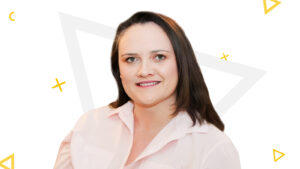
Busi Mavuso, the CEO of Business Leadership South Africa (BLSA), says that the president’s latest plans to attract even more investment should be complemented by other targets.
On 13 April, President Cyril Ramaphosa sold the country to the world at the fifth annual investment conference to attract trillions in foreign and domestic investment.
The event concluded the president’s five-year investment drive, with Ramaphosa ultimately securing R1.5 trillion in commitments – far head of the target of R1.2 trillion set in 2018.
The president had the tricky job of persuading investors that the country was actually making progress when it came to the energy crisis, visa issues as well as its overall financial stability.
While the president did not shy away from highlighting the challenges faced by the country, he stressed that the government has a roadmap and a handful of timelines to ensure that the challenges wouldn’t linger indefinitely.
According to Mavuso, the conference’s success should be celebrated – but she cautioned that the focus shouldn’t simply be on drawing investment and celebrating big numbers. The country needs these numbers to deliver progress and boost other metrics.
Commenting on Ramaphosa’s next investment goal of R2 trillion by 2028, the business leader said that the country needs to focus on other targets to see how the investments lead to economic growth.
“Investment is not a good in and of itself. It is good for what it creates, including economic activity and enables citizens to live better lives,” she said.
“Investment drives economic growth because it increases the capacity of the economy. The more roads, ports, railways, factories, energy facilities and other economic infrastructure, the more the economy can produce, generating taxable earnings that can make the country better off.”
For the next five years, Mavuso said that the country must measure its success in terms of investment not based on the figure but rather on the subsequent expansion of economic activity – focusing on the overall macro figures for gross fixed capital formation.
“I have no doubt that pledges do add at the margin to the investment happening, but it is really only when investment trends pick up at the macro level that we can be confident something good is happening in the economy,” Mavuso said.
New initiatives, including manufacturing, mining, roads, rail, electricity and technology, would make the latest target of R2 trillion a great achievement if met.
“It is the kind of investment that delivers what we ultimately want: jobs and better lives for all. Business is eager to work with government on the many policy interventions needed that would help make that a reality,” said Mavuso.
She added that while achieving the R1.5 trillion target is impressive, it happened during five years of the weakest economic growth seen in the country for decades.
Another major problem facing the new investment commitments is that many of them are effectively replacement investments – it is companies building their own electricity plants because they can no longer rely on Eskom to produce it, said Mavuso.
“That does not expand the capacity of the economy – it merely protects the existing capacity.”
She said that this is a good thing, with new electricity plants renewing business confidence that, in turn, attracts investment and economic growth.
When businesses feel confident about the future, they invest, said the CEO. “They must believe there will be customers to sell to for many years for investments they are considering now.”
Mavuso outlined the following major handbrakes to economic development and growth:
- Crumbling infrastructure
- The unstable energy supply
- Failures in the national logistics system
- Inefficient local government services such as water provision.











 Loading ...