

Best news in three years for South Africans


Financial confidence among South Africans has reached a three-year high, with consumers finally crawling out of “survival mode”—but more still needs to be done to address long-term struggles.
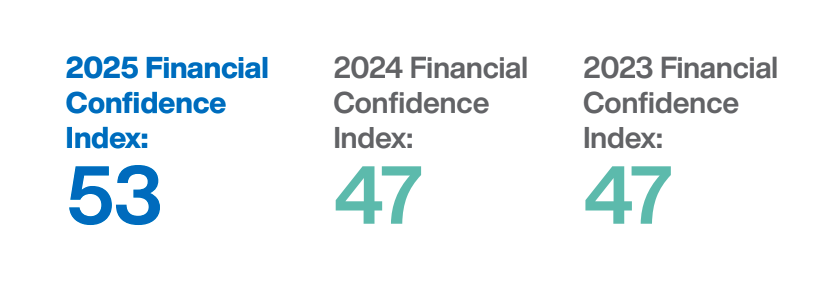
According to the 2025 Sanlam Financial Confidence Index (FCI), South Africans’ financial confidence has risen from 47 out of 100 in 2024 to 53 in 2025.
The survey had 1,512 participants, aged 20 to 70, with a personal income of at least R1,000 per month.
The study revealed that South Africans feel in control of their finances, yet still struggle to translate confidence into consistent, long-term action.
After years of economic instability, South Africans are recalibrating their relationship with money.
Half of South Africans say that they can recover from a financial setback, up 11% from the previous year.
“We’re seeing a collective shift from survival mode to control,” said Kele Boakgomo, CEO of Yugrow and behavioural scientist.
“Financial stress has forced new habits – people are protecting what they have, prioritising stability and learning to manage uncertainty. The next step is helping them turn control into long-term capability.”
The growth in confidence may also reflect a broader economic shift, as the prime lending rate has dropped from a peak of 11.75% in 2023 to the current 10.25% in 2025.
These lower interest rates should ease debt pressure and unlock more disposable income.
Real salaries have also risen for the first time in seven years, with inflation now stabilising, giving households a greater sense of control with less cost pressure.
Highlights from the report include:
- 39% have a high or very high Financial Confidence Index (FCI) score, compared to just 27% in 2024.
- 68% say they dare to live within their means (+10% increase year-on-year);
- 63% feel on track to pay off debt (+21%);
- And 58% believe they have the financial freedom to make life choices they enjoy (+38%).
- Less than half of South Africans have written down their long-term goals or track them.
- 42% trust their own financial abilities.
- Financial Wellbeing (32) still lags well behind Financial Self-Determination (61) and Resilience (58)
Past pains linger
Despite progress, scars remain for many. 74% of South Africans still feel stressed about their daily finances, with 72% also unhappy with their current financial situation.
“Our family circumstances shape deep-seated beliefs about money – beliefs that linger long after our situations change,” said Lee Hancox, Head of Channel and Segment Marketing at SanlamConnect.
“Many people still carry the fear or shame they experienced growing up. We must start having real, open conversations and normalise money talk as an act of empowerment. Awareness is the first step; advice is the next.”
Many people still feel the pain of COVID-19 and high interest rates, which may dampen their belief that they can build wealth in the future.
Global uncertainty is also rising, with many South Africans seeing a spike in mental health issues and many struggling with their well-being.
That said, Generation Z, those born between 1997 and 2010, tops every measure, ranging from Self-Determination (70) to Resilience (64).
The generation leads for optimism, digital fluency and openness to financial learning. Gen X and Baby Boomers struggle, often stretched by multigenerational care or retirement pressures.
“Sustainable progress lies in closing the space between what people know and what they live,” said Hancox.
“Financial literacy must deepen in classrooms and campaigns; it needs to show up in people’s daily choices, their family conversations, and the tools they use.”


















 Loading ...