

The hammer South Africa should hope the US doesn’t drop: Dawie Roodt


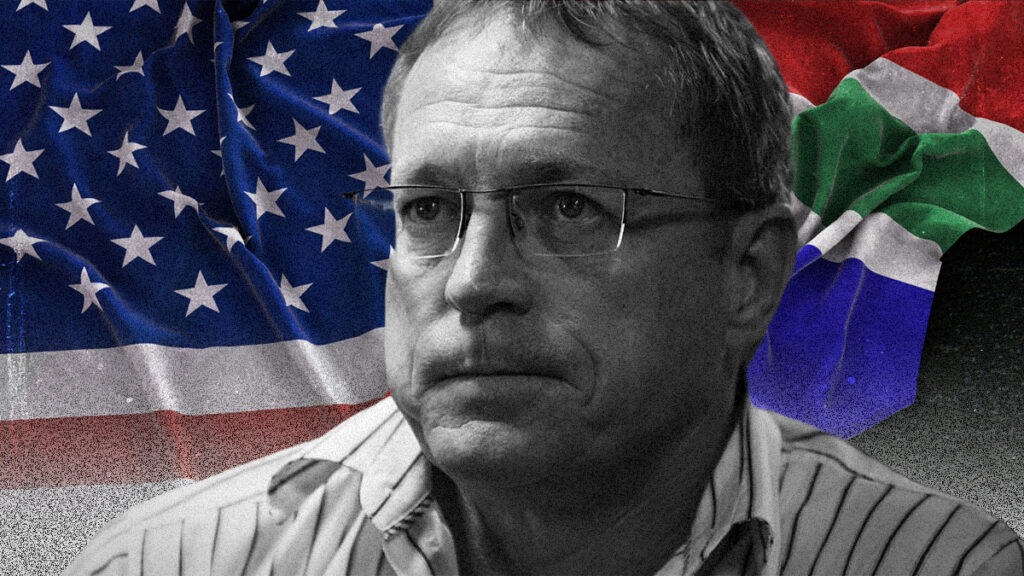
Renowned economist Dawie Roodt says South Africa faces political risks, rising fiscal vulnerability, and deep structural economic weakness if the country doesn’t play its cards right this year.
Speaking in an interview with Biznews, Roodt said one of the significant risks is exposure to external shocks, particularly from the United States.
Roodt first touched on the current standoff over a proposed VAT increase ahead of the 2026 Budget Speech, which he argued has become a political “game of chicken”, with parties more focused on optics than economic reality.
“Everybody’s talking about VAT, and that’s the sticking point,” he said, adding that political actors are trying to see “who’s going to sit with the egg on their face in the end”.
According to Roodt, the ANC is stuck in a lose-lose position. “If they succeed in doing this, everybody’s going to point fingers at the ANC and say you increased taxes, especially on the poor,” he said. “If they don’t succeed, they would have blinked first.”
Beyond the VAT debate, Roodt said the deeper problem is the size and cost of the state. He noted that government spending has increased significantly over the past few decades, rising from approximately 15% of GDP in 1970 to nearly 35% today.
“There was more than a doubling in the relative size of the state,” he said, warning that this calculation often excludes massive contingent liabilities such as the Road Accident Fund and others.
These high debt levels make South Africa acutely vulnerable to financial pressure, particularly from abroad.
Roodt stressed that one sanction the country should desperately hope the US never deploys is restrictions on American investment in South African bonds.
“If Donald Trump decides tomorrow morning that he’s going to implement some sort of financial sanction against South Africa, that is going to hurt really badly,” he said.
South Africa’s vulnerability is self-inflicted

Roodt explained that Americans account for roughly half of recent portfolio inflows into South Africa, mainly through bonds and equities.
“If Donald Trump tells them, ‘You’re not allowed to buy South African bonds anymore,’ with these extremely high levels of debt, see what’s going to happen,” Roodt warned.
He said long-term bond yields could jump sharply from around 11% to 15% or higher, forcing local banks to absorb more government debt.
“That means that balance sheets of banks can come under pressure, triggering a weaker currency, higher interest rates, and weaker economic growth”.
Roodt stressed that South Africa’s vulnerability is self-inflicted, rooted in years of weak growth and policy failure.
“We are extremely, extremely vulnerable because of our high fiscal debt situation,” he said, arguing strongly against any measure that gives the government more revenue.
“The only way you can get politicians to spend less money is to give them less money.”
He believes the country urgently needs to cut wasteful spending and send a strong signal of fiscal discipline.
As a symbolic starting point, Roodt said the government should slash spending on VIP protection.
“Cut back on that R2 billion they spent on blue light brigades. It will be a sign to the rest of us that they’re actually trying to cut back on unnecessary state spending,” he said.
However, Roodt acknowledged that meaningful spending cuts are politically explosive, particularly when they affect grants or public sector wages.
“You must spend less money on people and go and tell people you’re going to spend less money on them—see what they’re going to do,” he said.
Ultimately, Roodt argued that South Africa cannot tax its way out of trouble and cannot cut its way out either.
“There’s only one way that we can fix the debt-to-GDP ratio, and that is through economic growth,” he said.
For that to happen, he believes the government must make a decisive policy shift. “Protect private property rights, encourage free trade, and ensure sound money,” Roodt said.
“You do those three things, and I guarantee you your economy is going to grow.”







 Loading ...