

Another national disaster for South Africa


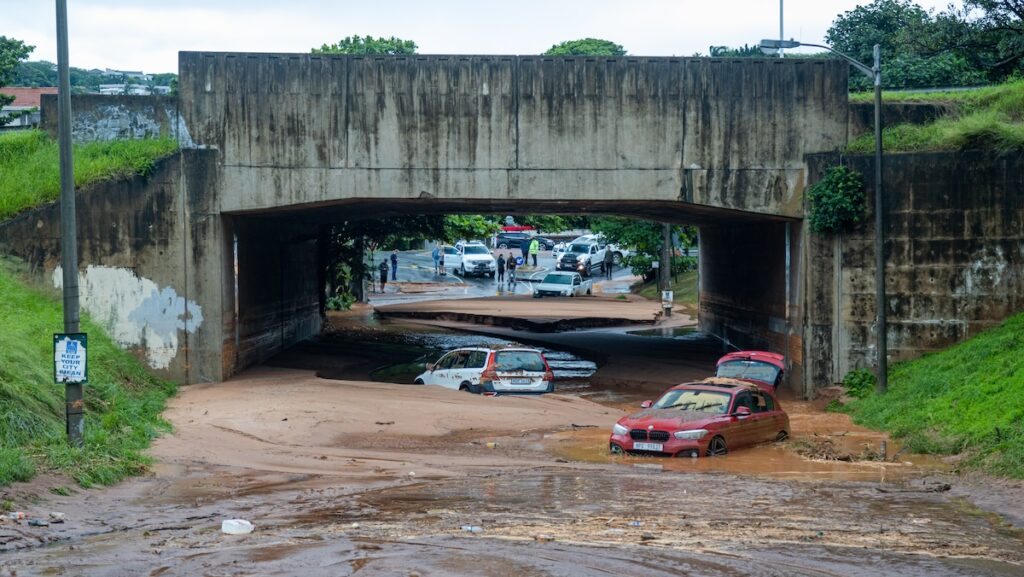
South Africa officially has another National Disaster following severe weather and widespread flooding across five provinces.
Following severe weather and widespread flooding, a National Disaster has been classified under the Disaster Management Act, 2002.
The classification was effected by the Head of the National Disaster Management Centre (NDMC), Elias Sithole, following consultations with relevant organs of state and Heads of Provincial Disaster Management Centres.
The Department of Cooperative Governance and Traditional Affairs (CoGTA) said that the decision follows a comprehensive assessment of adverse weather conditions experienced since late November 2025.
The severe weather, including heavy rainfall, strong winds, lightning, and flooding, affected Limpopo, Mpumalanga, KwaZulu-Natal, the Eastern Cape, and the North West.
These floods resulted in a loss of life, significant damage to infrastructure and property, environmental degradation, displacement of communities, disruption to schooling and agricultural activities.
There have also been parts of Kruger National Park that were closed. Mpumalanga alone recorded 20 fatalities, with further rainfall warnings in place.
The classification also follows extraordinary oversight visits by President Ramaphosa and Cogta Minister Hlabisa to see flood-affected areas and witness first-hand the scale of devastation.
While not declared a National Disaster, the classification means the National Executive assumes primary responsibility for coordinating and managing it.
All organs of state across the three spheres of government are required to strengthen support to disaster management structures, implement contingency measures and submit progress reports to the NDMC.
“Minister Hlabisa reaffirmed the government’s commitment to restoring normality and rebuilding affected areas, with an emphasis on building back better through resilient infrastructure,” said Cogta.
Crisis for South Africa

The floods in parts of the country are only one of the several issues facing South Africa, with other parts of the state calling for disaster relief.
The Western Cape government has also called for a provincial state of disaster to be declared amid wildfires and a worsening water crisis.
Minister of Agriculture John Steenhuisen also announced that he will table a declaration of the foot-and-mouth disease outbreak as a state of disaster at the next Cabinet meeting.
Amid these issues, Minister Hlabisa held a meeting of the Intergovernmental Committee on Disaster Management over the past weekend, which agreed upon immediate intervention measures and additional support.
“Response and recovery efforts will continue to be coordinated to ensure that assistance reaches all affected communities,” said Cogta.
“Minister Hlabisa reaffirmed that the state stands firmly with the people during this recovery period and remains committed to supporting communities as they rebuild and recover.”
The latest classification of a National Disaster comes hot on the heels of Gender based violence and feminicide (GBVF) in South Africa being classified as a National Disaster in November 2025, following widespread protests.
However, there is a distinction between a state of disaster being “classified” and a state of disaster being “declared”.
Classifying a state of catastrophe enables the government to coordinate and manage disaster response by assigning responsibility to specific government spheres.
A national state of disaster is declared when more than one province is impacted, where response cannot be managed effectively.
Where existing legislation and contingency measures are inadequate to address the situation, or where other exceptional circumstances exist, the government would declare a state of disaster, which is not the case.

















 Loading ...