

Joy for homeowners in South Africa is coming


While the South African Reserve Bank (SARB) opted to hold interest rates this week, this was not unexpected and does not by any means indicate that rate cuts have ended in the country.
According to Investec Chief Economist Annabel Bishop, the country is still very much in a cutting cycle, and if conditions continue to improve, the repo rate could drop by 200 basis points over the next few years.
The SARB’s Monetary Policy Committee voted to hold interest rates on Thursday (29 January), leaving the repo rate at 6.75% and the prime lending rate at 10.25%.
The decision was not unanimous, with four members of the MPC voting to hold and two voting to cut by 25 basis points.
Ahead of the announcement, economists and markets were divided, but most bets were on a hold, making the outcome unsurprising.
The same forecasts envision 50 basis points of cuts in the current cycle, split into two staggered 25 bp cuts in 2026.
However, Bishop noted that the MPC’s accompanying documents indicate that there may be as many as three 25bp cuts left in the current cycle, totalling 75bp, with potentially more to come.
“Currently, we expect the repo rate to reach 5.75% by the end of 2027, while the MPC’s forecast released yesterday has it at 6.00% for this point,” Bishop said.
“For 2028, we believe the repo rate would drop to 5.50% if CPI inflation remains very close to 3.0% y/y.”
This would put 125 basis points of cuts in the next three years, rising to 200 basis points by the end of 2030, should headline inflation consistently average 3.0% y/y over the five-year forecast period.
“A lower neutral real interest rate is influenced by a lower risk premium for South Africa, which would then be expected to strengthen the exchange rate, consequently lower inflation, and so lower the inflation outlook sustainably, resulting in interest rate cuts,” she said.
Inflation and the rand

Key to the forecast and continued cutting cycle are inflation readings and the rand, which is tied to them.
Reserve Bank Governor Lesetja Kganyago noted that South Africa’s inflation environment has been increasingly supportive of the new 3% inflation target, to the point that the central bank expects a more rapid move to the level.
Previously, the SARB had anticipated at least a two-year journey to settle at 3%, with 2026 forecasts anticipating inflation to move towards 4% before turning to settle at 3% by 2027
However, the December inflation reading of 3.6% is now seen as being the peak, and it’s all downhill from there.
Similarly, Bishop noted that Investec’s forecasts call for inflation to average 3.1% in 2026, with quarterly fluctuations between 2.9% and 3.3%.
However, if the rand maintains its current levels against the dollar—or even strengthens—the forecasts drop to as low as 2.8%. However, she cautioned that the rand is still a volatile currency.
“With the combination of investor risk profile in South Africa seen to have lowered, and substantial risk-taking in global financial markets this year and building over last, the rand has strengthened on its own, but also particularly on dollar weakness,” she said.
Aside from dollar depreciation, the rand has been bolstered by investors flooding into gold.
However, the gold price has already lost some of its recent strength, and the US dollar has paused its depreciation, with fears of severe rate cuts in the US having diminished.
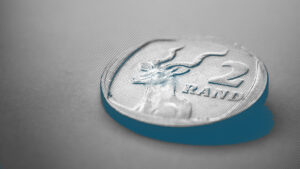
As a result, the rand/dollar exchange has moved from trading around R15.64 on Thursday to over R15.90 on Friday, demonstrating how quickly the tides can turn for the rand.
Nevertheless, Bishop said that a lower neutral real interest rate would improve the longer-term interest rate outlook for South Africa.
“We expect both, when SA’s inflation rate embeds at 3.0% y/y for a couple of years, excluding once-off price shocks which do not entrench second-round effects.”















 Loading ...