

South African state-owned bank records R7.8 billion profit


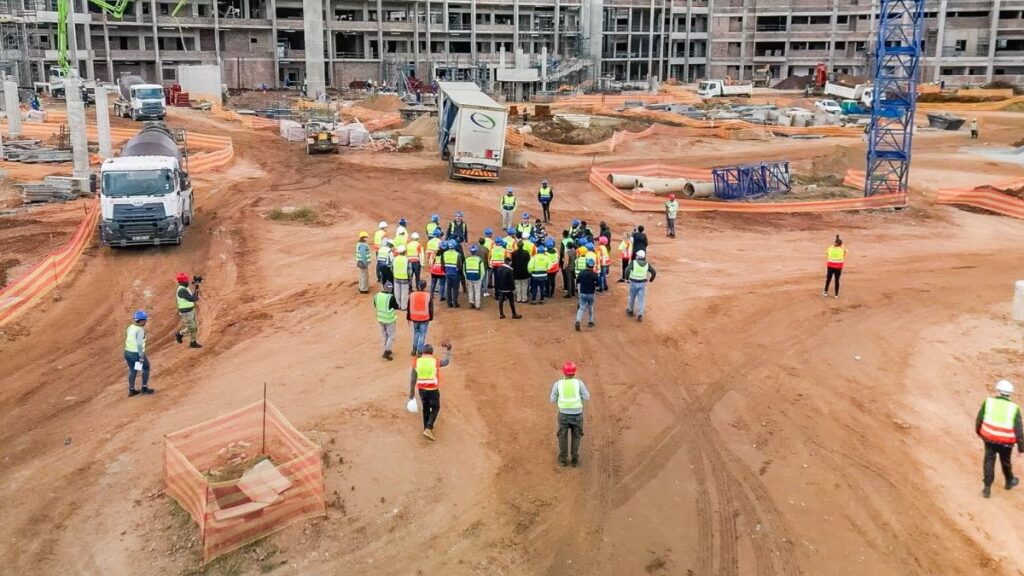
The Development Bank of Southern Africa (DBSA) exceeded its targets for infrastructure investment in the country, but overall fixed investment remains low.
The DBSA is a wholly state-owned company, focused on investing in critical infrastructure and development projects in South Africa.
The development bank has seen strong financial results for years, and its 2026 profits rose by roughly 47% year-on-year.
It reported over R7.8 billion in profit for the 2026 financial year, significantly higher than R5.3 billion in 2025.
The bank also exceeded several investment targets for the year, including its contribution to South Africa’s fixed investment.
The group aimed to contribute R6.2 billion to the value of infrastructure delivered, and exceeded this target by approximately R300 million.
In addition, the “Value of infrastructure unlocked in underresourced municipalities” was roughly R900 million higher than targeted.
One area where the DBSA was unable to meet its target for the year was job creation, with the bank facilitating only roughly 20,000 new jobs, compared with its 2026 target of 26,000.
The development bank attributed this to lower domestic commitments and a lack of jobs in its Infrastructure Delivery Division (IDD).
“The underperformance is largely attributed to fewer new jobs created from IDD and lower domestic commitments,” it said.
While the DBSA performed well financially, its investors and clients had concerns over the company, reflected in a lower-than-targeted client and stakeholder satisfaction index score.
The bank aimed for a four on this index, but only achieved 3.75, which it attributed to stakeholders not being fully aware of the group’s functions and concerns from clients.
“The underperformance is attributed to: A lower score for Stakeholder Relationship Index, which is due to some of the stakeholders not being aware of the DBSA’s products, channels and sector focus,” it said.
“A slightly lower than expected score for client’s satisfaction survey due to clients indicating concerns around product relevance, responsiveness, and innovation.”
South Africa’s fixed investment concerns
Despite the DBSA meeting and exceeding its investment targets for the year, South Africa’s fixed investment remains lower than in 2025.
From the end of 2025 to the first half of 2026, the value of planned investment projects dropped by 81% to R137.7 billion.
The data came from Nedbank’s capital expenditure project listing, which, although noting a considerable decline in planned fixed investment, noted that the amount is expected to grow marginally from last year.
It said that South Africa’s Gross Fixed Capital Formation (GFCF) is expected to rise in 2026, but at a slower pace than previously anticipated.
“Increased government infrastructure spending and continued investment in renewable energy capacity should help offset some of the drag from a less supportive global environment,” Nedbank said.
“We forecast modest GFCF growth of 0.6% in 2026 and average growth of 2% over the next three years,”
Fixed investment is vital for economic growth, as it represents the planned creation of new jobs and economic expansion.
Economic growth in South Africa has been slow in recent years, with the country’s GDP only growing by 1.1% in 2025.
In the second quarter of 2026, South Africa saw its GDP contract by 0.2%, snapping its streak of six consecutive quarters of economic growth.
The contraction came as global conflict has placed pressure on South African businesses and consumers, driven by high fuel prices resulting from the closure of the Strait of Hormuz.
The DBSA said it had “worked towards achieving exceptional results, even in the context of difficult global, regional and domestic economic recovery during the 2025/26 financial year”.
“The macroeconomic landscape has deteriorated in the first quarter of 2026, with the global growth outlook revised lower across both advanced and emerging economies,” it said.
“The escalation of the Middle East conflict has disrupted energy transit routes and materially worsened global macroeconomic conditions through an increase in energy prices, volatility, and tighter financial conditions.”















 Loading ...