

Homeowners secretly paying an extra R300 a month for electricity in South Africa


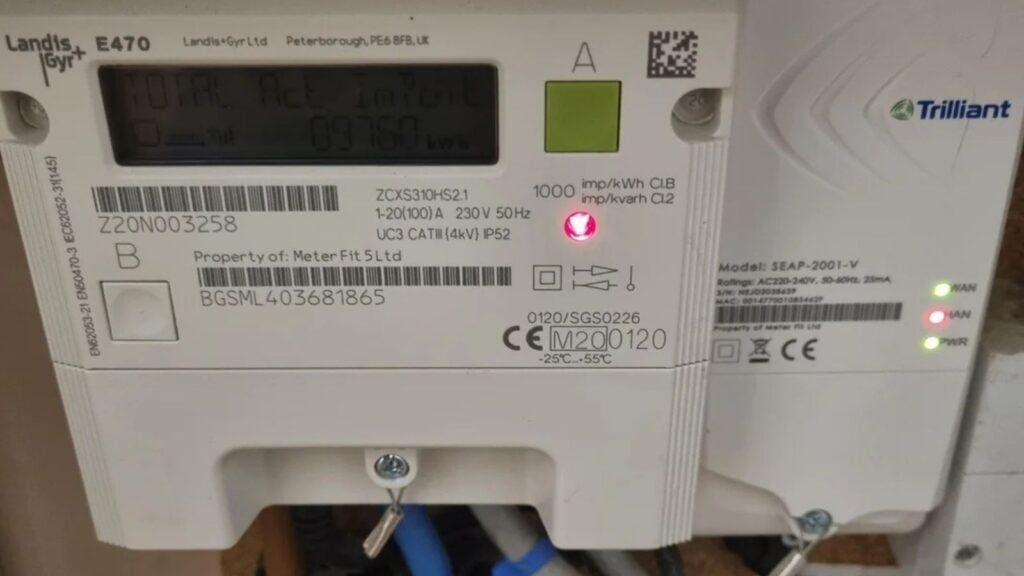
South African homeowners could be paying around R300 more for electricity each month without knowing it due to power outages.
This is because appliance resets, overnight energy spikes, and incorrectly configured timers quietly add unnecessary kilowatt-hours to household bills.
This is according to Matthew Koller, General Manager of Fungi Utilities, which analysed more than 400 million meter readings from almost 3,900 homes in residential estates across Johannesburg, Pretoria, Cape Town, and KwaZulu-Natal.
The August 2026 dataset found that unusual electricity consumption above a property’s normal overnight baseline can accumulate into a significant additional cost over a month.
Koller said an average overnight baseline of about 0.45 kWh per household provides a useful reference point for identifying abnormal consumption.
“For context, the baseline supports equipment that’s always active: Wi-Fi routers, security systems, electric fence energisers, and fridges and geysers that operate on timers or thermostats,” he said.
Fungi’s testing showed how appliance behaviour can change after a power interruption or manual switching.
A geyser that normally consumed around 354 watts increased to about 370 watts after the main breaker was switched off and power restored. A tumble dryer produced an even larger spike of 542 watts.
At the electricity rates used in the analysis, the geyser consumed roughly R1.47 per hour under normal operation and R1.53 per hour after the reset, while the tumble dryer consumed about R2.24 per hour.
“Resets are important indicators that larger loads are switching on, running for longer than expected or operating at the wrong time,” Koller said.
The problem can become more expensive when several appliances restart simultaneously after an outage.
Timers may return to factory settings or lose time, causing geysers, pumps, heating equipment and other automated appliances to operate simultaneously.
He added that homeowners should also be aware that using appliances overnight does not necessarily make electricity cheaper.
Massive extra cost when added to the latest tariffs hikes

In areas where inclining block tariffs apply, consuming more electricity during the month can push a household into more expensive usage blocks.
“Running a heavy appliance after midnight doesn’t automatically make it cheaper – it really just hides it from view. It’s the geyser cycling at 01:00 that tells you there’s a problem,” he said.
NERSA-approved increases for 2026/27 are 8.76% for Eskom direct customers and 9.01% for municipal customers, adding further pressure to household budgets.
Koller recommended starting an audit by checking geyser timers, thermostats, and heating elements, followed by the pool, borehole, and circulation pumps.
Homeowners should also compare their overnight baseline over several days and investigate any sustained increase.
A higher baseline could indicate that your refrigeration, security equipment, heated flooring, standby electronics, or other appliances are running at the same tiime.
For homeowners in estates, there can be another layer to the problem. Several properties running large appliances simultaneously can increase the estate’s overall demand.
“Residents don’t always realise that they can be billed through sub-meters while the estate’s main supply sits on a municipal bulk or commercial tariff,” Koller said.
“If a number of geysers, pumps or other large loads operate at the same time, the resulting coordinated spike can increase the measured demand during the billing interval and as a result, the central account.”
Koller also recommends checking refrigerator seals, ventilation, and temperature settings, and switching off non-essential electronics at the wall to see whether the overnight baseline drops.
“For a home that uses around 600 kWh a month, the latest tariff increases are already adding R180 to R220 before any resets are taken into consideration,” he said.
“Once you factor in the extra kilowatt hours that sneak in through misconfigured timers, baseline creep, and a few appliance resets, the combined impact can push the bill up by R500 a month.”

















 Loading ...