

New laws proposed for South Africa’s most iconic product gaining international demand


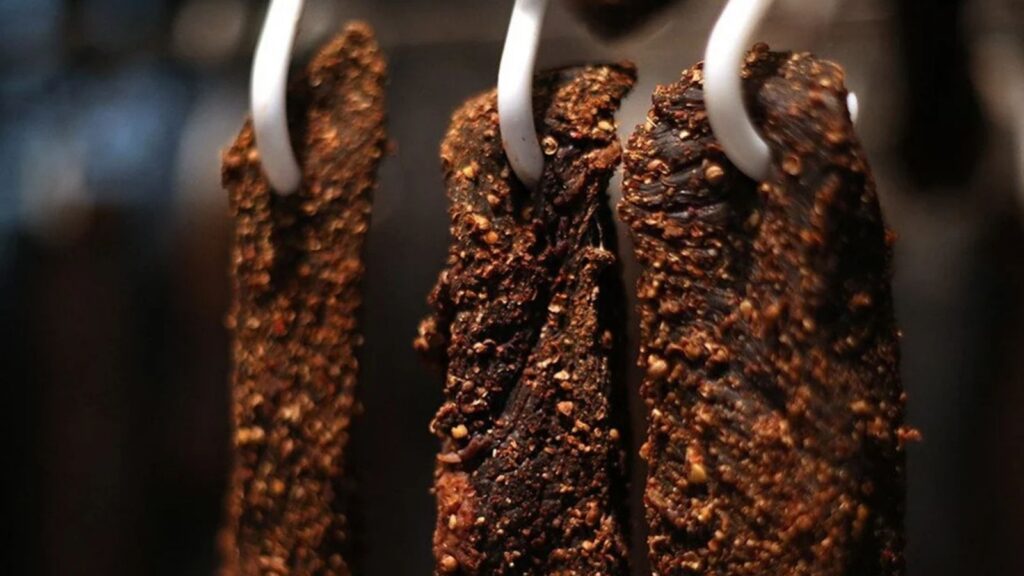
The growing popularity of biltong internationally could prompt South Africa and the wider Southern African region to consider protecting the product’s heritage.
This would include its production standards and identity through geographical or intellectual-property laws, similar to those imposed on other products like Rooibos or Champagne.
This is the feedback from Charl de Villiers, chair of the Game Meat Industry Association of South Africa (GAMESA).
In an interview with CapeTalk, he said biltong had already established itself as a global product, but that its South African roots should be protected as it expands into international markets.
“Yes, biltong definitely has grown globally. It’s obviously linked to South Africa. Everybody knows that biltong comes from South Africa,” said De Villiers.
He said the international growth of biltong was significant for the meat industry, although South Africa’s current foot-and-mouth outbreak has made it difficult to export biltong in the form familiar to South African consumers.
“That being said, it’s definitely worth looking at protecting it,” he said. De Villiers said biltong was distinct from other dried-meat products such as beef jerky because of how it is produced.
While both products involve drying meat, biltong traditionally uses an air-drying process and has a different flavour profile.
“Biltong and jerky are probably the products that are most popular worldwide. They differ in the way they are made,” he said.
“Biltong has got a specific process, where air drying takes place, much like jerky, but normally jerky has got a different spice.”
De Villiers added that jerky is normally sweeter, and in a lot of cases, it actually goes through a heating process or a cooking process.
He noted that biltong produced in countries with large South African communities, particularly the United Kingdom, is often made in a way that closely resembles South African biltong.
This raises the question of whether biltong could receive some form of geographical indication or intellectual-property protection, similar to products whose names are linked to a particular region and production tradition.
De Villiers pointed to Champagne as an example of how geographical protection can preserve the origin and reputation of a product.
Not a blanket restriction
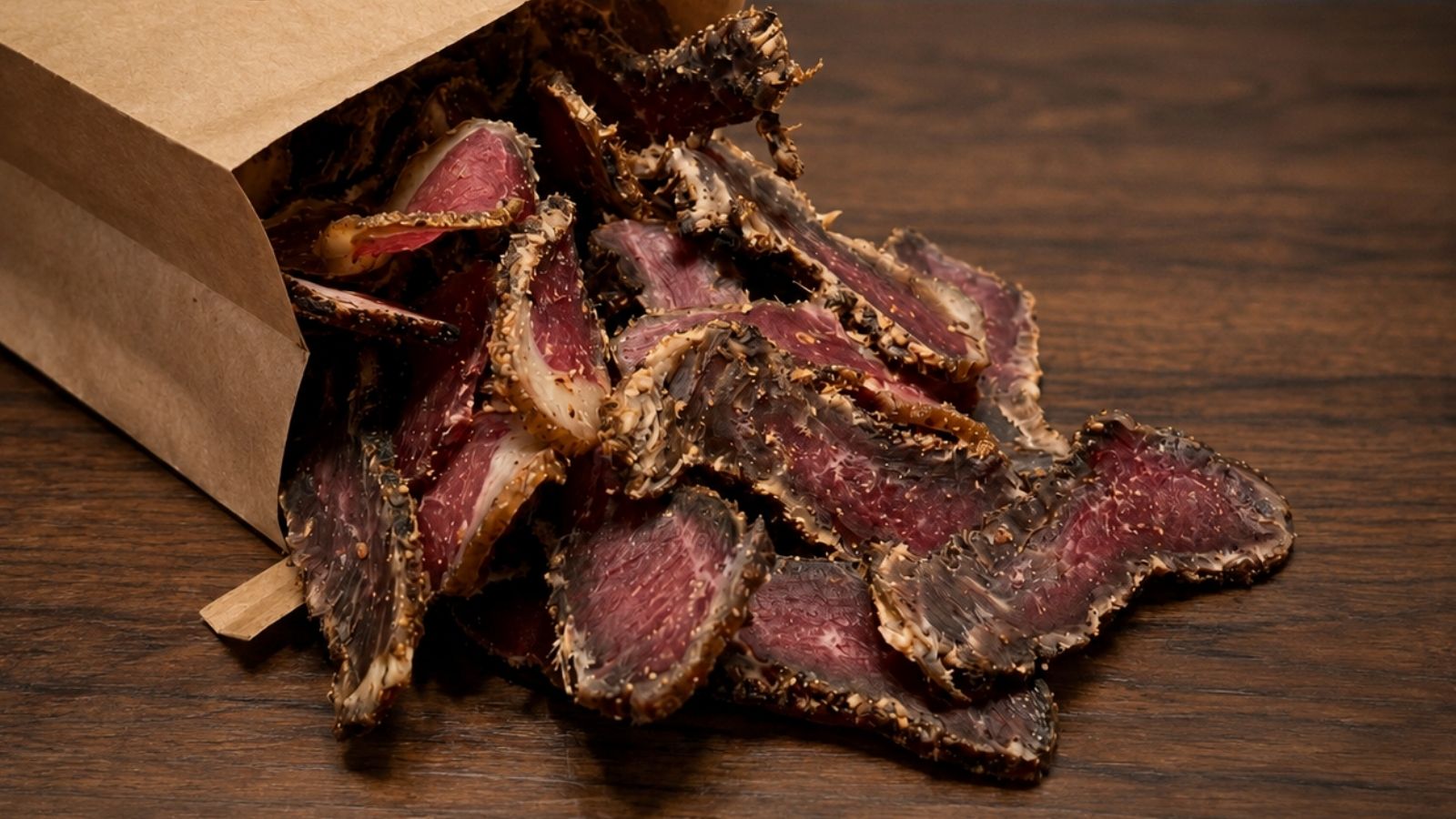
However, he said biltong presents a more complicated case because it is also produced outside South Africa, including in Namibia.
“If we look at the origin of biltong, we can’t necessarily say it’s just a South African product because it’s also produced in Namibia and in other places,” he said.
“If we’re going to look at protecting it, we have to link it to South Africa so that reputation goes with the biltong.”
De Villiers said he would support a Southern African geographical indication for biltong, but stressed that protection should focus on more than simply where the product is made.
“I would wholly endorse a Southern African geographic IP for biltong. But we have to protect the standards, more so than just the origin,” he said.
These standards could include how the product is made, its authenticity, quality, food safety and traceability.
He acknowledged that introducing formal standards would have cost and compliance implications for producers, particularly those wanting to export.
However, food safety and traceability requirements already apply when meat products are exported to different countries.
De Villiers also argued that droëwors, another product strongly associated with South African food heritage, could potentially receive similar consideration.
“I think droëwors is very synonymous with our heritage, and that’s what we need to protect, especially for future generations,” he said.
However, he said the objective should not be to prevent producers in other countries from making biltong, but to ensure that the South African identity and standards associated with the product are preserved.
“The objective should not be to put a fence around biltong, but to make sure its South African identity and the standards travel with it wherever it goes,” he said.
The question for the industry is therefore whether protection should require biltong made in South Africa to carry a specific geographical label, or whether the name “biltong” itself should be reserved for products meeting defined standards.
De Villiers said a blanket restriction could create problems for established producers outside South Africa, particularly in countries such as the UK.
“It will be difficult to say ‘only made in South Africa’ because then we’re taking out all of the other legitimate producers who already exist in the UK,” he said.
Instead, he suggested that the industry should first determine what makes biltong authentic and consider protecting those characteristics.


















 Loading ...