

Ramaphosa says Elon Musk owes South Africa


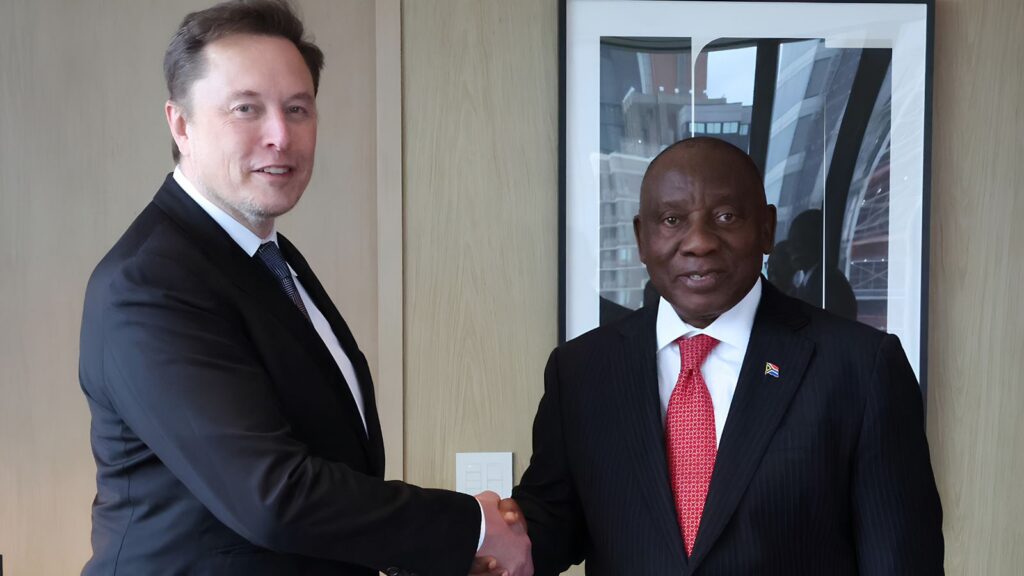
President Cyril Ramaphosa has challenged billionaire entrepreneur Elon Musk to remember his South African roots and contribute to the development of the country.
He argued that much of the knowledge and education that helped make him successful came from South Africa.
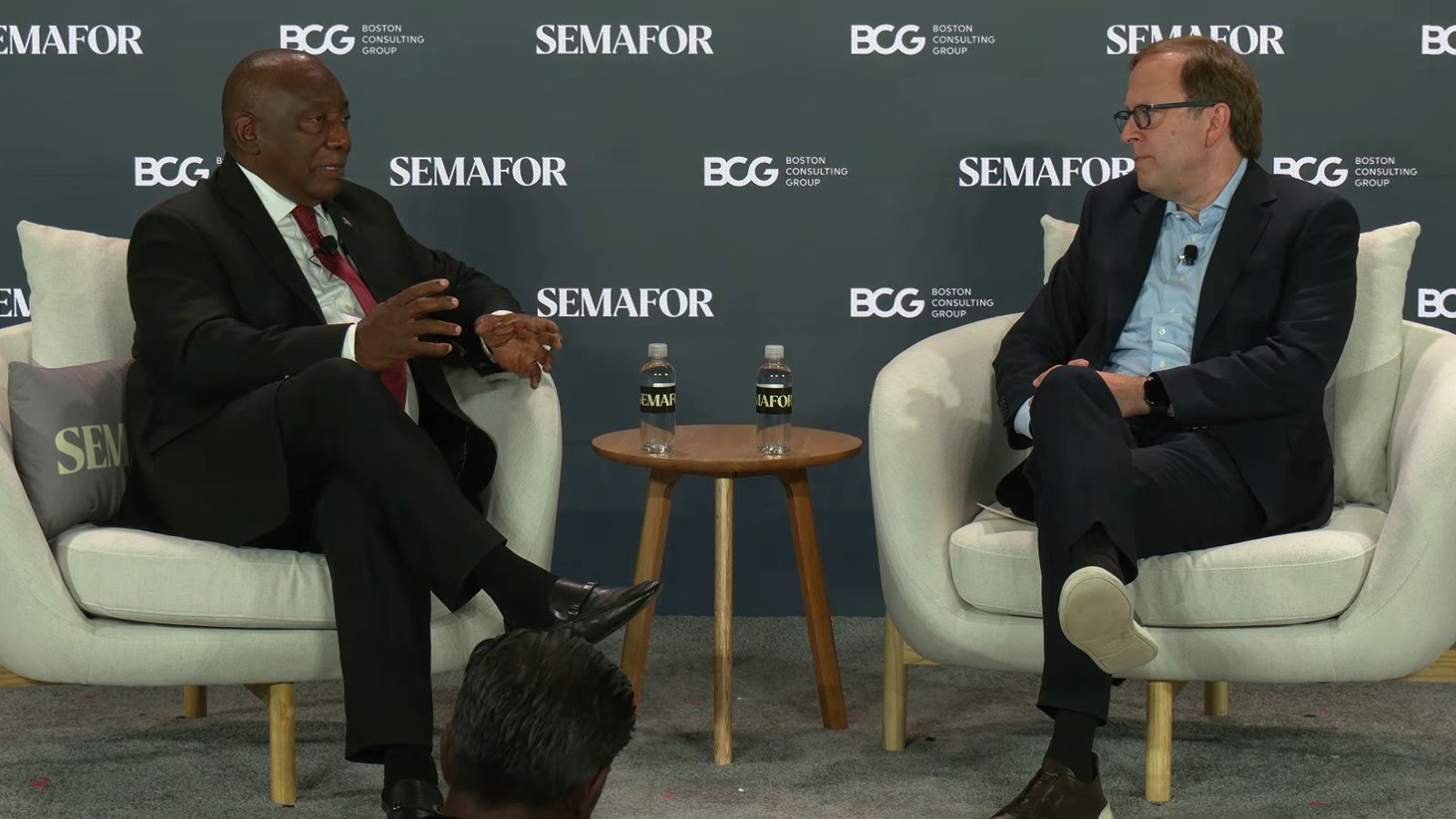
This was the feedback from Ramaphosa in an interview with Jonathan Karl, Chief Washington Correspondent at ABC News, while leading a week-long working visit to Silicon Valley, California.
Ramaphosa said Musk should recognise the role his upbringing and education in South Africa played in shaping his career.
The president said he had met Musk in the past and had been impressed by his abilities, describing himself as having been “awed by his brilliance”.
However, he said he would like to speak to the billionaire about his relationship with the country where he grew up.
“I would like to chat to him about him remembering his country because even as one is a citizen of a new country, you should still be loyal to your old country,” Ramaphosa said.
Musk, who was born and raised in South Africa before moving abroad, has become one of the world’s wealthiest and most influential businesspeople.
However, his public criticism of South Africa’s policies, particularly those relating to transformation and black economic empowerment, has strained his relationship with the government.
Karl raised Musk’s previous claim that Ramaphosa was building “apartheid 2.0” and asked what the president made of such comments given his own experience of imprisonment and persecution under apartheid.
Ramaphosa suggested that Musk did not fully understand the extent of the damage apartheid inflicted on black South Africans.
“I think Elon, I mean by nature, is very conservative, and he doesn’t fully understand the extent of what the apartheid policies did to black South Africans,” he said.
He added that Musk’s background as a white South African meant he might not have fully appreciated the inequalities created by the former government.
“And I think he, being a white South African, maybe has not really appreciated and come to understand the harm that apartheid policies did,” Ramaphosa said.
Musk must accept BEE rules if he wants to launch Starlink in South Africa
The president pointed out that apartheid deliberately advantaged white people through legislation, institutional practices and access to opportunities, including education.
He used the difference in government education spending under apartheid to illustrate the unequal system, comparing the resources allocated to his own education with those available to Musk.
“When the apartheid government spent R12 on his education, it spent R1 on my education,” Ramaphosa said.
He argued that understanding this historical inequality was necessary to appreciate why measures aimed at addressing its consequences remain important.
“If one does not understand that, one will never be able to understand precisely what needs to be done to remedy the harm that was done,” he said.
Asked what he would tell Musk if the billionaire were sitting in front of him, Ramaphosa returned to the role South Africa played in his development.
“I mean, I would say to Elon what you’ve become today is by dint of your own origins, where you were initially educated when you started dabbling with these game machines,” he said.
“It is because of the knowledge and the education that were made available to him.”
Ramaphosa said the skills and knowledge Musk developed during his formative years were part of an endowment shaped in South Africa, and that the billionaire should consider using his success to support the country.
“And it is this endowment that he now has that was formed in South Africa, and he should be one of those who would say I would like to contribute to the development of South Africa and give back to this country that made me who I am today,” he said.
The comments come amid ongoing disagreements between Musk and the South African government over the operating requirements for his satellite internet company, Starlink.
Asked whether Starlink would eventually launch in South Africa, Ramaphosa confirmed that discussions had taken place but said they centred on the country’s policies governing companies seeking to operate locally.
He said Musk had struggled to understand the government’s position, but maintained that foreign companies must comply with the rules of the countries in which they want to do business.
“All countries have policies in terms of how they admit companies to operate,” Ramaphosa said.
“The United States has the same. It has its own policies, and when you want to come and operate here, you’ve got to subscribe to the policies of the country.”











 Loading ...