

What the UK’s political chaos means for South Africa


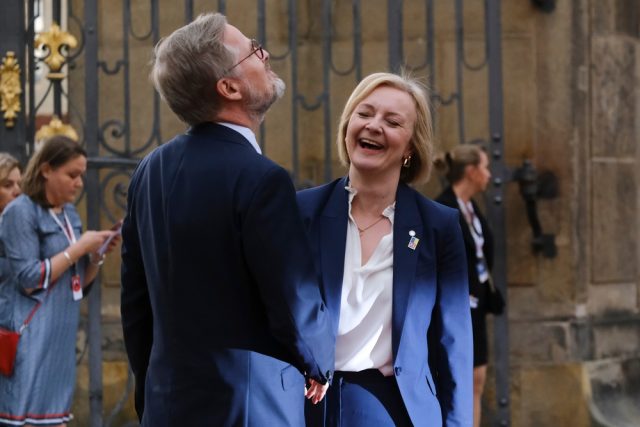
The UK’s Conservative Party leader Liz Truss resigned as Prime Minister after a chaotic 44 days in office that brought financial instability to the nation, causing serious knock-on effects to markets.
Speaking to Newzroom Afrika, Bheki Mngomezulu, a political analyst from the University of Western Cape, said that due to bilateral and economic ties with the UK, South Africa should be concerned about the turbulence her exit has caused. However, the situation remains complex.
Whenever a country has bilateral ties with another, if there is a disturbance in politics or finances, it can affect the other either directly or indirectly, he said, adding that this could be to the benefit of South Africa if the pound was to take a beating, making the rand slightly stronger.
However, this has not been the case, as markets have responded favourably to the Truss exit.
Azad Zangana, a senior economist and strategist at Schroders added that Truss’ resignation was largely expected by investors globally, who have responded positively to the news.
From a recent low, the pound has risen against both the US dollar and the euro, while benchmark 10 and 30-year gilts (government liability in sterling) have seen prices rise, outperforming other government bonds on the day.
“However, significant challenges remain for the UK, including how the Bank of England responds to this period of chaos while trying to lower inflation, which last month hit a 40-year high.”
Aside from market-related waves, Mngomezulu said that one of the biggest takeaways from the situation in the UK is the need to steer away from factionalism in domestic politics.
He said that unstable, factionalist politics pushes away foreign direct investment and can drive a currency down – as seen in the UK. He added that it is disingenuous for a political leader who comes into power to blame the previous leadership for mistakes made and set the bar too high.
He said that this is what has happened in South Africa, with past presidents deflecting blame and being too ambitious in their new administration. This was the case with Truss.
The South African government should learn from the UK, and use the events in the UK as a lesson for what could happen if changes aren’t made, he said.
What happened
Philip Shaw, an economist from Investec, said that Truss’s step down followed political turmoil over the past week – from the sacking of her chancellor and key supporter of drastic company tax cuts, Kwasi Kwarteng, to causing confusion among MPs in the UK House of Commons over a vote on fracking.
Shaw said that markets have calmed down, in contrast to the political situation. According to Shaw, the new chancellor, Jeremy Hunt, acted quickly to reassure markets, making it clear that he would jettison almost all of Kwarteng’s unfunded tax cuts, saving £32 billion per annum.
He also announced that Truss’ plan to freeze the domestic energy price cap at £2,500 would be curtailed from two years to six months, with a (yet to be decided) more targeted scheme to replace it in April next year. Furthermore, Hunt stated that additional painful decisions need to be made both in terms of taxation and public spending.
“Interest rate markets have rallied to price in a lower peak in the bank rate, from 6.25% in late September to a touch above 5.00% now, but after the events of the past month and a half, the reputation of the UK remains on the line,” Shaw said.
In mid-day trade, the rand was running against major currencies at the following levels:
- ZAR/USD: R18.41
- ZAR/EUR: R17.94
- ZAR/GBP: R20.47
Read: WhatsApp scam – South Africans lose millions in crypto pyramid scheme

















 Loading ...