

Billionaire Johann Rupert’s golden child is beating Walmart in the United States



Johann Rupert’s Richemont has overtaken Walmart to rank second among North America’s largest jewellery retailers.
According to National Jeweller’s latest State of the Majors report, Richemont generated $3.62 billion (R59.18 billion) in watch and jewellery sales across North America in 2025.
These sales were generated from just 105 boutiques operated by some of the world’s most recognisable luxury brands, including Cartier, Van Cleef & Arpels, IWC Schaffhausen and Vacheron Constantin.
The rankings show how dramatically the luxury jewellery market has shifted towards high-end consumers.
Richemont’s boutiques generated an estimated $34.5 million (R563.2 million) in annual sales per location, far ahead of competitors operating thousands of stores.
Industry leader Signet Jewelers retained the top position with $6.36 billion (R103.83 billion) in sales.
However, Signet required 2,329 stores across North America to achieve that figure, averaging roughly $2.7 million (R44 million) per outlet.
Walmart, which sells lower-priced jewellery alongside groceries and household products, dropped from second place to fourth in the rankings.
The fall reflects how wealthy consumers in the United States have continued to spend on luxury goods despite inflationary pressures, geopolitical uncertainty, and slowing economic growth in several major markets.
Other retailers also saw shifts in the rankings. Costco climbed from sixth to fifth as demand for its gold and diamond jewellery expanded rapidly.
Pandora rose from eighth to seventh, while Watches of Switzerland moved into the top 10. Luxury conglomerate LVMH slipped from fifth to sixth, and Macy’s dropped from seventh to eighth as it continued reducing its physical store footprint.
Swiss watch retailer Bucherer fell out of the top 10 entirely following ongoing disruption after its acquisition by Rolex in 2023.
The ranking highlighted the success of Richemont’s strategy of selling directly to customers rather than relying heavily on third-party retailers.
Over the past five years, the company has steadily increased control over how its products are displayed, marketed and sold.
Richemont is shooting the lights out
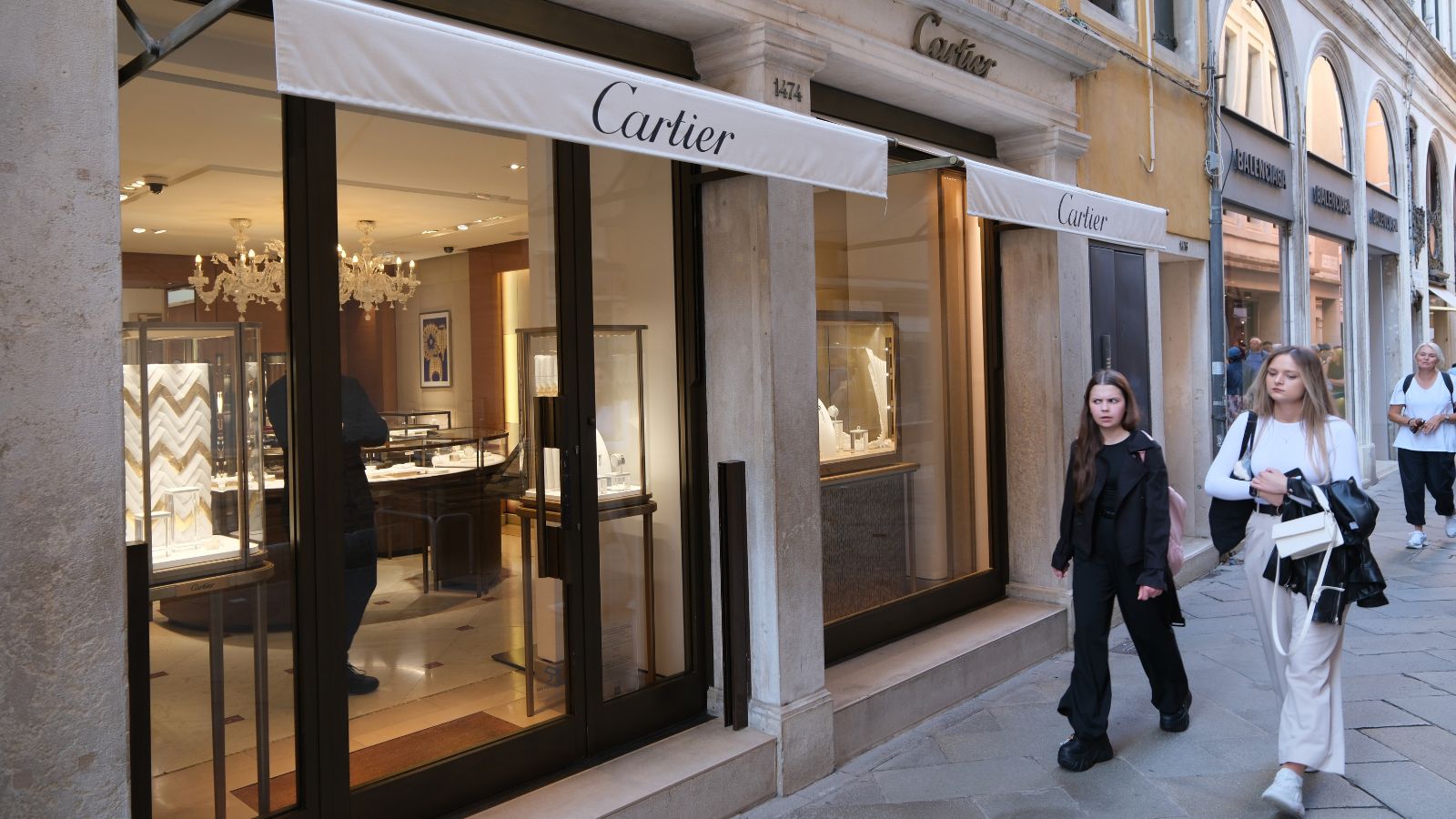
This direct-to-consumer approach has become central to Richemont’s growth. The company has effectively applied the business model used by Cartier and Van Cleef & Arpels across much of its wider luxury portfolio.
These jewellery maisons are known for tightly controlling every aspect of the customer experience, from boutique design to product presentation, creating an aura of exclusivity around their brands.
The strategy has delivered strong financial results. Richemont has tripled its earnings over the past five years, while revenue has increased every year since 2010.
Its latest annual report showed that direct-to-consumer sales accounted for 77% of total group revenue of more than €22.4 billion (R428 billion). Within its jewellery brands, direct sales made up an even higher 84%.
The model has also helped Richemont maintain higher profit margins compared to many of its competitors.
Luxury jewellery companies that rely heavily on brand desirability rather than the underlying value of precious stones and metals are generally able to command significantly higher prices.
Even as much of the global luxury sector struggles with weaker demand from China and broader economic uncertainty, Richemont has continued outperforming expectations.
The group reported an 11% increase in sales for its 2026 financial year on a constant currency basis, ahead of analyst forecasts of 9.7%.
Rupert’s rise alongside Richemont’s growth has made him one of Africa’s wealthiest and most influential businessmen.
According to Forbes estimates, he has a net worth of roughly $15.7 billion (R256.29 billion), making him the second-richest person on the continent.
He is the eldest son of the late Anton Rupert, whose tobacco business eventually evolved into the Rembrandt Group.
Johann Rupert later spun off the company’s international assets to create Richemont, which grew into one of the world’s largest luxury goods groups with brands such as Cartier and Montblanc.
Today, Rupert serves as chairman of Remgro, Richemont and Reinet Investments, with the Rupert family retaining controlling stakes in all three businesses.
Richemont is the largest of the three companies, with a market capitalisation of R1.91 trillion. Reinet is second with a market cap of €5.88 billion (R111.72 billion), while Remgro is slightly smaller with a R101.46 billion market cap.


















 Loading ...