

One of South Africa’s biggest cities spending R93 million to turn waste into electricity


The City of Cape Town has allocated R93 million to a gas-to-power plant at the Coastal Park Landfill near Muizenberg, which converts waste gas into electricity.
The plant, which is powered by methane gas emissions from the decomposing refuse at the site, is part of a project that has generated enough energy to supply over 4,300 households.
Aeronautics research and space exploration group, NASA, reported that the concentration of methane in the atmosphere, occurring from both natural sources and human activities, has more than doubled since 1826.
Scientists have estimated that this increase in methane emissions has caused a 20-30% increase in global warming.
Methane is a greenhouse gas and is ranked as the second-largest contributor to warming the Earth (global warming), behind carbon dioxide.
Decomposing waste at landfill sites, along with agriculture and fossil fuels, is reportedly the largest contributor to methane emissions.
To reduce methane emissions from landfills, the City of Cape Town has implemented initiatives like the gas-to-power project.
The aim of these landfill projects, such as the gas-to-power plant at Coastal Park, is to prevent solid waste from entering the environment and spreading disease, and to keep the air clean for communities.
“At Coastal Park Landfill, the City’s waste-to-energy project will generate 1.3 million kWh a month. Of this, 1.2 million kWh will be fed into the Cape Town grid,” said Mayoral Committee Member for Urban Waste Management Grant Twigg.
“This is enough power to supply more than 4 000 households. The remaining power will be used to run operations at the landfill facility, generating further savings and efficiency for ratepayers.”
Waste to power
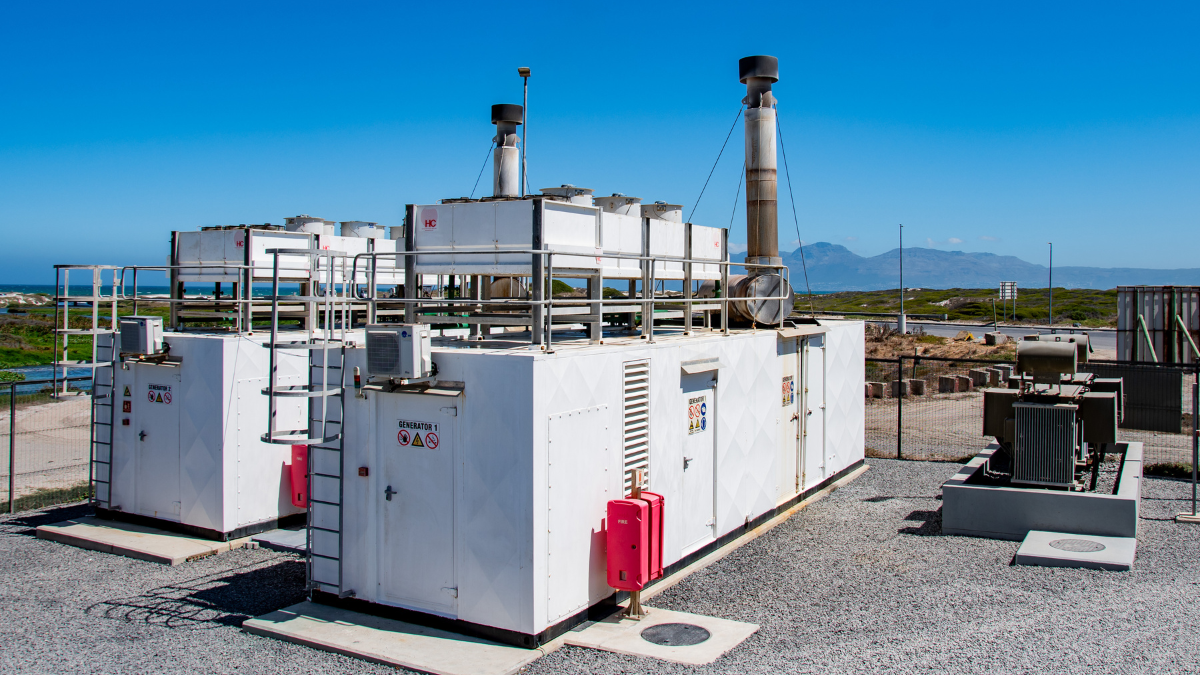
Since November, the project at the Coastal Park Landfill has been converting landfill gas into electricity by digging perforated pipes or wells to extract methane gas from the site.
GroundUp reported 49 vertical gas wells, each one about 30 metres deep, embedded in the waste, along with approximately the same number of horizontal trenches.
These wells and trenches collect methane, which is then directed to the main collector pipe, leading to the landfill gas extraction and flaring plant. On the way, this gas is initially treated to extract condensate.
It then passes through a heat exchanger, where chilled water from a 110 kW chiller at 7°C cools the gas and removes additional condensate.
The plant also eliminates impurities that could harm the generators. A part of the electricity generated is fed into the grid, while the rest powers landfill operations.
There are two waste-to-energy generators that use recovered methane as fuel for their engines.
Twigg explained that this project has taken over 10 years to develop, mainly due to regulatory approvals, infrastructure requirements, and coordination with Eskom.
R36-million in carbon credits has been generated from reduced landfill gas emissions, prompting City of Cape Town officials to believe these projects will eventually cover their costs.
The project will be scaled up with an additional R82-million investment from the City of Cape Town, with plans to expand similar energy-producing projects to Bellville South and Vissershok.
“With the current budget that we have, we think it’s going to be sufficient to make sure that we operate Coastal Park and also for the investment that we’re making at Vissershok and at Bellville.”
“So definitely, we’re trying our utmost not to burden the residents of Cape Town, but to make them benefit from this,” said Twigg.
Twigg said that residents will not encounter increased tariffs, as the work is financed from current budgets and is a key component of Cape Town’s long-term infrastructure strategy.













 Loading ...