

Minimum wage warning for South Africa


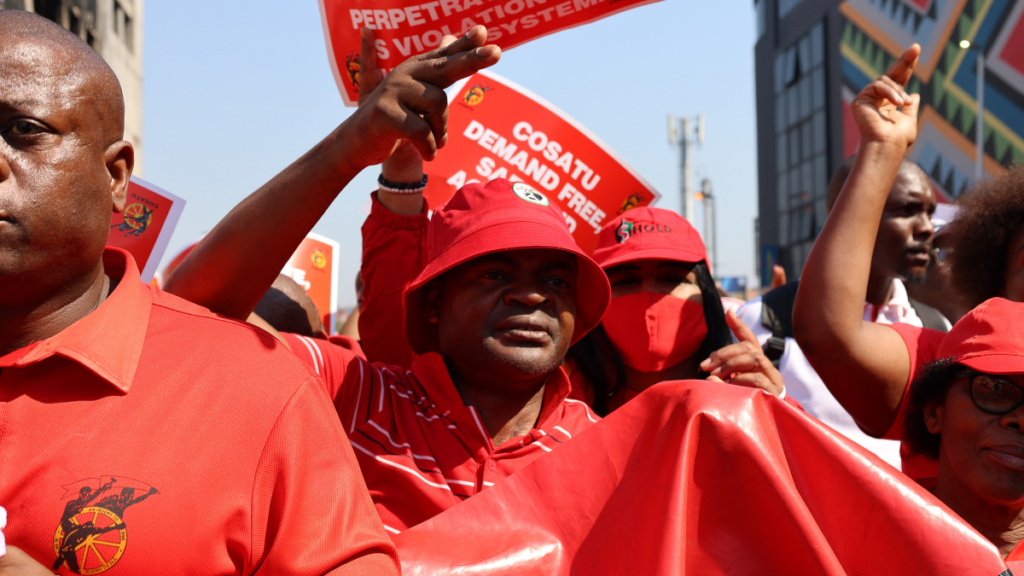
Union federation Cosatu has proposed a national minimum wage increase of 8% for 2025, which the Democratic Alliance (DA) has warned risks increasing employment in South Africa.
Cosatu proposed increasing the national minimum wage in 2025 by the average inflation rate plus 3% (est. 7.5%- 8.0%).
This suggestion has been met with strong opposition, especially from the DA, which said a national minimum wage hike will deepen South Africa’s unemployment crisis.
DA spokesperson on employment and labour, Michael Bagraim, and the General Secretary of Cosatu, Solly Phetoe, spoke to SABC about their opposing views.
Bagraim explained that since the introduction of the national minimum wage in 2019, the situation has become far worse for low-wage workers and unemployed people in South Africa.
“We have 41% unemployment in South Africa. We have over 11 million people who are in the job queues, people who want to work but can’t find work. Every single family in South Africa is suffering.”
Since its introduction, the minimum wage has not actually trickled down to the lowest-paid people in the country, he said. “What it has done is it kept more and more people out of the workplace.”
“We have a country that is on its hands and knees. The country itself is reeling from unemployment, it’s an unbelievable situation. How the unions have sustained this is impossible.”
He explained that instead of raising minimum wages, the DA has other suggestions that would improve the situation workers are in.
This includes forming a work seekers alliance that would help job seekers with CVs, buying clothing to wear to interviews, and getting educated.
Furthermore, South Africa also has comprehensive legislation, such as the Basic Conditions of Employment Act (BCEA) and the Labour Relations Act (LRA), as well as bargaining councils that can help protect workers’ rights.
“We don’t in any way begrudge someone from earning more, but what we do begrudge the country from doing is actually locking people out of the workplace.”

He explained that small businesses, in particular, which are the “engine room of job creation” are negatively impacted by the minimum wage.
As a result, they will choose to hire workers below the minimum wage and risk the consequences.
Bagraim explained that, considering that South Africa only has 2,000 labour inspectors, there isn’t much of a risk.
Alternatively, small businesses may choose to outsource their work to people who aren’t paying wages at all, either through automation or by importing cheaper goods from places like China.
“Many industries in South Africa that were the backbone of our job creation are shrinking.”
“We’ve seen that with the clothing industry, for instance, in the Western Cape.”
“The reality is the Democratic Alliance is now speaking up on behalf of those South Africans that can’t find a job, that won’t find a job.”
He emphasised that if becomes it too difficult to employ people, many job seekers will never find employment, especially since there will always be people who are willing to work for less than minimum wage.
Even the government itself is unable to pay people the national minimum wage, with some employees of the Expanded Public Works Programme (EPWP) earning less than half.
The initiative, which was started nearly two decades ago by the South African government, is aimed at reducing unemployment and poverty by creating temporary work opportunities.
It provides short-term jobs in various sectors, including infrastructure, social services, and environmental projects.
Workers employed through the programme are required to earn a minimum of R13.97 per hour, much less than the R R27,58 national minimum wage.
COSATU pushes back

However, despite the pushback, Phetoe made it clear that Cosatu will not change its stance on the national minimum wage.
He explained that the call for a wage increase stems from the worsening economic crisis, rising poverty, inequality, and the high cost of living in South Africa.
Phetoe criticised the DA for blaming job losses on the 2019 introduction of the minimum wage, arguing that the cuts were deliberately made by employers aligned with the party.
He noted that vulnerable workers in sectors like security and farming have not experienced large-scale retrenchments, and other countries with similar policies continue to support millions of workers.
Phetoe emphasised that the national minimum wage is not sufficient to meet basic living expenses and reiterated that COSATU plans to launch a campaign for a living wage soon, stating, “The national minimum wage is not a living wage, it’s nothing.”
He stressed that the national minimum wage has had a significant positive impact on workers.
He highlighted the significant impact the wage has already had. For example, domestic and farm workers, who were earning less than R1000 a month, are now able to afford necessities like school fees, food, and transport.
However, he pointed out that some employers still deduct costs for accommodation, transport, and food, leaving vulnerable workers struggling.
“How do you think the workers, the poor working class or the vulnerable workers, are going to live?”













 Loading ...