

Another win for the South African economy


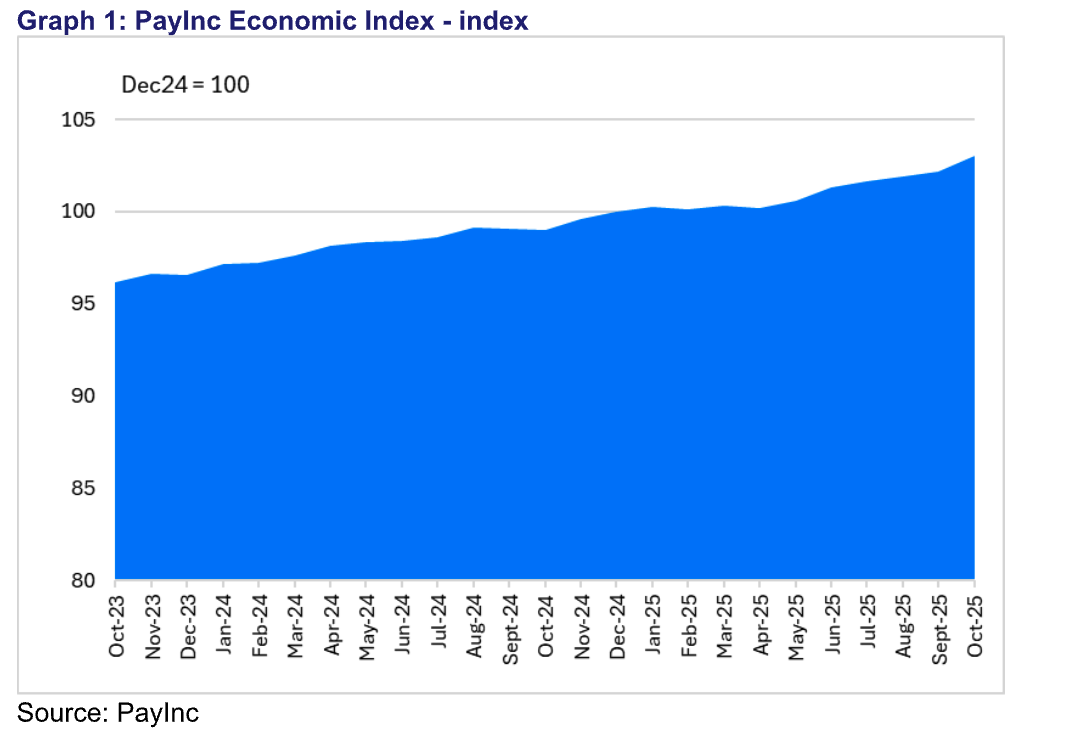
The PayInc Economic Index continued its upward trend in October, adding to several other improved economic indicators in the country, even if more is needed for sustained economic growth.
“The PayInc Economic Index reached 103.0 in October 2025, a 0.8% improvement on September’s level – and a 4% hike on year ago levels,” says Shergeran Naidoo from PayInc.
A notable uptick in economic activity in October indicates that the economy’s improvement has spilled over into Q4.
The indicator comes a day after the Quarterly Labour Force Survey showed an improvement in unemployment of 1.3 percentage points to 31.9%. While still high, its in the right direction.
“Despite numerous challenges and ongoing uncertainties, the economy is still showing remarkable resilience, with a few sectors outperforming,” said economist Elize Kruger.
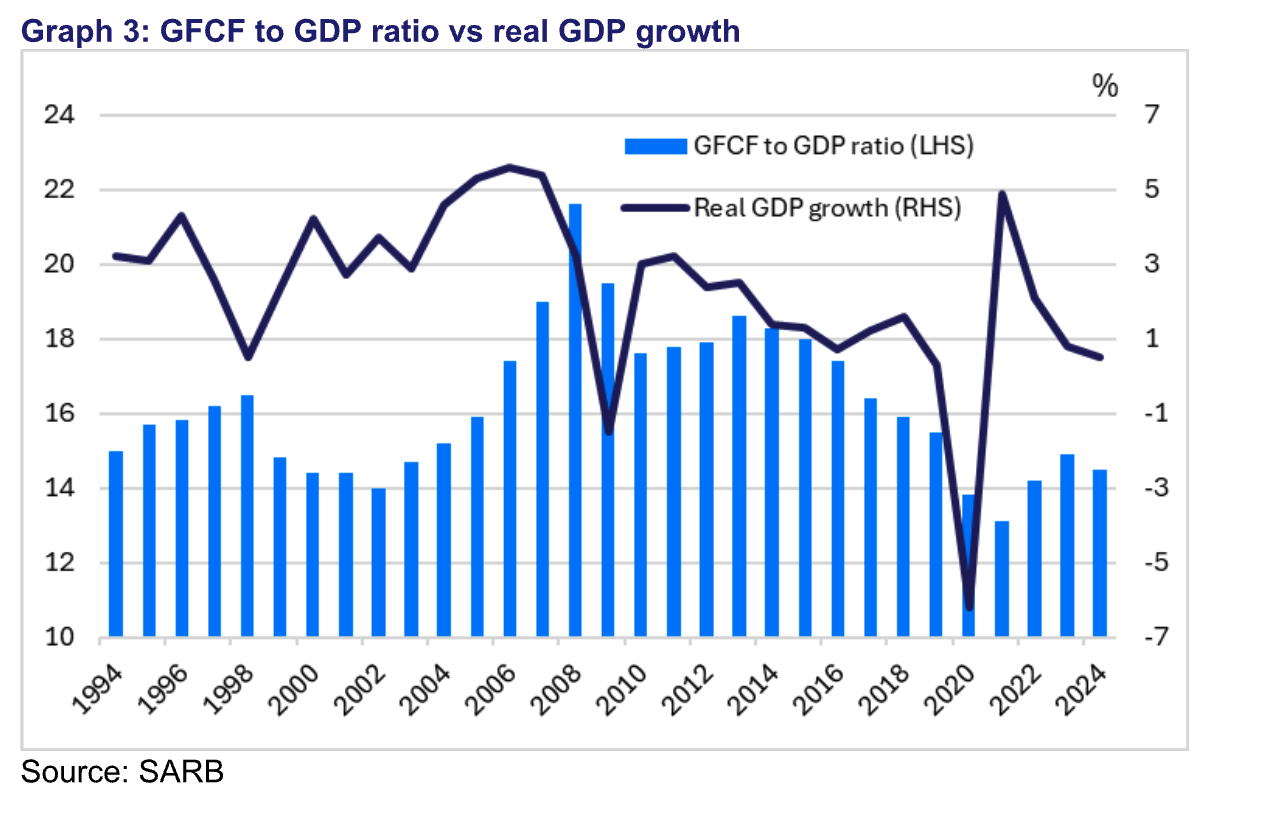
However, economic growth still remains constrained amid weak investment growth in the nation.
Growth is expected to remain at around 1%, with the business environment remaining constrained and the economy failing to create enough jobs to effectively tackle unemployment.
Kruger said that significantly higher levels of investment spending is needed to increase the economy’s growth potential in a sustainable manner.
That said, there are several development that are looking to drive growth, most notability in structural reforms in many sectors that should increase investment spending/
This includes the updated Integrated Resource Plan, which sees the private sector play a much larger role in electricity generation. R2.2 trillion in investment will be needed by 2042.
Transnet is also set to embark on a massive capital expenditure programme worth about R127 billion to improve the performance of rail networks.
Although interventions are also planned for other sectors such as water, South Africa needs to focus on implementation, which remains its Achilles Heel.
The downward trend evident in South Africa’s Gross Fixed Capital Formation to GDP ratio has been a key factor in the lacklustre growth in the economy over the the last decade, Kruger said.
Indicators remain mixed
Other economic indicators for October were mixed, but still point to an improvement in 2025.
Naamsa’s data revealed that vehicle sales continued to be robust in October 2025, with total vehicle sales up 16.0% y/y in October 2025. Year-to-date sales are up 15.7%.
The S&P Global South Africa Purchasing Managers’ Index (PMI), which measures conditions in the private sector, showed a contraction to negative territory in October.
However, this was the first decline in sector months following renewed downturns in output and sales.
The S&P noted that the slowdown occurred despite a historic improvement in supplier delivery times and one of the softest levels of cost pressures since mid-2020.
The Absa PMI also slipped back into negative territory in October, with the manufacturing sector’s performance remaining under pressure.
Demand remains sluggish on the export side, complicated by the rise in US trade tariffs and logistical challenges.
“While the underlying resilience evident in the economy remains encouraging, the economic growth rate is still stuck around 1%, keeping the economy firmly in a narrative of muddling along,” said Kruger.
“As long as economic growth remains below population growth, South Africans are worse off year by year.”














 Loading ...