

SARS gives R239 billion ‘gift’ to taxpayers



The South African Revenue Service (SARS) says it has processed over R239 billion in refunds to taxpayers this year, and is ready to meet the National Treasury’s new tax collection target.
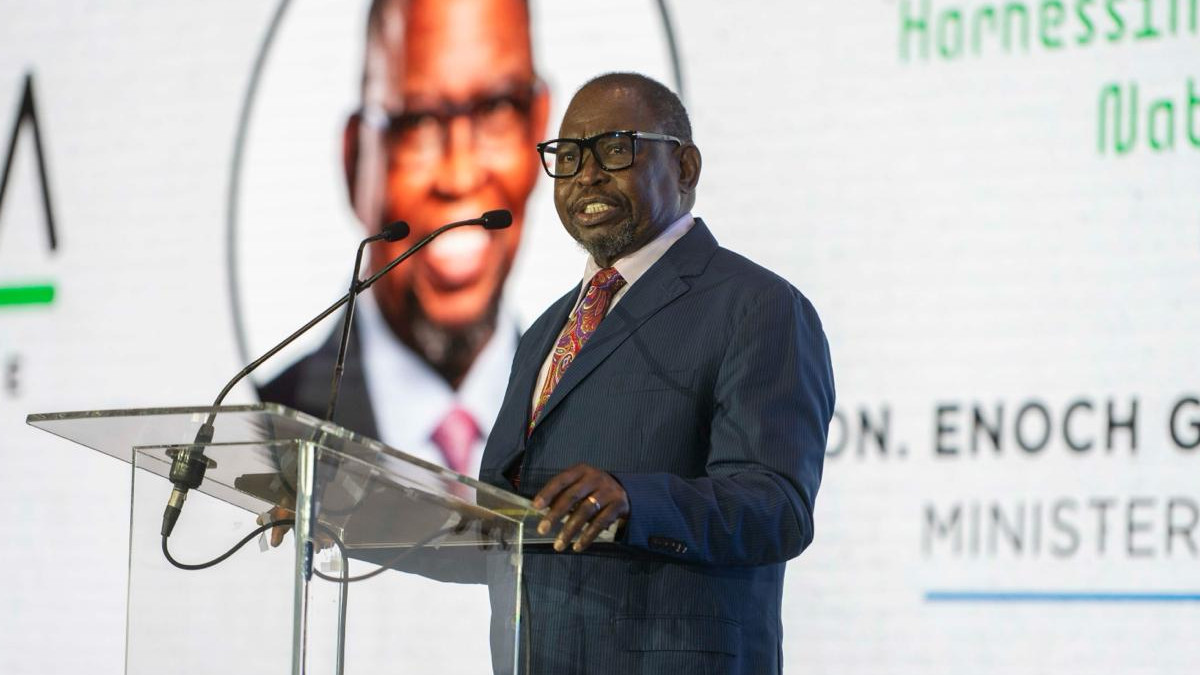
Finance Minister Enoch Godongwana revealed this week that tax collections in the country have overshot targets set in the February Budget, prompting the department to raise the bar.
The new revised estimate for tax collections, as contained in the Medium-Term Budget Policy Statement on Wednesday (21 October), is a record R2.144 trillion.
This is an increase of R17.1 billion compared to the R2.127 trillion February 2026 Budget estimate.
Commenting on the new target, SARS said it was ready to chase it.
The national tax service noted that the upward adjustment to the target comes despite deteriorating economic conditions, with the Treasury cutting the GDP growth forecast from 1.6% to 1.2% in 2026.
“Despite improved electricity reliability, which supports economic activity, structural constraints such as logistics and infrastructure challenges continue to hinder South Africa’s growth prospects,” SARS said.
Nevertheless, the year-to-date tax collections show that the country’s revenue system is resilient.
To this point, SARS Commissioner Johnstone Makhubu noted that, as of 30 September 2026 (H1 2026), the taxman collected R992.2 billion in net revenue.
This includes gross collections of R1.231 trillion and refund payments totalling R239.1 billion.
Net revenue was R15.5 billion, or 1.6%, above the February 2026 Budget estimate, and R67.4 billion, or 7.3%, higher than the corresponding period last year, highlighting the outperformance.
While SARS has delivered a significant amount back to taxpayers in the form of refunds, it has also ramped up its pursuit of non-compliant taxpayers.
In the first six months of the financial year, compliance interventions secured a preliminary R137.7 billion, the commissioner said.
This comprised R76.3 billion in direct cash collections and a further R61.3 billion in prevented revenue leakage.
“Every rand recovered through compliance interventions protects honest taxpayers and strengthens the fiscal framework,” Makhubu said.
“Compliance is one of the most effective tools available to safeguard the integrity of the tax and customs ecosystem.”
The strong performance by SARS, and the higher revenue target set by Treasury, bodes well for taxes in 2027. There was no indication from Treasury that new taxes will be needed to plug a hole.
Collection isn’t enough
Makhubu noted that while the revenue performance for the first six months provides a solid foundation, achieving the revised revenue estimate will require more.
Not only does SARS need to sustain its collection and compliance efforts during the remainder of the financial year, but the government and taxpayers also need to do their part.
“As reflected in the Minister’s speech, sustainable revenue growth ultimately depends on economic expansion, investment, job creation and broad-based compliance,” Makhubu said.
The commissioner also flagged external pressures.
Economic conditions, particularly domestic growth and developments in the global economy could impact the revenue outcome, he said.
Notably, the country faces a challenging economic environment, characterised by geopolitical tensions, supply chain disruption and increase in energy prices.
Despite this, SARS said revenue in the second half of the 2026/27 financial year is expected to increase by R66.3 billion (6.1%), driven mainly by Pay-As-You-Earn, Corporate Income Tax (CIT) and Domestic VAT.
The MTBPS estimate for the second half 2026/27 financial year was revised upward to R1.15 trillion, which is R1.6 billion higher (0.1%), largely due to a R11.7 billion increase in CIT (including Interest).
SARS said the revision reflects an improvement in the profitability of companies, which is measured through the Gross Operating Surplus (GOS), which is projected to grow from 3.5% to 5.4%.
This GOS growth is premised on the results of the first two quarters, which is 10.7% and 7.0%, respectively.
Domestic VAT was increased by R2.5 billion, in line with the upward revision in household expenditure growth from 5.1% to 6.2%.
In addition, the import growth outlook improved from 6.5% to 11.0%, resulting in a further increase of R2.2 billion in Customs duties.
The revenue outlook excludes the fuel levy relief announced by the Minister at the MTBPS.
“The revenue estimate as announced presents a challenge to SARS,” Makhubu said.
“However, SARS accepts the challenge and remains committed to its mandate of collecting all revenues that are due, enhancing compliance and facilitating legitimate trade.”
















 Loading ...