

Nearly R400 million spent and not a single house to show for it


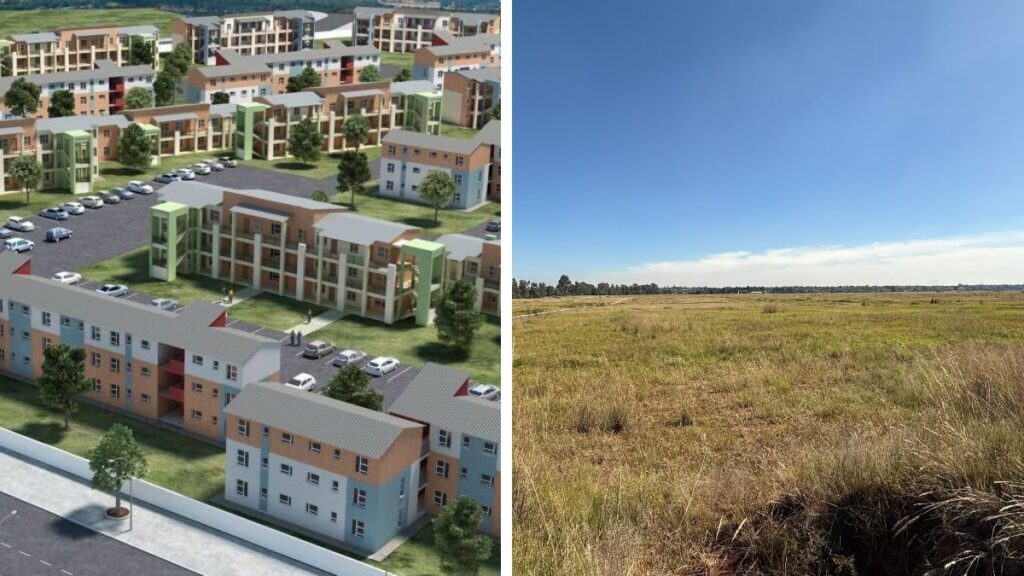
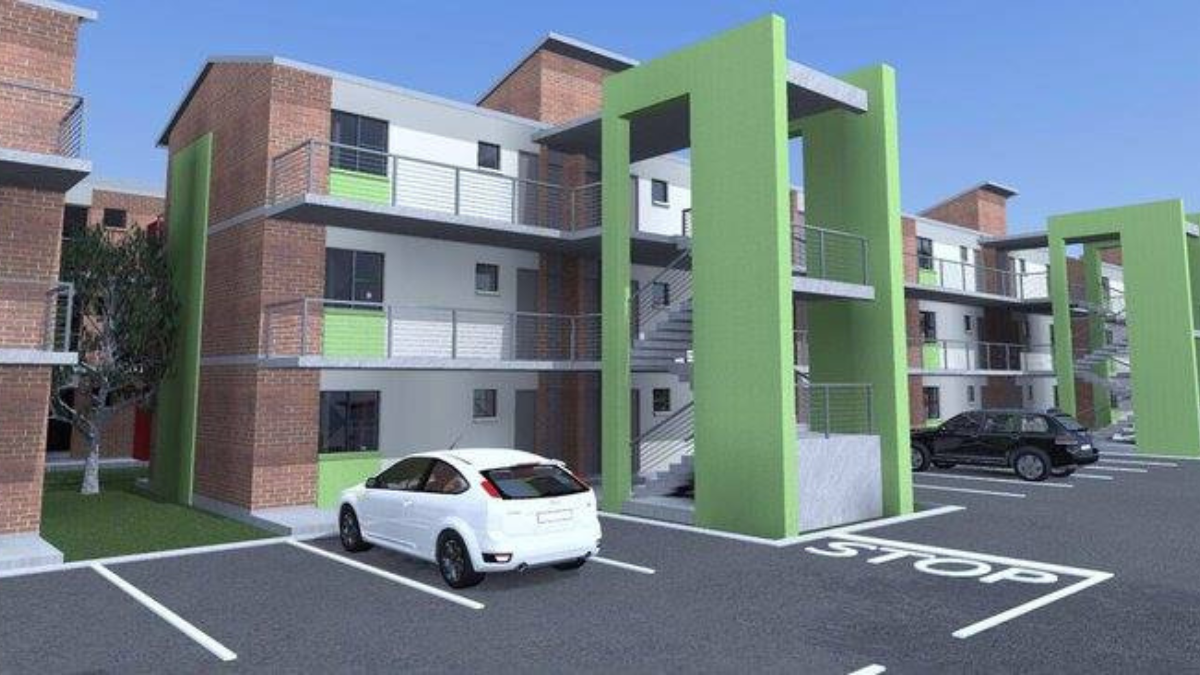
Just under 10 years ago, thousands living in informal settlements in Springs, Gauteng, were promised a place to call a permanent home in a multi-billion rand ‘Daggafontein Mega City’ by March 2023.
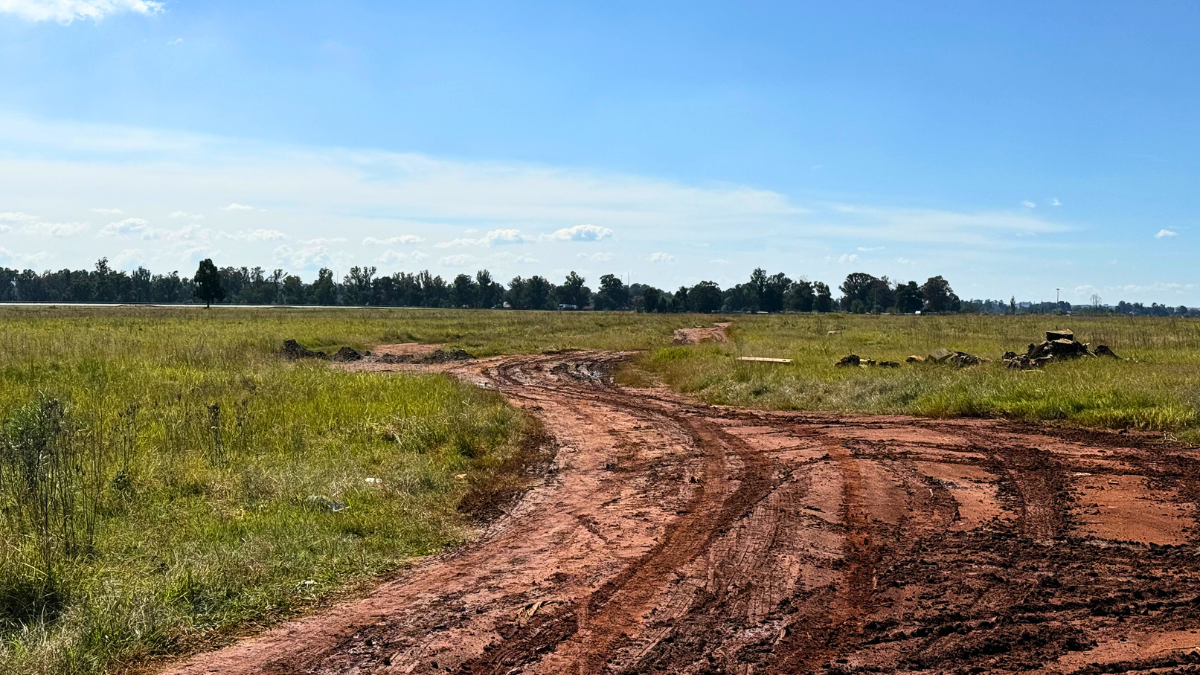
Fast-forward to 2025: while some roads and internal services are reportedly completed, hundreds of millions have been spent, yet not a brick has been laid.
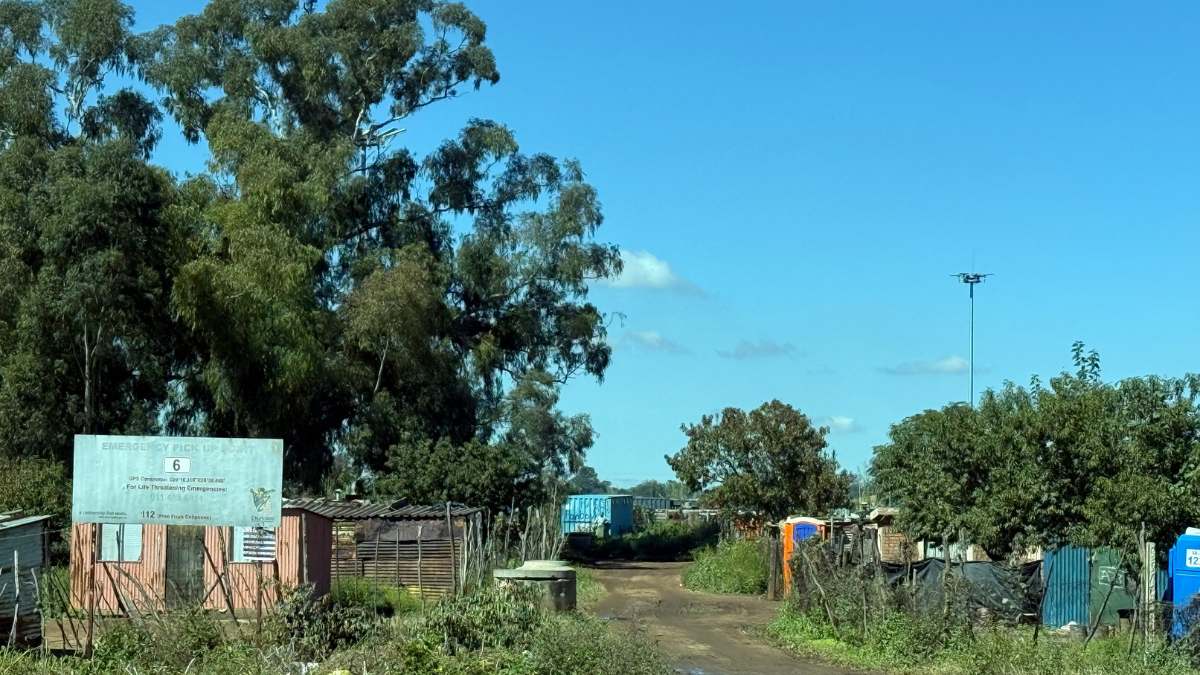
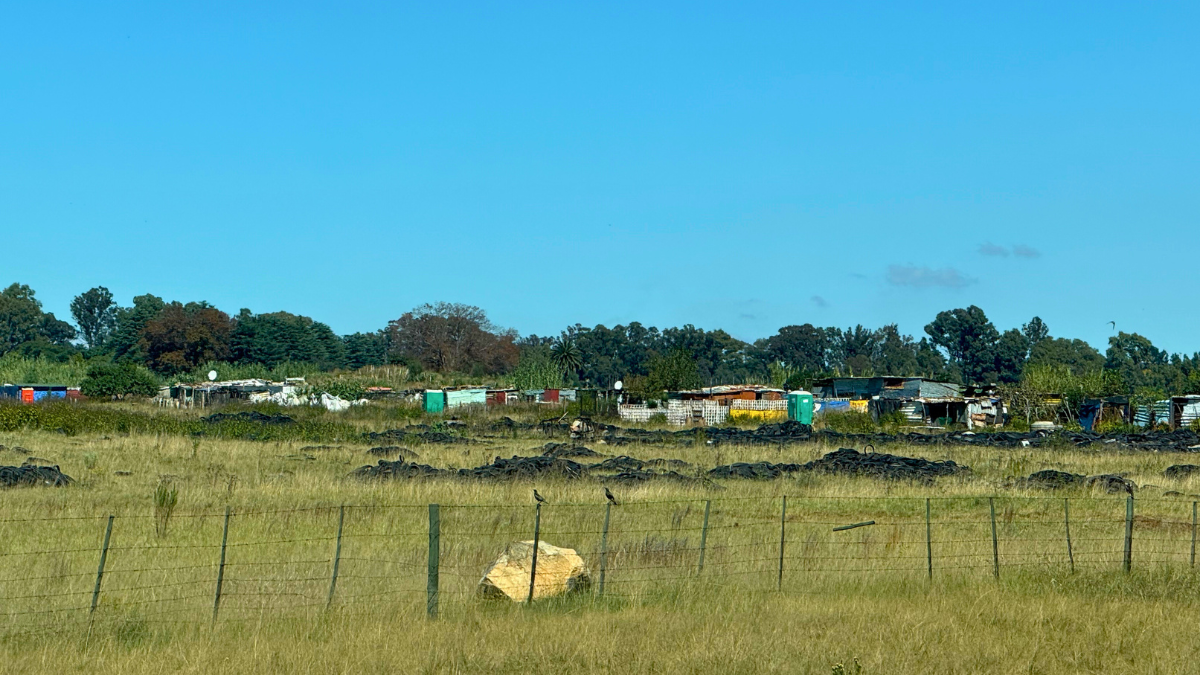
Meanwhile, just a few hundred metres from the new mega-development site, nearby informal settlements like Daggafontein, Kwasa Village, N1, Hollywood, Schoonplaas, Gugulethu, and Everest, as well as backyard dwellers in Springs and Kwa-Thema, have mushroomed.
First announced in 2016, it promised to tackle Ekurhuleni’s housing shortage and growth of informal settlements and homelessness.
It is part of 15 land parcels identified for mega housing projects in 2016 by the Gauteng Department of Human Settlements (GDHuS), an intergovernmental partnership.
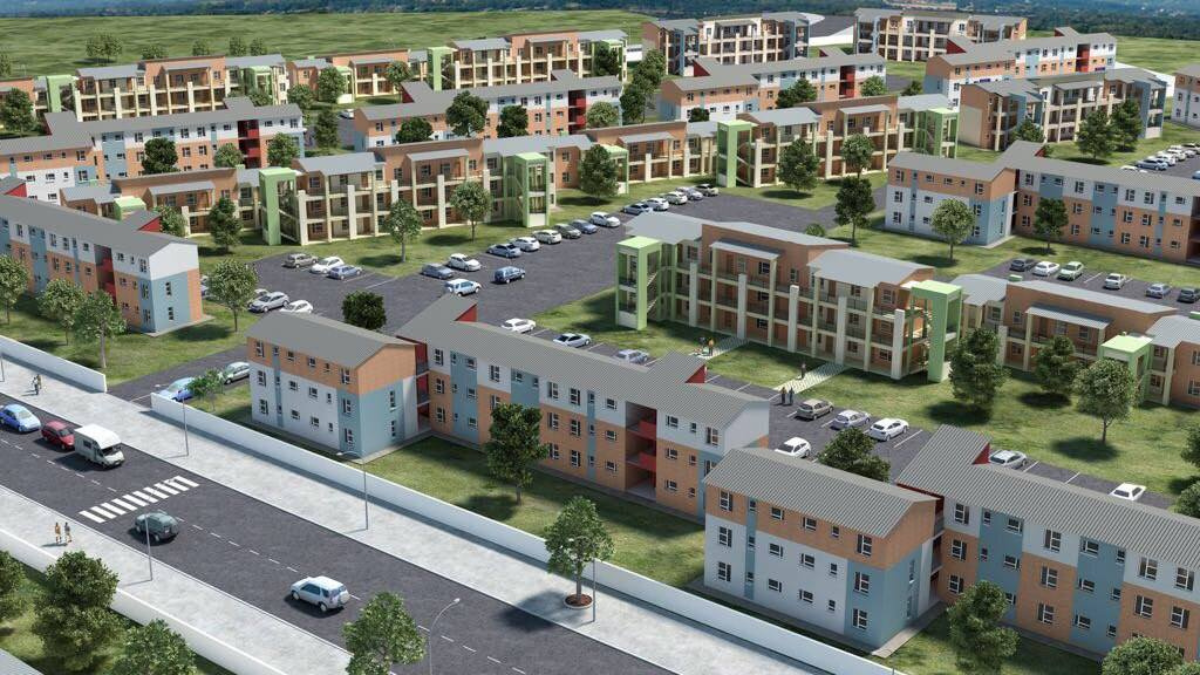
Spanning approximately 750 hectares and divided into three main portions, the project has been said to deliver between 16,000 and 18,000 housing units.
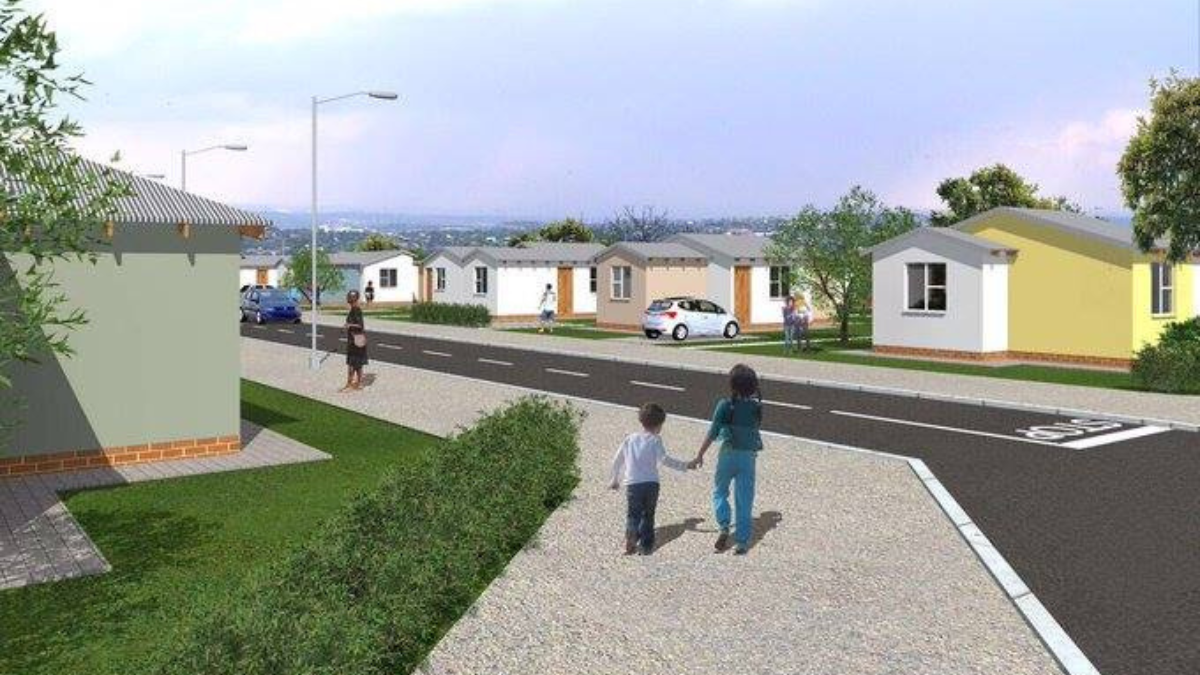
These include RDP or Breaking New Ground (BNG) homes, social housing, affordable rentals, and bonded units for middle-income buyers.
Beyond housing, the plan incorporated a range of amenities to support a self-sustaining community.
These amenities include three schools, a medical facility, a sports and recreation centre, a shopping mall, and even urban agriculture initiatives.
The development would also include retail, industrial, and office spaces to stimulate local economic activity, all underpinned by high-speed fibre internet.
They promised 7,500 temporary jobs during the five-year construction phase and 3,500 permanent jobs thereafter.
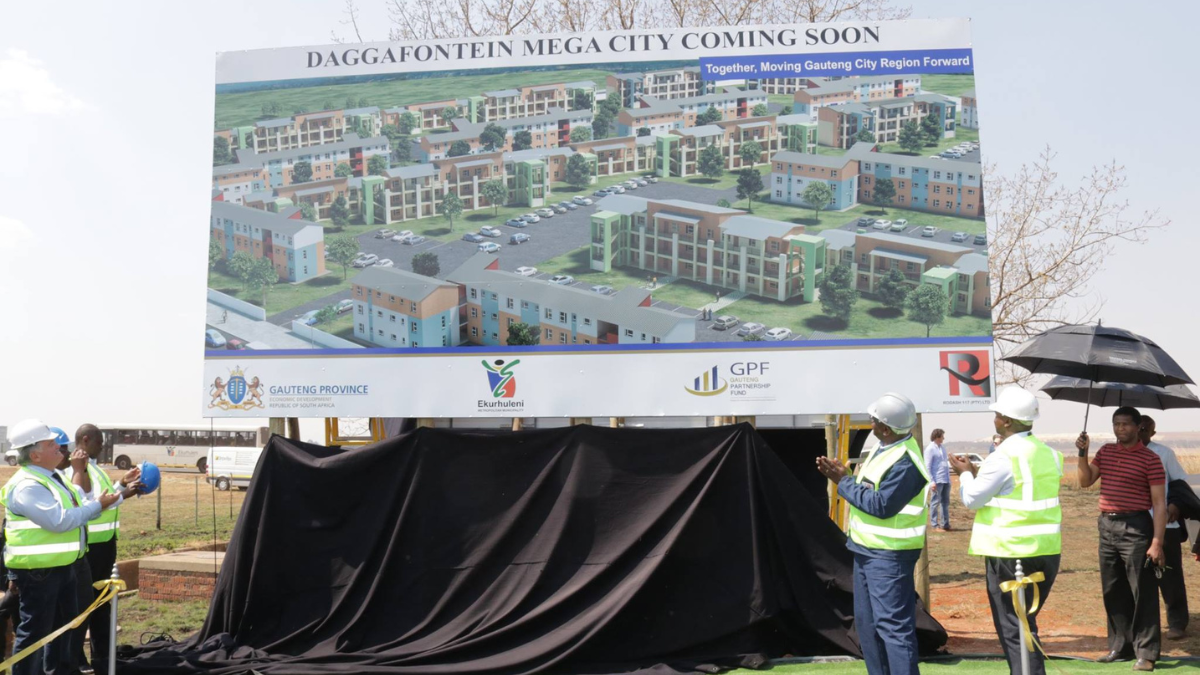
The sod turning ceremony took place in September 2017, attended by former Gauteng Premier, David Makhura, then MEC of Human Settlements, Paul Mashatile and former Ekurhuleni Mayor Mzandile Masina.
According to the City of Ekurhuleni’s 2016 to 2021 Integrated Development Plan (IDP), the projected completion date was 31 March 2023.
Pricy foundational work
In 2017, Rodash 117 purchased the land for R170 million and entered into development agreements with the Gauteng Department of Human Settlements.
It was appointed as the turnkey developer, while the City of Ekurhuleni was responsible for the provision of bulk services.
In a matter that was settled in the Gauteng Division of the Hight Court in December 2019 a director of Rodash said that the project:
“Envisages the creation of infrastructure in a mega township consisting 17,000 individual stands over a period of 5 years commencing from the beginning of 2018.”
“This will assist the crucial housing need in the area and any further delay . . . would prejudice the whole project and the service delivery of land to the poorest of the poor.”
Kitso Botlhale Consulting Engineers were appointed as “multi-disciplinary service providers for the detailed design phase, tender document preparation for the construction phase, and construction supervision.”
TCT Civils had been appointed in February 2020 for the “upgrading, construction and installation of Civil Engineering Services for the Human Settlement Development Projects.”
GDHuS is responsible for the delivery of top structures and internal engineering services, while the CoE is responsible for bulf infrastructure.
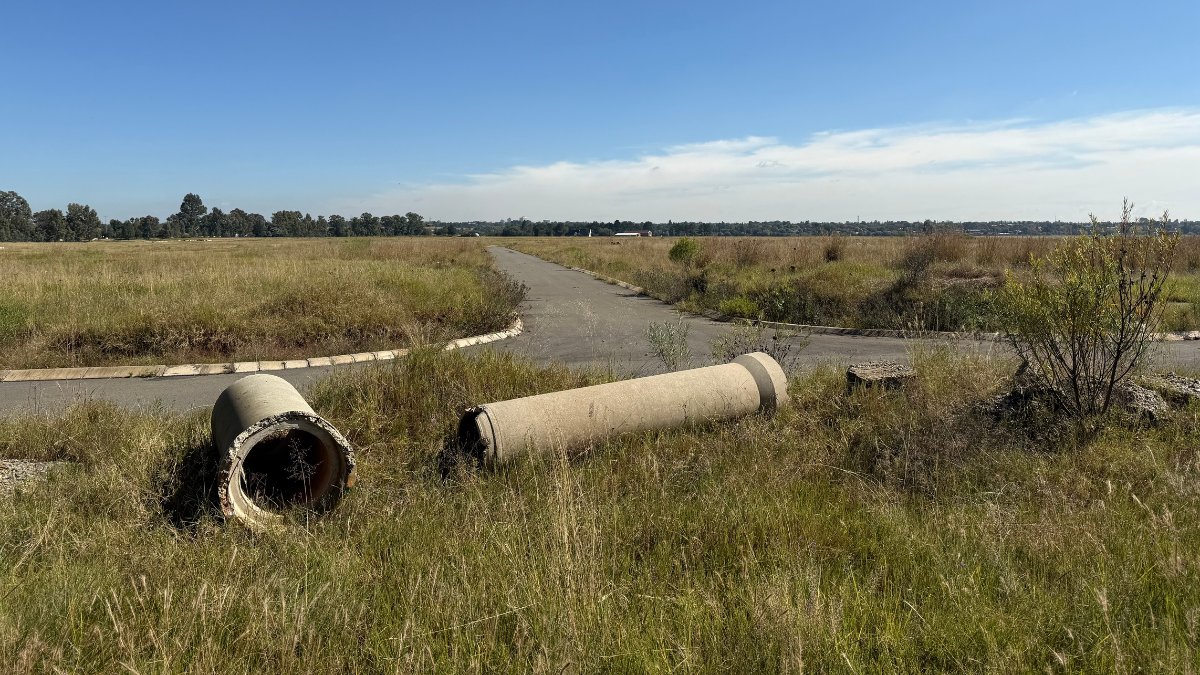
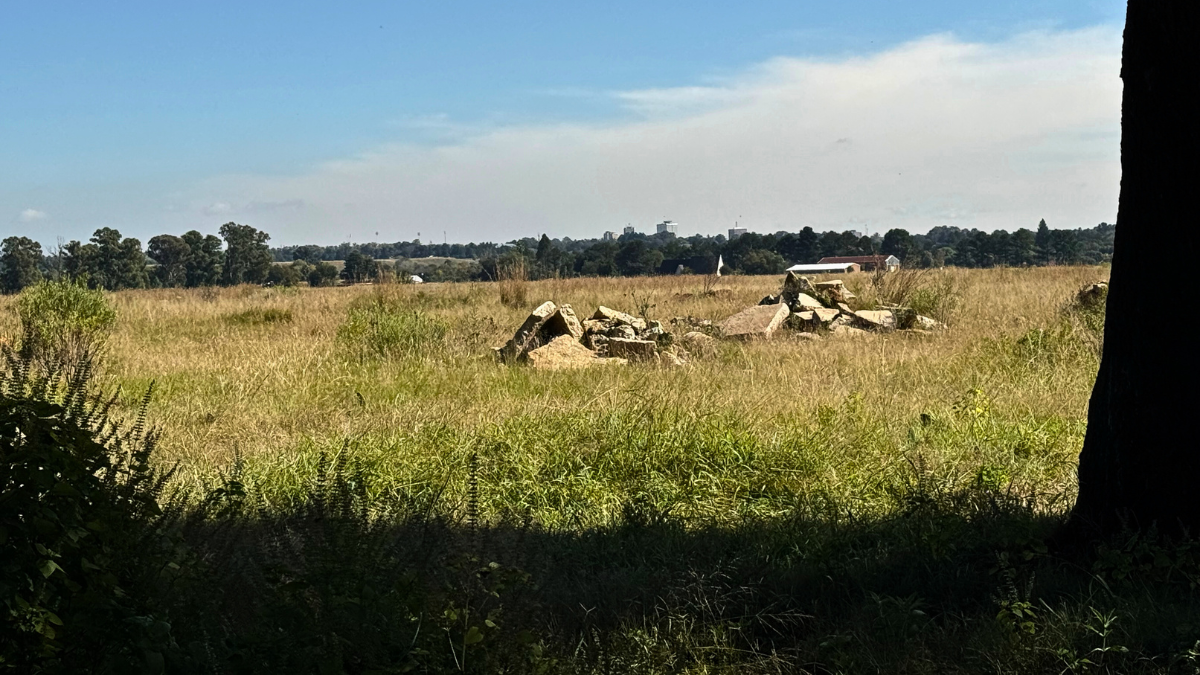
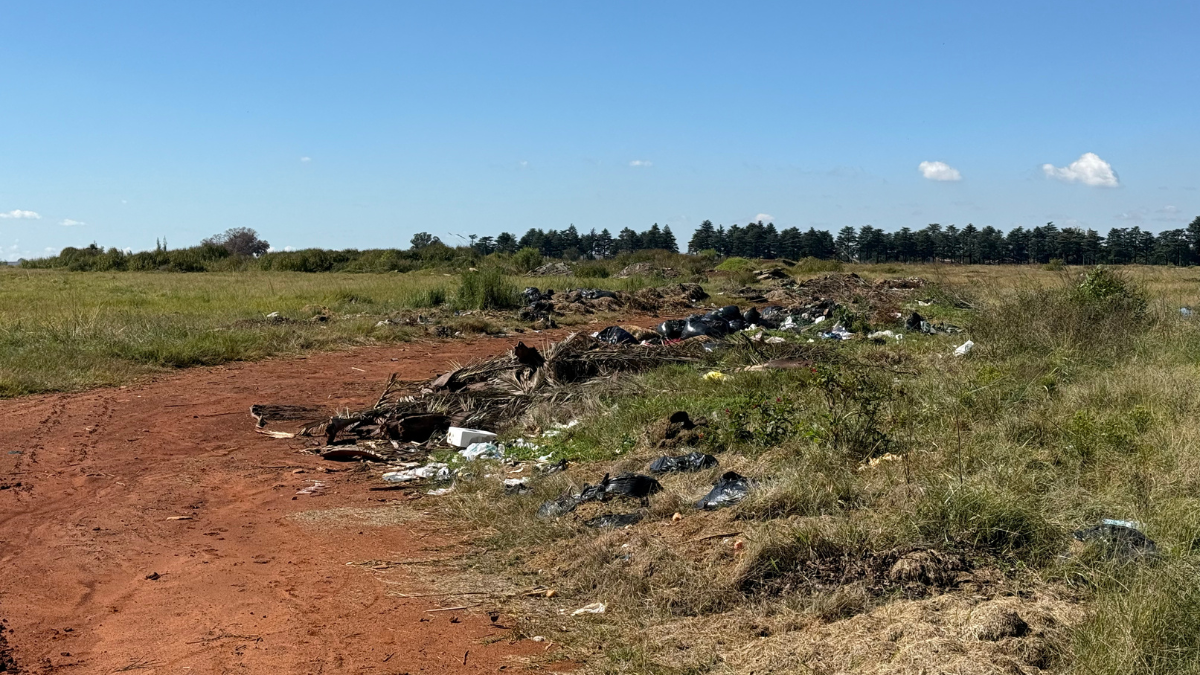
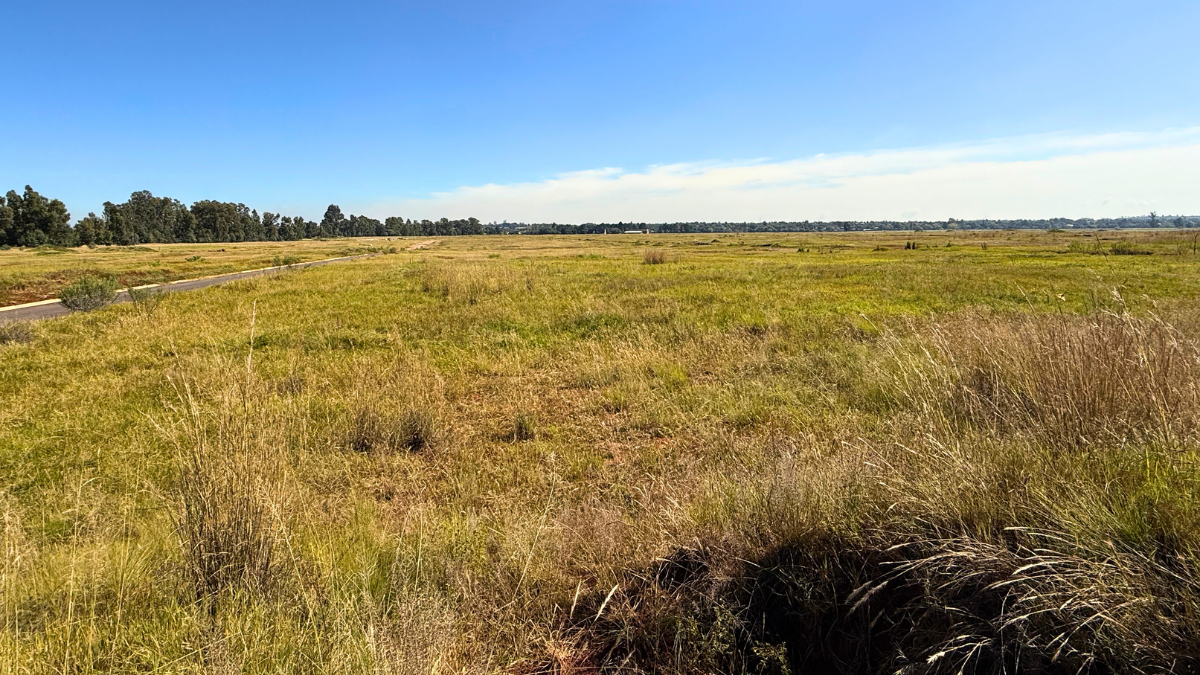
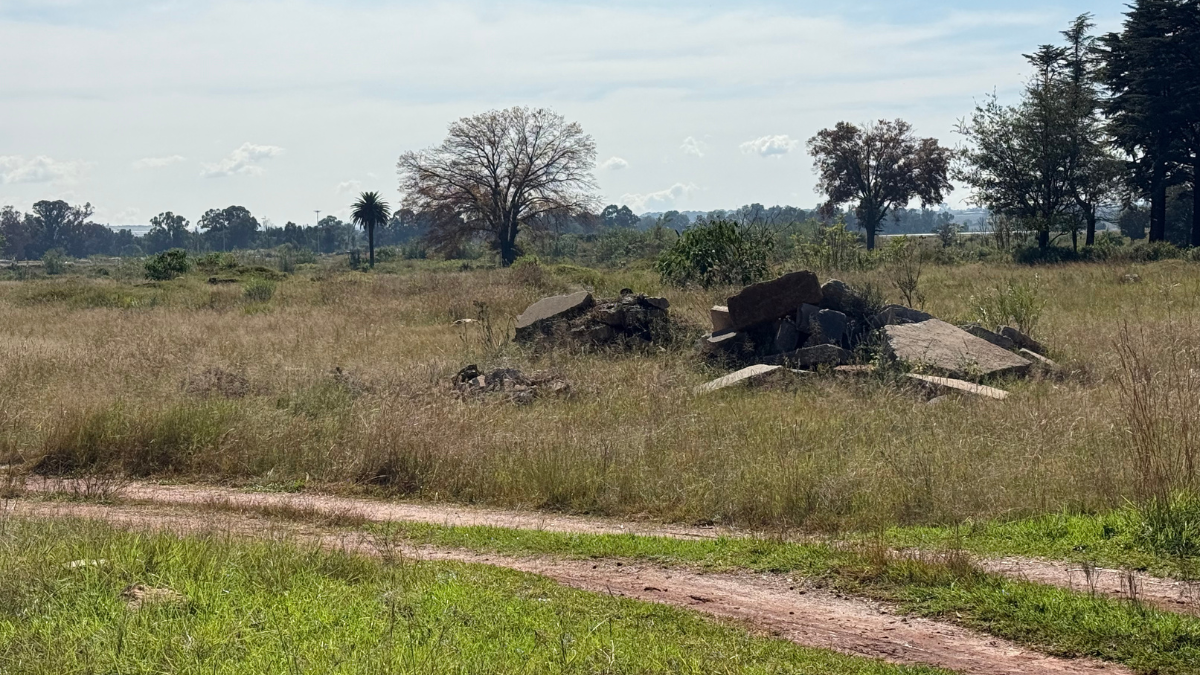
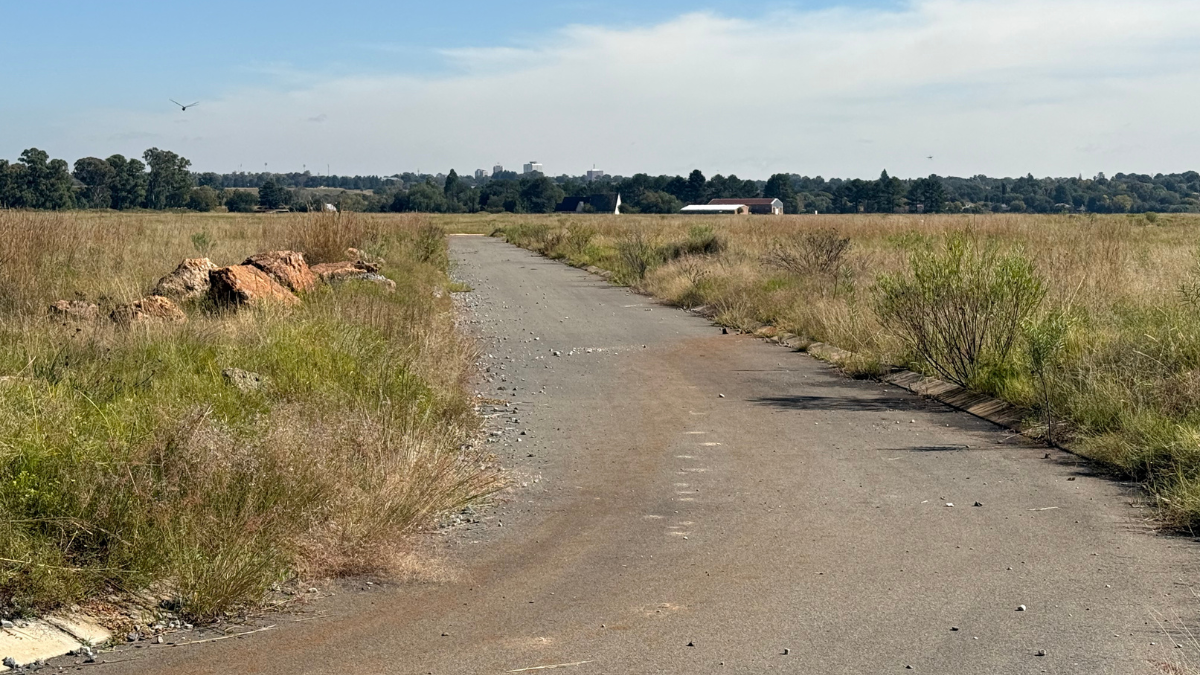
BusinessTech visited the Daggafontein Mega City in April 2025, more than two years past the originally planned completion date, and no houses have been constructed.
CoE spokesperson Zweli Dlamini told BusinessTech that the project got delayed by the appointment of services providers. Several other reports have officials citing issues with contractors and community differences.
Dlamini previously told GroundUp that City was busy appointing a new contractor after the contract given to TCT Civils and Construction lapsed in December 2022.
“CoE has appointed a service provider to finalise the water bulk line which could not finalised due insufficient funds in the last financial year,” Dlamini told BusinessTech.
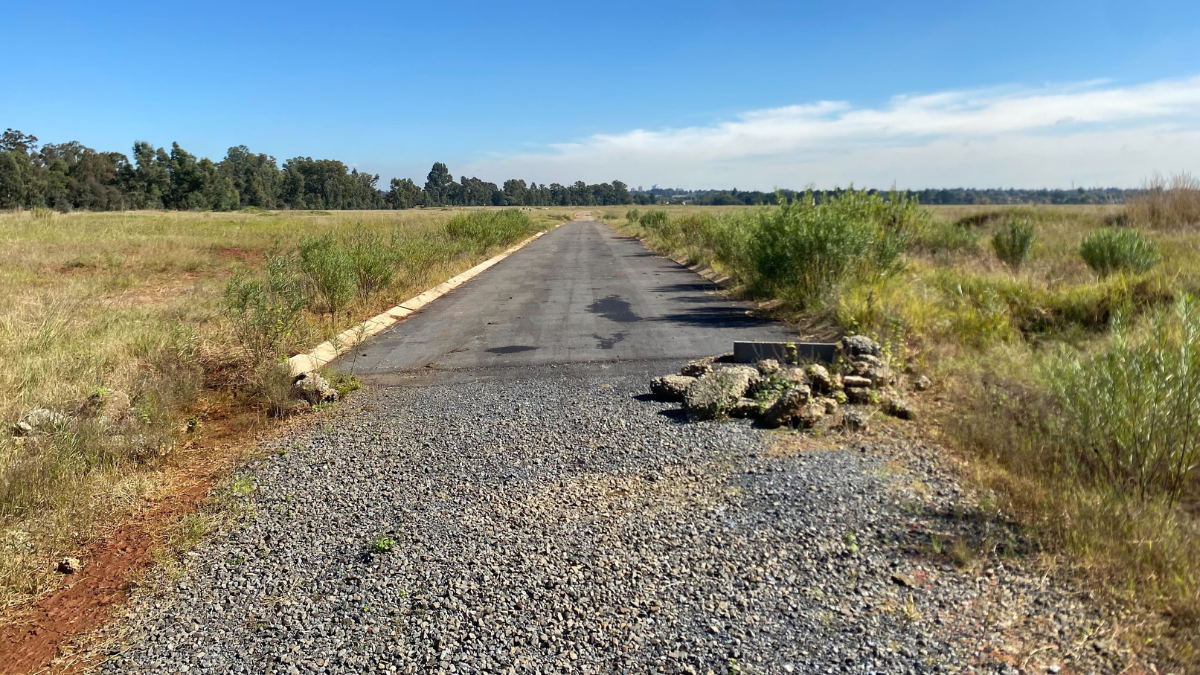
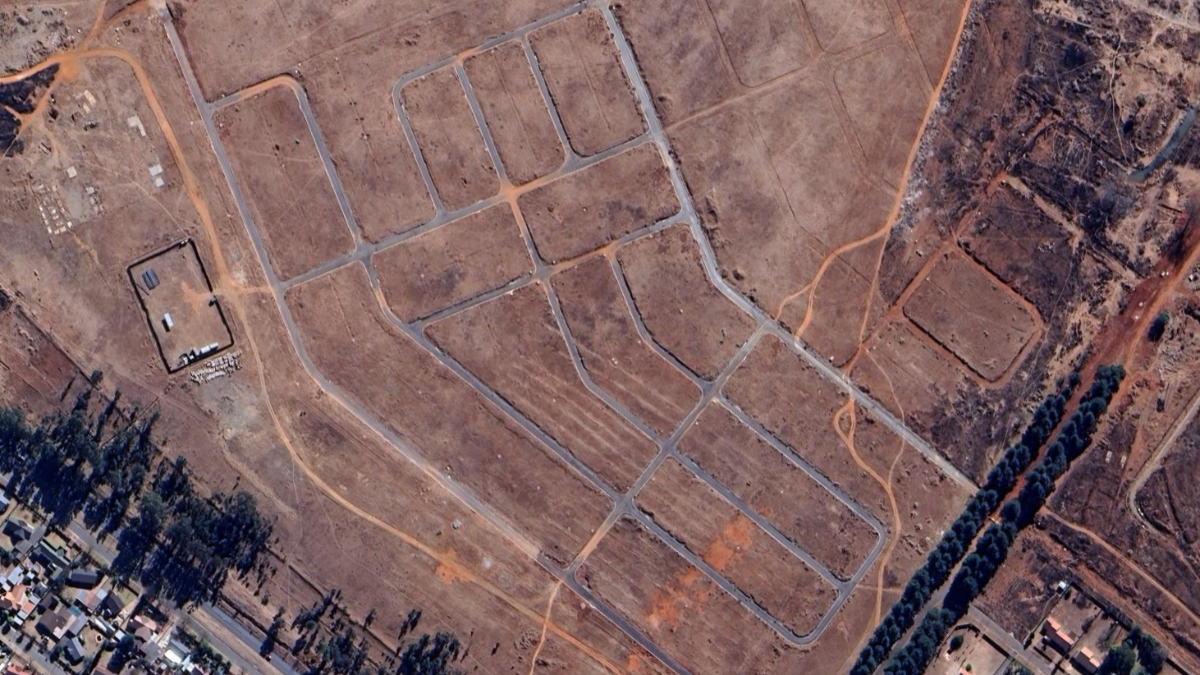
Road networks on the vast land have been done. However, this was some time ago and these roads have started deteriorating.
Dlamini mentioned that several internal services, like roads, along with the stormwater infrastructure and water and sewer reticulation, are completed. However, they still need to implement extension 5 and 6.
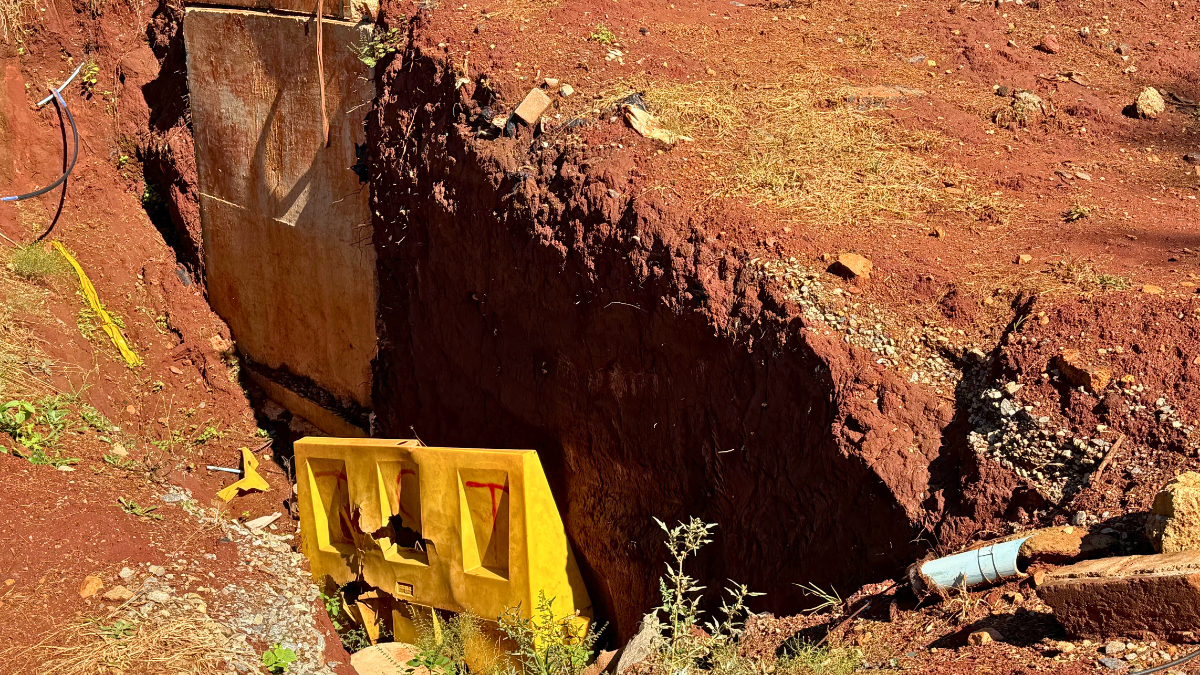
Construction on water pipelines has also commenced, but seem to have been left for some time as well.
“The last time I saw construction was last year. There they were just digging, doing the water pipes. But I have not seen them since,” said Estie Masimanga, who lives in the adjacent informal settlement nearby for some time.
Three years ago, 900 units were pledged for the end of 2022, which did not materialise.
Hundreds of millions spent on the Daggafontein Mega City
Gauteng Department of Human Settlements spokesperson Tahir Sema said that to date, the provincial department has spent R77.57 million through the Human Settlement Development Grant (HSDG) on the installation of internal services.
Sema said that they have completed infrastructure for water and sewer reticulation, as well as road and stormwater systems, for 1192 future walk up housing units.
Looking at the City’s Annual Reports since, they began reporting on capital expenditure on the project in the 2018/19 financial year, through the HSDG.
According to these reports, to date, expenditure has been reported at:
| Financial year | Actual expenditure | Variance from the original budget |
| 2018/19 | R34.92 million | 0% |
| 2019/20 | R118.9 million | +137% |
| 2020/21 | R62.81 million | +116% |
| 2021/22 | R36.49 million | +4% |
| 2022/23 | R45.81 million | +31% |
| 2023/24 | R14.25 million | +43% |
| Total reported | R313.18 million |
However, the reports contain some inconsistencies. For example, the 2019/20 report stated that R202 million had been spent on the project.
Then, in its 2020/21 report, after disclosing an additional R62.81 million on the project, the City repeated that it had “spent R202 million to date” on design and construction of water and sewer internal services.
Looking forward, Dlamini said that the GDHuS is busy making appointments for the top structure service provider for phase 1 of implementation.
Sema said that actual housing construction can only begin once the CoE finishes the bulk infrastructure, highlighting the need for coordination between government bodies.
The city said it has set aside R12 million for this financial year to finalise the roads and stormwater and water bulkline.
Now, the total completion of phase 1 (Extension 4) is estimated at R670 million, and the timeline for completion is now expected in 2029/2030.
“Completing the project will guarantee that 18,000 people who are on the waiting list finally realise their dream of owning a decent house,” said the CoE spokesperson.
Sema said that further investment and inclusion in the provincial department’smulti-year business plan will proceed once the CoE completes the necessary bulk infrastructure to “ensure fiscal discipline” in line with the PFMA.
“The City is committed to fast-tracking all the mega projects and address the issue of homelessness in our society.”
“As and when funds are made available, this programme shall be accelerated. We remain committed to restoring the dignity of our people,” he added.
Sema said that the GDHuS has put systems in place to fast-track project delivery, including prioritising mega projects, coordinating with municipalities, and monitoring performance.
He said a provincial task team also works to unblock delays, align projects with spatial plans, and escalate urgent issues to leadership.
He added that they are focused on improving their planning, budgeting, and implementation processes in line with the PFMA.
“The Department remains committed to transparent, responsive, and accountable delivery of sustainable human settlements.”
*This article has been updated with a correction from the GDHuS that the grant stems from the Human Settlement Development Grant (HSDG), and not the Urban Settlements Development Grant.
Images of the site now











 Loading ...