

Bad news about United States’ investigation into South Africa


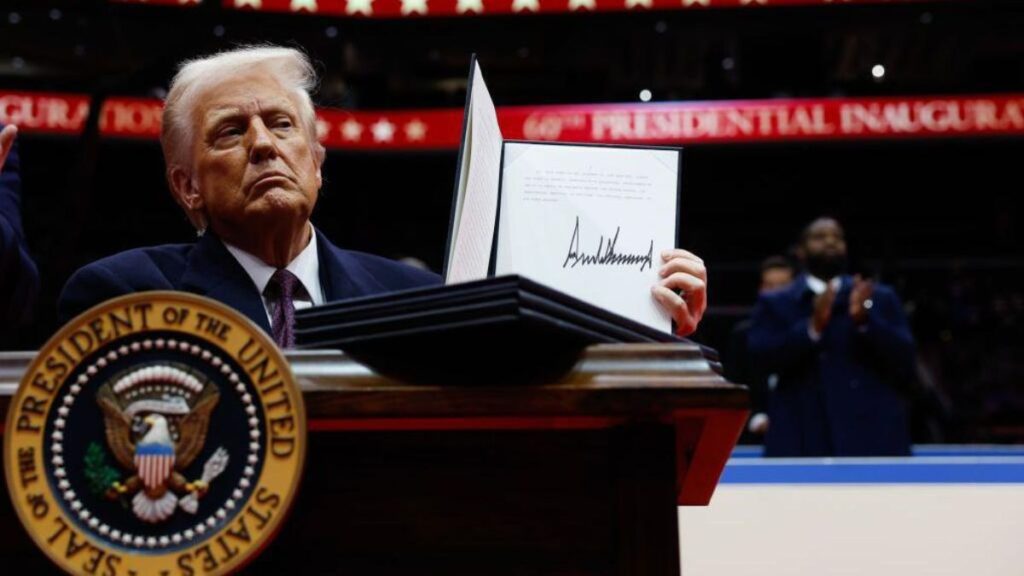
The new United States investigation into South Africa and other countries’ trade practices could carry significant economic risks for South Africa, even if its stated rationale is questionable.
This is the warning from Steven Gruzd, head of the African Governance and Diplomacy Programme at the South African Institute of International Affairs.
On Monday, 16 March, the United States Trade Representative (USTR) launched a Section 301 investigation into South Africa and 59 other countries to determine whether they are engaging in “unfair trade”.
The investigation forms part of a broader push by the US government to “level the playing field” between its own local production and more affordable imports.
Trade representative Jamieson Greer said a key focus of the investigation will be on forced labour, but could also include many other unfair trade practices.
Notably, the investigation is not only looking at whether countries produce goods through forced labour, but also whether they allow these goods to enter their markets.
The investigations are an initial step to determine whether South Africa and other listed governments have taken sufficient steps to prohibit the importation of goods produced with forced labour.
Speaking in a recent interview, Gruzd suggested the real motive behind the investigation may extend beyond labour concerns.
“To me it sounds like an opportunity to find reasons not to import goods from South Africa on top of quite a strict tariff regime,” he said.
He argued that the investigation reflects a broader policy stance in Washington.
“Donald Trump seems to have this notion that all his trade partners are getting the better of him, and so he’s trying to find reasons to impose more restrictions,” Gruzd said.
Gruzd added that it is not really about forced labour at all, but rather a wider trade and geopolitical pressure tactic.
Despite the investigation’s relevance or merit, he warned that it should still be taken seriously.
“It depends on what it unearths, and it’s not going to put us in a great position with the US,” he said.
South Africa cannot shy away from the US

Gruzd said this is especially true given the current state of the two countries’ relationship and would just be another log on the fire.
The potential cost to South Africa’s economy could be concentrated in key export sectors that rely on the US market and are already feeling the pressure.
Gruzd highlighted industries that benefit from the African Growth and Opportunity Act (AGOA), including the motor, wine, and fresh fruit and agriculture industries.
He expects the investigation to have a broader chilling effect. “I think it will make it more difficult to get goods into the US market,” he said.
He warned that while diversification efforts toward markets like China are underway, “it’s not so easy to switch markets that easily.”
Gruzd also noted that the absence of a South African ambassador in Washington for an extended period has further complicated engagement, which he described as a problem.
Looking ahead, he warned that the economic fallout may not be immediate but could intensify over time. “I don’t know if immediate, but in the medium term, definitely,” he said.
If the US ultimately finds South Africa guilty of unfair trade practices, “it can take a whole number of measures, including stopping imports that will just really damage the economy.”
He also dismissed suggestions that South Africa could easily pivot away from the US. “It’s not so easy, especially with the historical relationship we’ve had and the size of the imports that go into the United States from South Africa,” he said.
“This is more than a warning shot, and it’s the start of what is obviously a much tougher US line on South Africa,” he said.















 Loading ...