

State-owned company relaunches product to protect South Africa from social unrest


Sasria has relaunched its Wrap Cover, which provides large corporate insurance against escalating risks linked to civil commotion, riots, strikes, public disorder, and terrorism.
Sasria is a state-owned company created in 1979 following the aftermath of the 1976 Soweto Uprising and is designed to cover South African businesses against strikes, riots and public disorder.
The Wrap Cover product has returned to the market nearly five years after it was withdrawn following the July 2021 unrest.
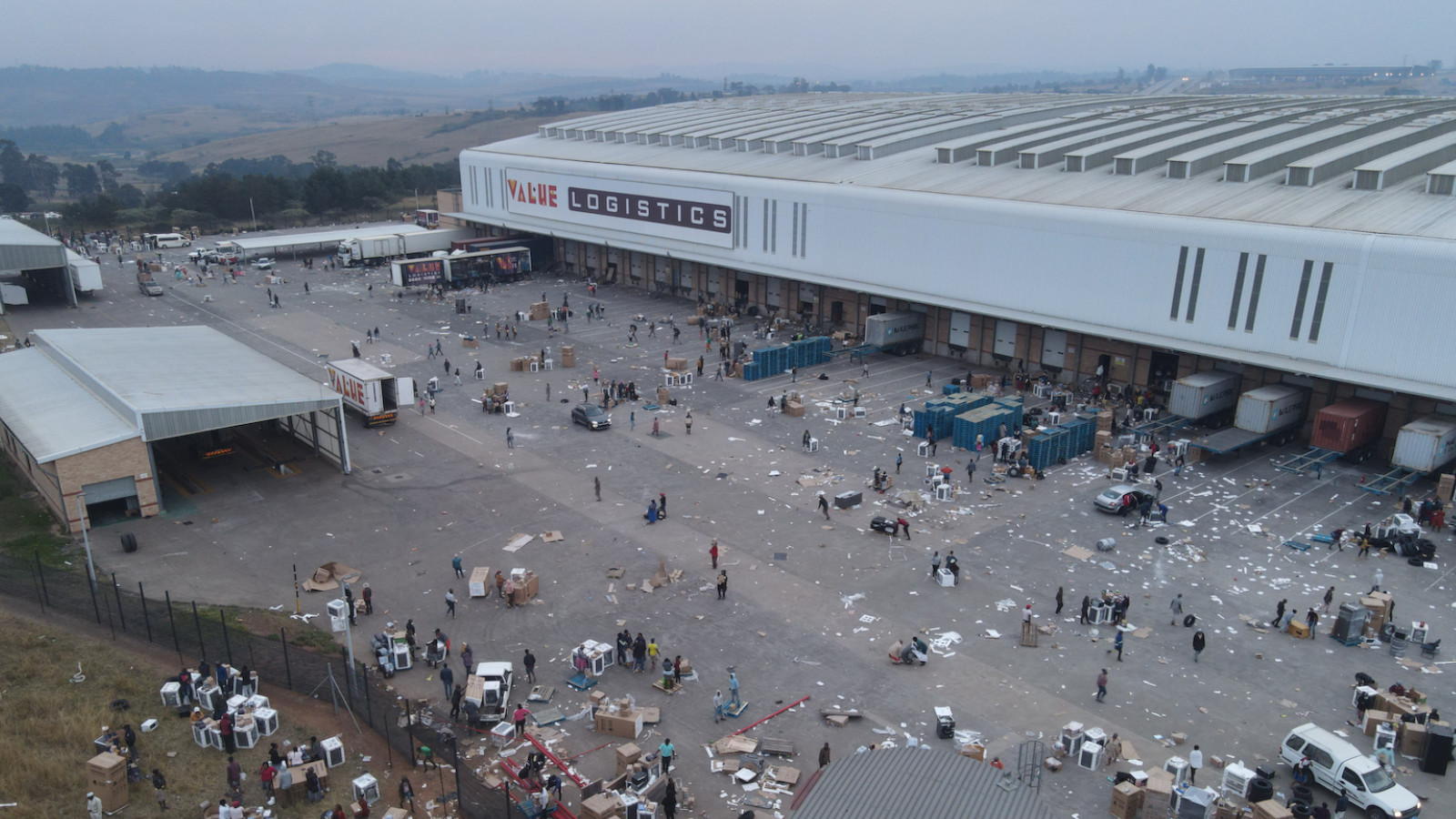
The July 2021 unrest led to damages exceeding R31 billion and reshaped the global insurance market for political violence.
Sasria said that the product’s reintroduction highlights a renewed ability to handle large-scale risk and occurs amid growing concerns among businesses about the cost of political violence insurance.
The product is structured as an excess-of-loss product above Sasria’s R500 million primary coupon.
The cover offers additional insurance capacity for companies with large asset bases and concentrated business interruption risk.
South African companies had to turn to international markets to obtain political violence cover after the product was withdrawn in 2021, often at far higher premiums.
“This created an unsustainable situation for companies operating in South Africa,” said Sasria Chief Executive Officer Mpumi Tyikwe.
“The Wrap Cover represents a market-correcting intervention aimed at restoring locally priced risk protection.”
Tyikwe added that the lack of locally available excess capacity forced large South African businesses to rely on offshore political violence insurance, often at multiples of historic prices.
For many, that pricing reflected global reinsurance volatility rather than South Africa’s underlying risk profile.
Better financial standings
Sasria said the decision to relaunch the product follows the strengthening of its financial standing and capital base, with funds rising to R18.6 billion.
Sasria said that it is on track to achieve its R30 billion capital reserves target by 2029. The enhanced capital position is complemented by improved underwriting and risk governance frameworks.
These developments have allowed the state-owned entity to cautiously resume gradually returning excess cover capacity to the market. The relaunched Wrap includes:
- Excess protection above Sasria’s R500 million primary coupon
- A limit of R500 million, reduced from pre-2021 levels
- Reinsurance arrangements aligned with prudential requirements
- Dedicated corporate underwriting and strengthened governance oversight
“This is not a return to the pre-2021 status quo. The product has been intentionally redesigned to promote long-term sustainability,” Tyikwe said.
He added that the availability of adequate risk transfer capacity will help to limit capital flight, enhance corporate resilience, and strengthen South Africa’s capacity to absorb future shocks.
Large corporations, including manufacturers, retailers, and logistics operators, remain some of the most exposed to risks from political violence and unrest.
While South Africa’s political environment remains relatively stable, Sasria’s existence is based on the fact that many of these risks are unpredictable.
South Africa still has incredibly high unemployment, and low economic growth is not helping to improve this issue.
One example of tension lies in KwaZulu-Natal amid the impending liquidation of Tongaat Hulett and its surrounding infrastructure.
SA Canegrowers Association chairman, Higgins Mdluli, warned that this liquidation could lead to unemployment for 40,000 directly employed workers.
“The surrounding rural communities will immediately be vulnerable to economic and social unrest,” Mdluli said.

















 Loading ...