

Worst news in over 12 months for braai lovers in South Africa


Annual pricing for hosting a braai in South Africa has hit its worst inflation levels in over a year, with braai lovers paying over 5% more than they were in 2025.
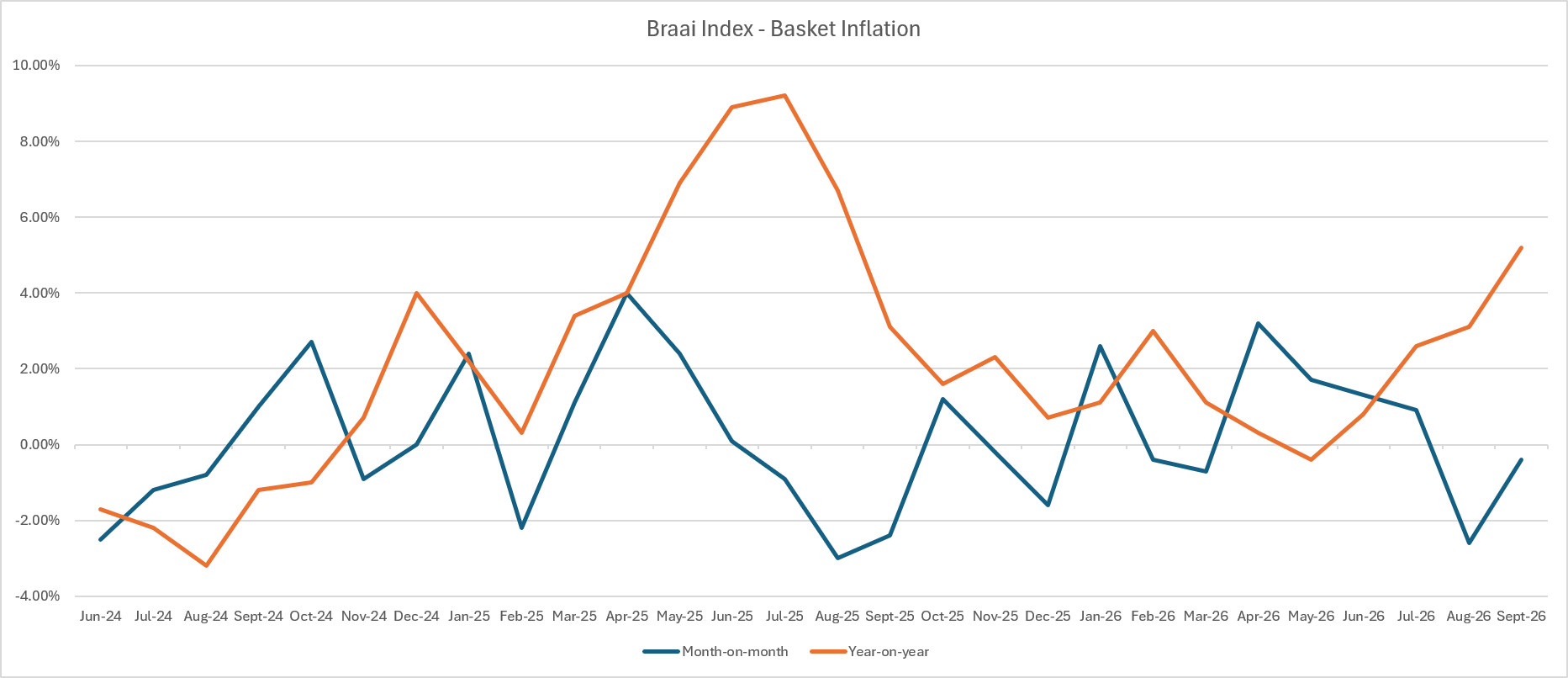
The latest Braai Index for September 2026 showed year-on-year inflation at 5.2%, continuing the upward trend.
This is higher than the 3.1% recorded in August and the highest level since 6.7% in August 2025.
The index, which is based on September pricing tracked by the PMBEJD group from stores across South Africa, also leads official headline inflation data from Stats SA, giving a preview into pricing trends.
Stats SA’s inflation data for August showed food and non-alcoholic beverage prices rising by only 0.7% y/y—the lowest levels in 10 years—versus the Braai Index’s 3.1% rise.
This points to the second-round effects of higher inflation filtering through to specific food categories, balanced by disinflation in other segments.
Notably, braai basket inflation is tracking higher than headline inflation.
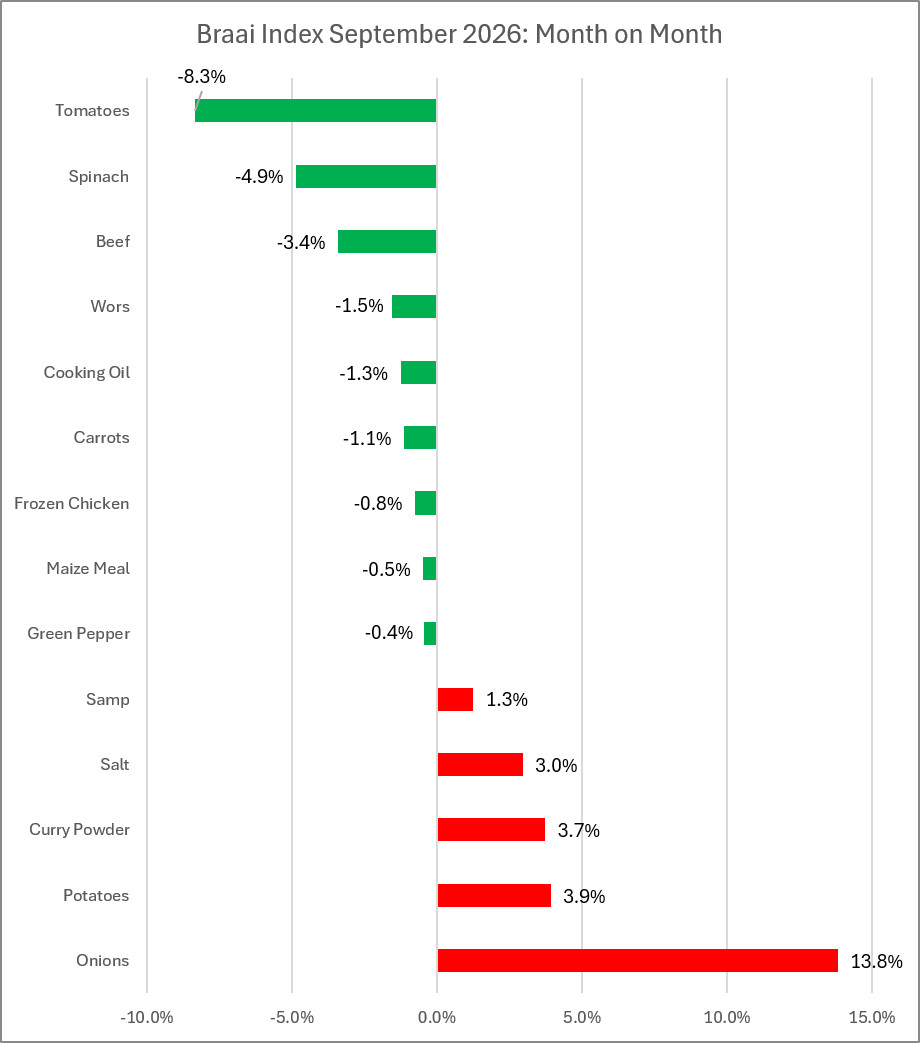
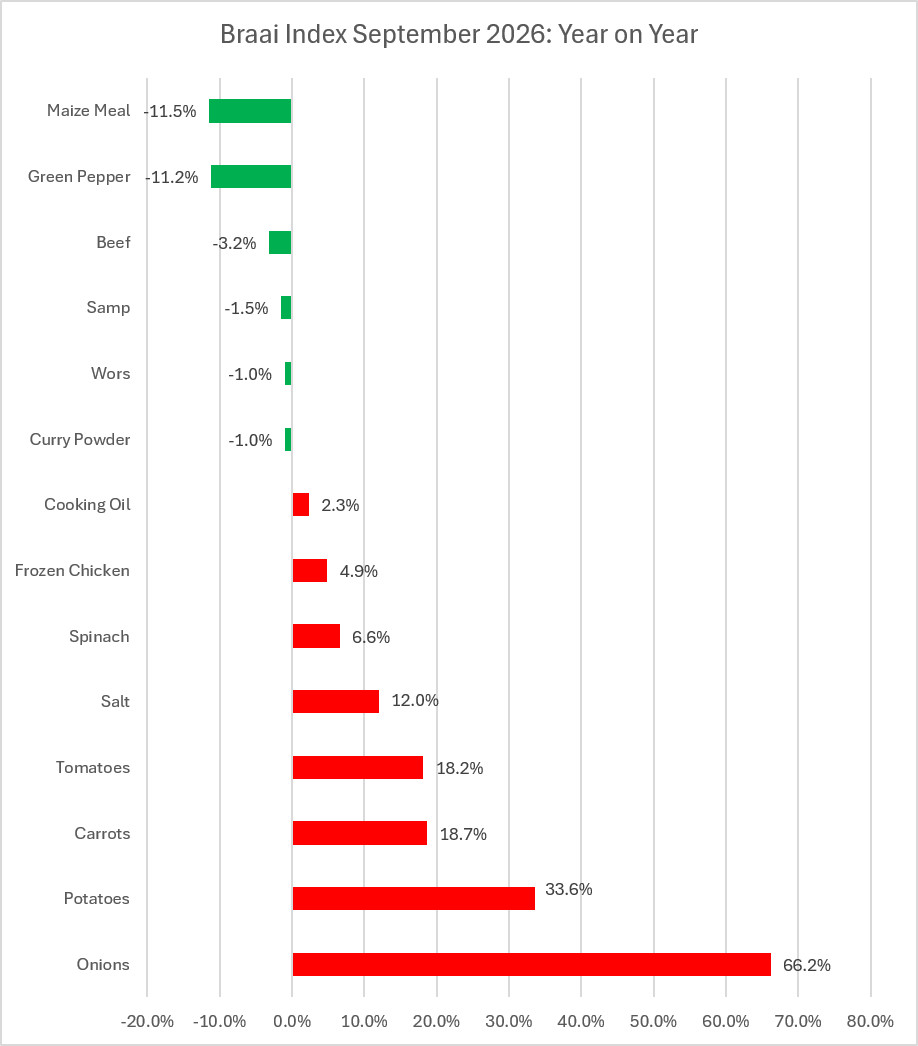
For September, meat prices (beef and wors) were generally lower than last year, with chicken prices being the outlier, up 4.9%.
However, the real culprit behind braai time being more expensive is on the side—potatoes, onions, carrots, and tomatoes all show double-digit increases from 2025.
The more positive news is that after four months of month-on-month price inflation, following the Iran War in March, pricing is starting to ease.
After basket prices fell 2.6% month-on-month in August, they declined another 0.4% in September.
The Braai Index is compiled monthly by BusinessTech using pricing data from the PMBEJD. Its methodology originated from Bloomberg.
The PMBEJD’s data reflects actual prices across South Africa’s major provinces and includes items typically found in the shopping baskets of most South African households.
The basket consists of meat (beef, wors, chicken portions), vegetables (spinach, carrots, tomatoes, potatoes, onions, green peppers), and other items (samp, maize, curry powder, salt).
It’s important to note that the index is based on data from PMBEJD, which excludes other protein sources like pork and lamb; therefore, these alternatives are not included in the analysis.
Braai Index September 2026 Month-on-Month [-0.4%]
Braai Index September 2026 Year-on-Year [+5.2%]
Warnings sound
According to Agbiz Chief Economist Wandile Sihlobo, South Africa’s excellent 2025/26 crop season is likely to help keep food price inflation moderate for the rest of the year.
However, an expected El Niño drought may put pricing under pressure in various product categories going into and throughout 2027.
Base effects of the low inflation from this year will also have a hand in driving up inflation next year, he said.
“The key products keeping consumer food price inflation at these lower levels are mainly grain-related, fruits and vegetables, which are all currently in deflation,” he said.
Regarding meat prices—a core component of a braai—Sihlobo noted that meat price inflation has also continued to moderate, suggesting slaughtering activity remains steady.
“However, fears of foot-and-mouth disease have added upside pressure on red meat prices over the past few months,” he noted.
The economist said that the pace of cattle slaughter has declined, “though not notably”.
“Another factor to keep in mind is that during foot-and-mouth disease outbreaks, the country is typically temporarily closed to some export markets, increasing domestic supplies even if slaughter has declined somewhat,” he added.
“Base effects on meat prices, along with continued cattle slaughter, have helped ease price inflation.”
Sihlobo said that the real concern is that the continued US-Iran War will drive prices higher by keeping energy costs elevated.
He said that fuel accounts for a substantial share of food distribution costs, and that over 80% of staple food products are transported by road.
South Africa will see record petrol and diesel prices from Wednesday (7 October), with petrol shooting up to over R30/litre for the first time in history.
The wholesale price of diesel is over R33 per litre—hitting upwards of R35/litre at the pumps.
While El Niño poses a risk to food prices in the year ahead, the second-round impact of the energy crisis is coming to bear in the more immediate term.


















 Loading ...