

If you live in Tshwane, you should probably contact your body corporate


The City of Tshwane has called on residents who live in complexes and estates to ensure that their body corporates are up to date with their municipal bills and levies, or face being cut off.
The municipality – which includes the capital, Pretoria – is in the middle of a campaign to cut off power and other services to customers whose outstanding debts, it said, have grown to unsustainable levels.
The Democratic Alliance, which heads up a coalition government in the province, said it has so far raised R300 million through its campaign to disconnect non-paying customers.
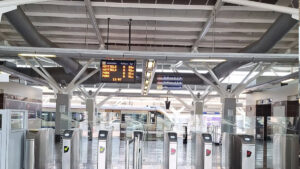
Targets on Tuesday included the South African Revenue Service, a tenant in a building in Menlo Park, and the South African Police Service headquarters in the Pretoria CBD, while the Gautrain station in Hatfield was also cut off, but has since claimed that the act was illegal and has threatened court action.
Gautrain statement: Hatfield station pic.twitter.com/HDA1erhY0r
— Gautrain (@TheGautrain) February 15, 2022
Businesses collectively owe the municipality more than R5 billion ($326 million), residents more than R8 billion and government departments and embassies more than R1.3 billion, Randall Williams, the executive mayor, said in a recorded interview circulated by his office on Wednesday.
“We are going after all our debtors because they have an obligation to pay. You cannot consume for free,” he said. “How do we afford to run the operations of the city if we have no revenue?”
An opposition coalition led by the Democratic Alliance retained control of Tshwane in last year’s municipal ballot, Bloomberg reported. The vote saw national support for the ruling African National Congress drop below 50% for the first time since it won power in the first multiracial elections in 1994, a backlash against its shoddy management of South Africa’s towns and cities.
It noted that Moody’s Investors Services rates Tshwane’s debt at Caa2, eight levels below investment grade, and changed the outlook in its assessment to negative from stable in October, saying liquidity shall continue to be fragile in the medium term.
The City of Tshwane also turned its attention to residential estates on Tuesday and warned residents that they could find themselves in the dark.
Yesterday, part of the #TshwaneYaTima campaign focused on Residential Estates. We did not mention them due to security reasons. Please ensure that your body corporate is using your levies wisely before you find yourself in the dark.
— City of Tshwane (@CityTshwane) February 16, 2022
Tshwane mayoral committee member for finance Peter Sutton said that less than 1% of court challenges against the city for disconnecting debtors have been successful. The city, he said, anticipated that there would be pushback.
“We have done, in the last week, over 420 disconnections for businesses as part of this campaign,” Sutton said. “Less than 2% of those cases have been challenged in court, and less than 1% of those cases have been successful against the city.”
Sutton said that some customers appeared to misunderstand the dispute process. “What we often find is that people will declare a dispute, for instance on electricity or water usage on the bill, and then they will stop paying the bill entirely.
“The law states, very clearly, that it is only the item that is in dispute [that is exempted from payment], all other services must still be paid for. A lot of our credit control actions is not related to the actual dispute on that account, but for other services of that account not in dispute and not being paid for.”
Tshwane said that the City of Joburg is following suit, in its quest to collect unpaid accounts.
Yesterday, part of the #TshwaneYaTima campaign focused on Residential Estates. We did not mention them due to security reasons. Please ensure that your body corporate is using your levies wisely before you find yourself in the dark.
— City of Tshwane (@CityTshwane) February 16, 2022
Nonpayment not unique to Tshwane
Non-payment is an issue in many municipal areas, noted Gerhard Kotzé, managing director of the RealNet estate agency group. “These days, most sectional title units do have a separate municipal electricity meter or a pre-paid meter that means tenants will only pay for their own usage,” he said.
“But many schemes do not have separate water meters for each unit, which means that the local authority sends the body corporate a bulk account that is then divided among the residents according to the participation quota (PQs) of their units.”
This can become very unfair as it does not necessarily reflect tenants’ real usage of water at all, he said.
“For example, the couple renting a three-bedroom flat is very likely to consume less water than the family of four renting a two-bedroom unit in the same complex, but may well be charged more because the PQ of the three-bedroom unit is higher.”
Alternatively, water usage calculated according to PQs might be added to the monthly levies that unit owners have to pay – “and when water charges are increased steeply as they have been this year, landlords could once again be looking to pass on at least some of this extra expense to their tenants. Consequently, prospective tenants should always aim to be billed for their own actual usage of utilities.”
In addition, he said, they must make sure that the sectional title scheme they are considering is in a good financial position overall, “unless they want to risk living in a complex that cannot be properly maintained for lack of funds, or where the units are about to be attached and sold in execution to meet body corporate arrears.
Read: Government considering taking on Eskom’s R392 billion debt

















 Loading ...