

Shift in semigration trends in South Africa



FNB’s latest Residential Property Barometer says that semigration is slowing down, but it’s still well above the long-term average.
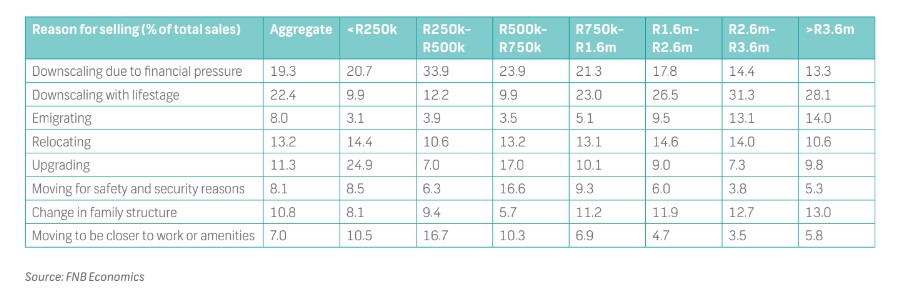
According to the barometer, sales attributed to relocation in South Africa (semigration) increased from 11% in 4Q23 to 13% in 1Q24.
“While semigration slowed in recent months, survey results suggest that they are still above the long-term average of 9% since the inception of the survey question in 4Q07,” FNB said.
Financial-pressure-induced sales, on the other hand, receded from 25% in 4Q23 to 19% in 1Q24, aligning closely with the historical average of 18% since 4Q07, having hovered above this level for most of 2023.
Upgrading has, however, slowed from 15% in 4Q21 to 11% in 1Q24 due to the interest rate tightening cycle.
Emigration sales were steady at 8% and in line with the long-term average since 4Q07, far lower than the peak of 18% seen in 2019.
Set to pick up
Semigration, particularly to the Western Cape, is set to pick up as homeowners make the jump to areas where things aren’t falling apart, especially as they face increased cost pressures due to rising municipal rates and electricity tariffs.
FNB’s 2024 property insights analysis by John Loos showed some reasons for optimism, with a mildly improving economic environment, which could yield better results for the commercial property market.
That said, this will only likely play out in 2025.
Loos added that property investment might improve due to various economic reasons, such as interest rate cuts and lower inflation, with investors having a better 2024 than previous years.
“But improvement may only reflect in 2025 numbers, with various economy-property market ‘leads and lags,’ and risks remain abundant,” he said.
In terms of recent trends, Rory O’Hagan from Chas Everitt said that semigration is benefitting Gauteng, with a wave of semigration to the Western Cape from Gauteng and other inland provinces reversing as return-to-office mandates start to gain ground.


















 Loading ...