

Checkers in hot water, and South Africans must say goodbye to the green ID book


The rand recovered slightly on Tuesday after US President Donald Trump suggested that the war in the Middle East could conclude soon.
The rand was trading at 16.2750 against the US dollar, bouncing back from Monday’s three-month low of around 16.90.
Analysts noted that the risk of further weakness will depend on any escalation of global conflict, as distribution risk weighs on the market, given that South Africa is a net importer of energy.
Following Trump’s comments, oil prices fell after reaching a three-year high on Monday, which relieved some pressure on import-dependent economies.
However, the lack of clarity regarding the duration and scale of the conflict will keep markets volatile.
Additionally, Statistics South Africa released economic growth figures indicating that the economy grew by 0.4% in the fourth quarter of 2025, slightly better than expectations in quarter-on-quarter terms.
Year-on-year growth stood at 0.8%. Economists surveyed by Reuters had predicted a 0.3% quarter-on-quarter GDP growth and a 1.8% year-on-year increase.
On the Johannesburg Stock Exchange, the Top-40 index was last up 2.3%. Meanwhile, the benchmark 2035 government bond strengthened, with the yield falling by 2.6 basis points to 8.435%.
As of Wednesday, 11 March, the rand is trading at R16.21 to the dollar, R21.82 to the pound, and R18.87 to the euro. Gold is currently valued at $5,207.02 per ounce, while oil prices have risen to $86.90 per barrel.
5 important things happening in South Africa today

Checkers in hot water: Customers have complained that Checkers’ private-label “ready to braai” chicken product contained more sauce than chicken, with some alleging their packs had less than the listed 62% chicken content. In response, Checkers withdrew the product and announced that its supplier is investigating the production process. [News24]
The end of green ID books: Home Affairs Minister Leon Schreiber said his department is committed to eradicating the green ID book in South Africa, as it costs the country billions of rands a year in identity theft. [Daily Investor]
Electricity price shock coming: Municipal customers will see a 9.01% increase starting 1 July 2026, influenced by the differing financial year cycles of Eskom and municipalities. However, the average increase masks significant hikes in fixed charges, which will raise some residential bills even more. [MyBroadband]
Big payday for new Absa CEO: Kenny Fihla became CEO of Absa Group in mid-June 2025, receiving a R20.7 million cash buyout and a R77.7 million share-based buyout. The bank noted that these awards were for amounts forfeited by his previous employer, Standard Bank Group. [Moneyweb]
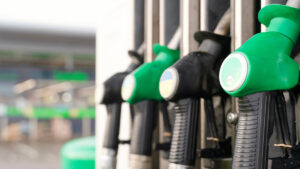
Calls for petrol price relief: Civil rights organisation AfriForum has written to the Minister of Finance, Enoch Godongwana, urging him to halt the planned increase in the general fuel levy and instead introduce a temporary tax cut to cushion consumers from the expected surge. [BusinessTech]










 Loading ...