

Battle over another new tax for households in major city, and some areas so dangerous courier vehicles need armed escorts in South Africa


South Africa’s 2026 Local Government Election has been completed, revealing a significant shift across the major metros.
The election outcome marked a complete shift in tone for many municipalities, with the ANC suffering significant losses across the board.
Overall, the party has fallen by almost 15 percentage points in the national count since 2021, losing majorities and its leading position in all but two metros.
While it maintains a firm lead in Buffalo City, its lead in Mangaung is fractional, with only 0.5 points separating it from the DA.
The DA, meanwhile, has seen growth. The party has gained just under 3 points on the national scale and has taken the lead in five of the eight metros. The outlier is eThekwini, where the MK Party left the ANC dazed.
But the path forward is not clear-cut, with the DA and ActionSA having a complicated, antagonistic history, and the DA and ANC having to balance a broader national partnership in the Government of National Unity.
In addition to the election results, markets will also be on the lookout for key economic data coming this week.
The main focus for the week will be manufacturing and mining production data for September as well as the latest Quarterly Labour Force Survey for Q3.
According to Nedbank economists, the QLFS is likely to show a modest deterioration in the unemployment rate, which currently sits at 33.6%.
The bank said that the operating environment remained challenging during the quarter, with higher oil and fuel prices increasing input, transportation and distribution costs for businesses.
This placed pressure on profitability and likely cut employment capacity and hiring.
For manufacturing and mining, the same economic pressures are likely to weigh on output, with the bank seeing contractions of 2.4% and 7% year-on-year, respectively.
On Monday, 9 November 2026, the rand was trading at R16.49 to the dollar, R22.07 to the pound, and R18.41 to the euro. Gold is trading at $4,124.06, while oil prices are at $98 a barrel.
5 important things happening in South Africa today

Battle over Johannesburg’s 65.6% water levy increase: The City of Johannesburg implemented its 65.6% fixed water levy increase without any justification, despite repeated requests for disclosure and legal action. The Metro is collecting approximately R1.8 billion a year through a charge whose legal basis and calculation remain disputed. AfriForum has taken the matter to the High Court. [Newsday]
Courier vehicles have to travel with armed escorts: The Courier Guy keeps a list of “high-risk” areas to which it cannot deliver packages unless drivers travel in unmarked vehicles and are escorted by armed private security. It said these areas were identified using historical data on parcel hijackings and thefts, and that the added security was intended to protect drivers. [MyBroadband]
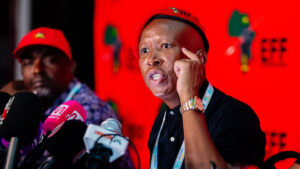
Election results: The Independent Electoral Commission (IEC) has completed the vote counting for the 2026 Local Government Election, revealing a significant shift across the major metros. [BusinessTech]
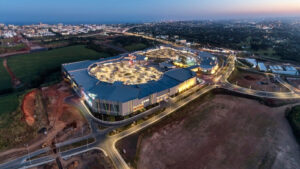
First Woolworths Food store of its kind for Tzaneen: Woolworths Food has officially opened a new store at Tzaneen Lifestyle Centre in Limpopo, the first shop of its kind in the region. [Daily Investor]
Big problem for proposed drinking laws: The Department of Transport is pursuing legislative amendments to reduce South Africa’s legal drink-driving limit to zero, effectively making it illegal to consume any amount of alcohol at restaurants or bars if you plan on driving. However, this change focuses almost entirely on motorists while doing nothing to address drunk pedestrians. [Top Auto]








 Loading ...