

Another warning for Ramaphosa


President Cyril Ramaphosa has been warned that South Africa could quickly lose investor confidence if he fails to decisively address concerns over his ability to control the armed forces.
This comes after what has been described as disorderly conduct within the South African National Defence Force following a controversial naval exercise near Cape Town earlier this year.
Lisette IJssel de Schepper, chief economist at the Bureau for Economic Research (BER), said that business confidence in South Africa has been on an upward trend recently.
However, she warned that this confidence remains fragile and could be lost if uncertainty persists about the president’s authority over the military.
She stressed that investors are unlikely to commit capital in an environment where civilian control over the armed forces appears to be in question.
“It’s certainly a risk that investors did not think they’d have to worry about going into 2026,” IJssel de Schepper said.
“The president’s got a very short window now to address this. If it is not addressed properly, if heads don’t roll, if there’s no clarity on this front, then we’ll see how quickly signs of investor confidence in our fourth-quarter index can evaporate.”
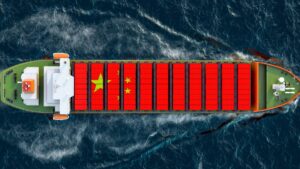
The warning follows reports that explicit instructions to exclude Iran from a Chinese-led naval exercise at Simon’s Town were ignored.
It was reported by News24 that the initial directive was given in early November during an interdepartmental meeting attended by the presidency, the Department of International Relations and Cooperation, and the Department of Defence.
The order was clear. Iran was not to participate in the exercise in any capacity, not even as an observer.
Despite this, Iran ultimately took part in the exercise, an outcome one senior source described as “blatant defiance” by the head of the SANDF, General Rudzani Maphwanya, and the chief of the navy, Vice-Admiral Monde Lobese.
Time is of the essence
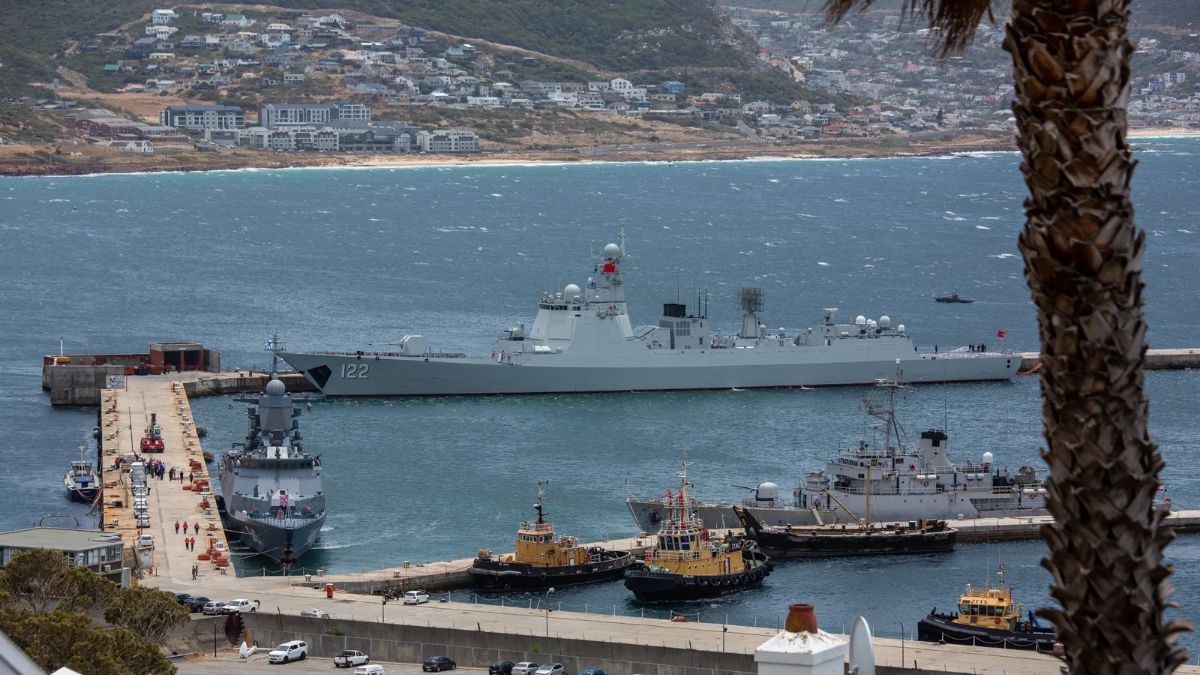
After confirmation of Iran’s participation, Defence Minister Angie Motshekga announced in January that a board of inquiry would be established to investigate why President Ramaphosa’s instruction was not carried out.
However, IJssel de Schepper warned that the damage to investor sentiment may already be underway if the issue is not handled decisively and transparently.
South Africa’s growing military engagement with Russia, China and Iran, combined with doubts about the president’s control over the defence force, is “extremely concerning” from an investor’s perspective and will “absolutely” affect confidence, she said.
She added that this kind of uncertainty is not abstract or theoretical. It feeds directly into how investors assess risk, cost of capital and long-term stability.
Issues such as the rule of law and civilian oversight of the military should be assumed fundamentals, not variables that need to be reassessed.
Decisive action by the president could also have a strongly positive effect. IJssel de Schepper said a clear demonstration of accountability and control could reassure investors and reinforce confidence at a critical moment for the economy.
However, she warned that if it does not happen, an issue that was barely on investors’ radar until recently could become a central concern.












 Loading ...