

Alma Mater International School: Building South Africa’s strongest pipeline into hard-science and global universities


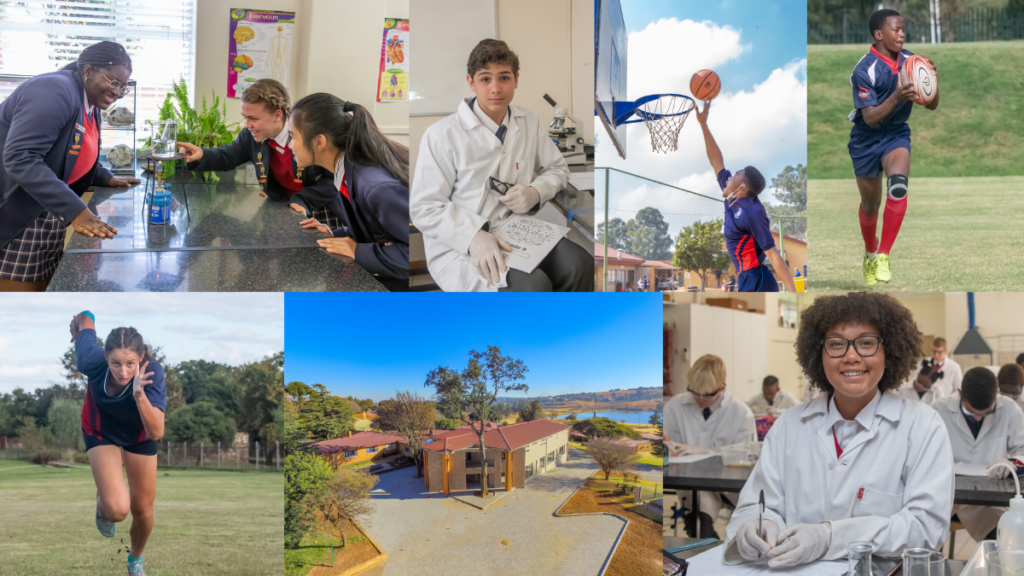
In a South African education landscape increasingly focused on outcomes rather than optics, Alma Mater International School has quietly established itself as one of the country’s most consistent pipelines into hard-science degrees and top-tier global universities.
While many schools highlight individual headline placements, Alma Mater’s strength lies in scale, consistency and academic depth across multiple cohorts.
Over the past four years, its graduates have secured admission to more than 50 leading universities across South Africa, the UK, Europe, North America, Asia, Australia and New Zealand.
These pathways span highly competitive fields including Medicine, Engineering, Actuarial Science, Genetics, Computer Science and Economics, disciplines where sustained academic rigour is essential.
A performance profile built for demanding degrees
At the heart of this success is a rigorous Cambridge academic model designed around conceptual understanding, analytical reasoning and long-term academic discipline, rather than short-term exam preparation.
Across the November 2025 Cambridge examination sittings, spanning IGCSE, AS and A Level, Alma Mater students collectively achieved 22 A*s, 89 A grades and 165 B grades, reflecting sustained academic strength across senior phases and a culture of high academic expectation.
At Advanced Level, students recorded strong A and B outcomes across Mathematics, Physics, Chemistry, Biology and Economics, reinforcing the school’s academic depth well beyond foundational study.
This aggregated performance provides a clear indication of institutional consistency rather than reliance on isolated results from any single phase.
Sustained excellence over time
Importantly, the 2025 outcomes sit within a five-year pattern of consistently strong performance across the Cambridge pathway.
Across successive cohorts, Alma Mater students have demonstrated particular strength in Biology, Chemistry, Physics and Mathematics, forming a stable academic base for progression into Medicine, Engineering and related STEM fields.
This longitudinal consistency has enabled reliable placement outcomes year after year, signalling institutional strength rather than dependence on exceptional individuals.
Hard science, not just high averages
What distinguishes Alma Mater is not simply strong grades, but the academic pathways students pursue and sustain.
In recent cohorts, over 80% of Sixth Form students consistently followed hard-science and quantitative pathways, including Mathematics, Physics, Chemistry, Biology and Economics.
Students such as Tshiamo, who achieved As across Mathematics, Physics, Biology and Chemistry, and Teane, who demonstrated a strong balance of quantitative and language subjects, reflect the academic resilience and discipline increasingly sought by selective universities.
Proven success in Medicine and Engineering
Alma Mater has developed a particularly strong reputation for Medicine placements, both locally and internationally.
Within South Africa, students have consistently secured admission to Medicine and Health Sciences at Stellenbosch University, the University of Cape Town, the University of Pretoria and Wits, across undergraduate and graduate-entry routes.
Internationally, graduates have progressed to European medical schools such as St Charles University (Second Faculty of Medicine, Prague) and St George’s Medical School of London (Cyprus), alongside pre-medical and biomedical pathways in North America.
Engineering outcomes are equally strong, with placements at institutions such as KAIST (Korea Advanced Institute of Science and Technology) and leading universities in the UK, Canada, the United States and Europe.
Research-driven preparation for university study
A distinguishing feature of Alma Mater’s academic approach is the Cambridge International Project Qualification (IPQ), which requires students to complete extended, university-style research assessed externally by Cambridge.
Recent IPQ successes include Zandre, who achieved an A* for a research project analysing treatment approaches for a rare genetic disorder, and Olivia Gould, who also earned an A* for her research into neonatal respiratory support for pre-term infants, work that directly aligned with and supported her progression into medical studies at a leading European medical school.
These outcomes reflect the level of inquiry typically expected in early undergraduate study and demonstrate how structured research at school level can meaningfully strengthen applications to competitive Medicine, Engineering and life-science programmes.
Education built for the real world
Behind these outcomes is a model that combines small-cohort teaching, structured academic support, rigorous assessment, long-term research and focused university guidance.
With over 30% international students representing more than 25 nationalities, Alma Mater operates as a genuinely global academic environment from the outset.
As university competition intensifies and academic thresholds rise, Alma Mater International School stands out not through slogans, but through something far more compelling: measurable academic depth, sustained hard-science performance, and a proven ability to prepare students for success at the world’s most demanding universities.
Click here to learn more about Alma Mater International School.


















 Loading ...