

Rand takes a big hit


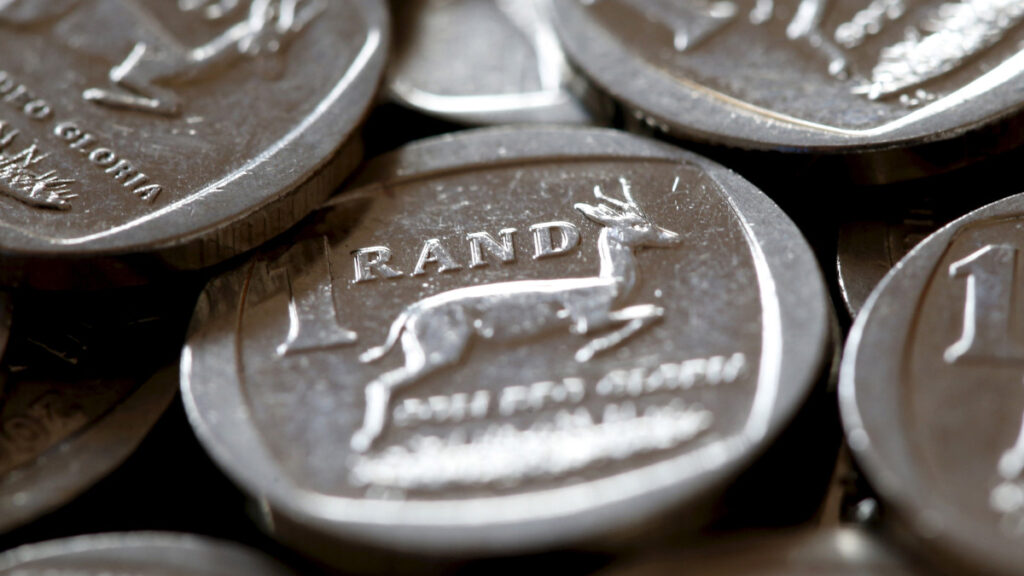
The rand has taken a knock following the eruption of war between the United States/Israel and Iran, with trouble brewing for markets if the conflict escalates and expands.
Over the weekend, the United States and Israel carried out major strikes on Iran that killed Supreme Leader Ayatollah Ali Khamenei.
Iran has retaliated with missile and drone attacks across parts of the Middle East.
The volatility in global markets has played out through a move into safe havens, while global oil prices have surged.
“Although the US is involved, and President Donald Trump’s stance on tariffs continues to undermine the USD’s value, it remains a haven for investors seeking to shield themselves from the volatility that might follow this weekend’s events,” said ETM Analytics in a research note.
For the rand, the unit buckled, weakening to R16.17 against the dollar early on Monday (2 March 2026), but recovered to around R16.05/$ by the afternoon. It is currently trading at R16.12/$ at 14h45.
The dollar gained 0.2% against a basket of currencies, while gold – a major South African export – hit its highest level in more than four weeks.
According to Investec Chief Economist Annabel Bishop, the US and Israel’s actions have little impact on the rand and inflation in isolation, but could be a drag if current conditions persist or worsen.
“Our expected case does not see the tensions persistently spread through the Middle East, but the risk has risen,” she said.
The rand ended R15.87/USD on Friday with oil at US$72/bbl. The rand oil price has jumped 12% after the weekend attack. Oil is currently sitting at $79 a barrel.
Bishop warned that if this is sustained or rises further, it would push up fuel prices in South Africa in April. This will have a longer-term impact on inflation and, subsequently, interest rates.
However, the more immediate outlook is more stable—albeit risky.
“If the oil price elevated sharply further, and the rand weakened against the US dollar substantially, South Africa’s MPC would most likely look through this if it’s a temporary shock and not raise interest rates,” Bishop said.
Risk of more volatility to come

Looking at rand forecasts, Bishop noted that the 2026 budget has reduced the likelihood of Investec’s downside scenarios.
However, there is a risk of a wider conflict in the Middle East, which could drag these down.
Given the current state of affairs, Investec’s base-case scenario, which envisages the rand averaging around R16.20/$ for most of the year before dropping to R16.05 by the end of the year, has increased to a 54% likelihood.
In this scenario, economic growth slowly rises to 3.0% over five years, while South Africa’s credit rating shifts to a positive outlook thanks to fiscal consolidation.
Underpinning this scenario is that geopolitical tensions do not escalate. Bishop noted that this is a key risk.
She noted that the White House has received support from world leaders for the strikes on Iran, including Canada, Australia, Albania, Saudi Arabia, Israel, Kosovo, the UK and Ukraine.
As such, risks have risen somewhat for a multi-country NATO conflict.
“The conflict is not expected to have ended yet, despite some pullback in markets this morning, with President Trump warning yesterday that the US intends to continue striking Iran for four to five weeks,” she said.
Trump added that “Operation Epic Fury” aims to crush the Iranian regime and end the nuclear threat in the country.
With Operation Epic Fury, Trump touted “a precise, overwhelming military campaign to eliminate the imminent nuclear threat posed by the Iranian regime, destroy its ballistic missile arsenal, degrade its proxy terror networks, and cripple its naval forces”.

















 Loading ...