

Another food product pulled from shelves in South Africa, and SA police in hot water



The South African rand was steady on Wednesday as traders cautiously assessed President Donald Trump’s assertion that the US was in negotiations to end the war with Iran.
This came after a significant weakening of the currency on Tuesday, where it traded around 17.1125 to the dollar.
In early trade on Thursday, the unit continued to take its cue from the global backdrop and traded around the R17/$ level.
US President Donald Trump has stepped back from plans to target Iran’s energy infrastructure, which has boosted the appetite for risk-sensitive currencies like the rand.
However, sentiment grew cautious once again after Iran denied holding negotiations with Washington, raising concerns about a potential energy-driven economic shock.
According to central bank data released on Tuesday, South Africa’s composite leading business cycle indicator rose by 0.4% month-on-month in January.
This index tracks various factors, including vehicle sales, business confidence, the money supply, and other relevant data.
“While Q1.26 is expected to see some growth momentum, Q2.26 looks to begin with hefty fuel price increases which will have a depressing effect on retail, wholesale and vehicle sales if the war persists,” said Annabel Bishop, chief economist at Investec.
Investors are now focusing on Thursday’s central bank rate decision, with economists expecting the bank to maintain its main lending rate at 6.75%.
The US dollar recently rose 0.2% against a basket of currencies, while oil prices rose amid supply concerns. Johannesburg’s Top-40 index is currently down by 0.3%.
Additionally, the benchmark 2035 government bond experienced a decline, with the yield rising by 12.5 basis points to reach 9.01%.
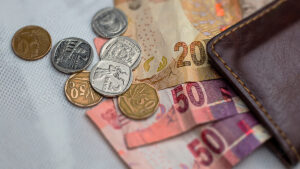
As of Thursday, 26 March, the rand is trading at R17.02 to the dollar, R22.74 to the pound, and R19.68 to the euro.
Gold is currently valued at $4,461.09 per ounce, while oil prices have risen to $104.2 per barrel.
5 important things happening in South Africa today

Fruit juice pulled from the shelves: The National Consumer Commission has confirmed a recall of specific batches of Slimsy Pomegranate Squash Concentrate (6% in one-litre bottles), with a best-before date of October 14, 2026. [TimesLive]
SAPS in trouble: The South African Police Service (SAPS) and the Hawks did not attend a portfolio committee meeting to report on their investigations into lottery-related corruption. Originally scheduled for 29 January, the meeting was postponed to 24 March. Despite this, SAPS and the Hawks did not attend or offer any explanation for their absence. [Moneyweb]
Bad news for inflation: South Africa is experiencing an inflationary shock from rising fuel prices and disrupted oil supply from the Middle East. The Reserve Bank may need to navigate this period, potentially pushing inflation past the 3% target. This could signal the end of the interest rate-cutting cycle and lead to hikes if the conflict persists. Izak Odendaal, chief investment strategist at Symmetry, notes that the situation is more complex than past examples. [Daily Investor]
Massmart seeks R9 million: The Constitutional Court ruled on Wednesday that the Labour Court does not have the authority to decide on claims for compensation arising from conduct that occurs during a protected strike. [BusinessDay]
Top-ups paid to political party: The Democratic Alliance (DA) is facing internal criticism after a leaked report revealed “top-ups,” or additional payments made to public representatives. Senior party leaders spoke to News24, raising concerns regarding the criteria used for these additional payments. [News24]













 Loading ...