

United States cutting South Africa off


The head of UNAIDS said she was saddened by US plans to withdraw HIV/AIDS funding for South Africa and urged Washington to reconsider.
She warned the move could cost lives in the country with the largest number of people infected with the virus.
Winnie Byanyima also told a UN news briefing ahead of a high-level UN conference on HIV/AIDS that broader global aid cuts risked reversing decades of progress against the disease.
In an emailed statement, the US State Department said the United States has “decided to initiate a phased drawdown” of the President’s Emergency Plan for AIDS Relief (PEPFAR) in South Africa.
This was because of “South Africa’s failure to make demonstrable progress on policy requests by the administration.”
Semafor last week cited a State Department official and two congressional aides as saying that the decision was a response to South Africa’s failure to meet US demands that Pretoria reduce its partnership with Iran, end Black Economic Empowerment policies, and address “Kill the Boer” anti-apartheid chants.
The Trump administration has laid out a clear list of policy requests for South Africa, reiterated and outlined by US Ambassador Leo Brent Bozell back in March.
The five “asks” reflect the same demands put forward in 2025 to secure a better trade deal with the US, with the added demand of political non-alignment.
The demands are:
- Protecting rural communities from violence, referring to the globally publicised farm attacks. In 2025, the US wanted this to become a priority crime focus.
- Condemning rhetoric that incites hatred and glorifies violence, referring to the infamous “kill the boer” chant. The US wants the government to publicly condemn this.
- Ensuring appropriation policies include fair and clear compensation standards, referring to the government’s move to normalise “nil” compensation in new expropriation laws.
- Ending mandatory surrender of ownership or control of corporate decision-making as a cost of one’s own business, referring to South Africa’s strict BEE policies.
- Ending its association with Iran and enemies of the United States and becoming a non-aligned state, as it purports to be.
“These are achievable, practical and beneficial to both Americans and South Africans,” Bozell said at the time.
Because of South Africa’s failure to address these requests, the Trump administration is now taking further steps to pressure the country.
The US State Department said PEPFAR was never intended to be permanent and that South Africa “is a middle-income country and is more than capable of supporting its own health programs.”
Putting lives at risk
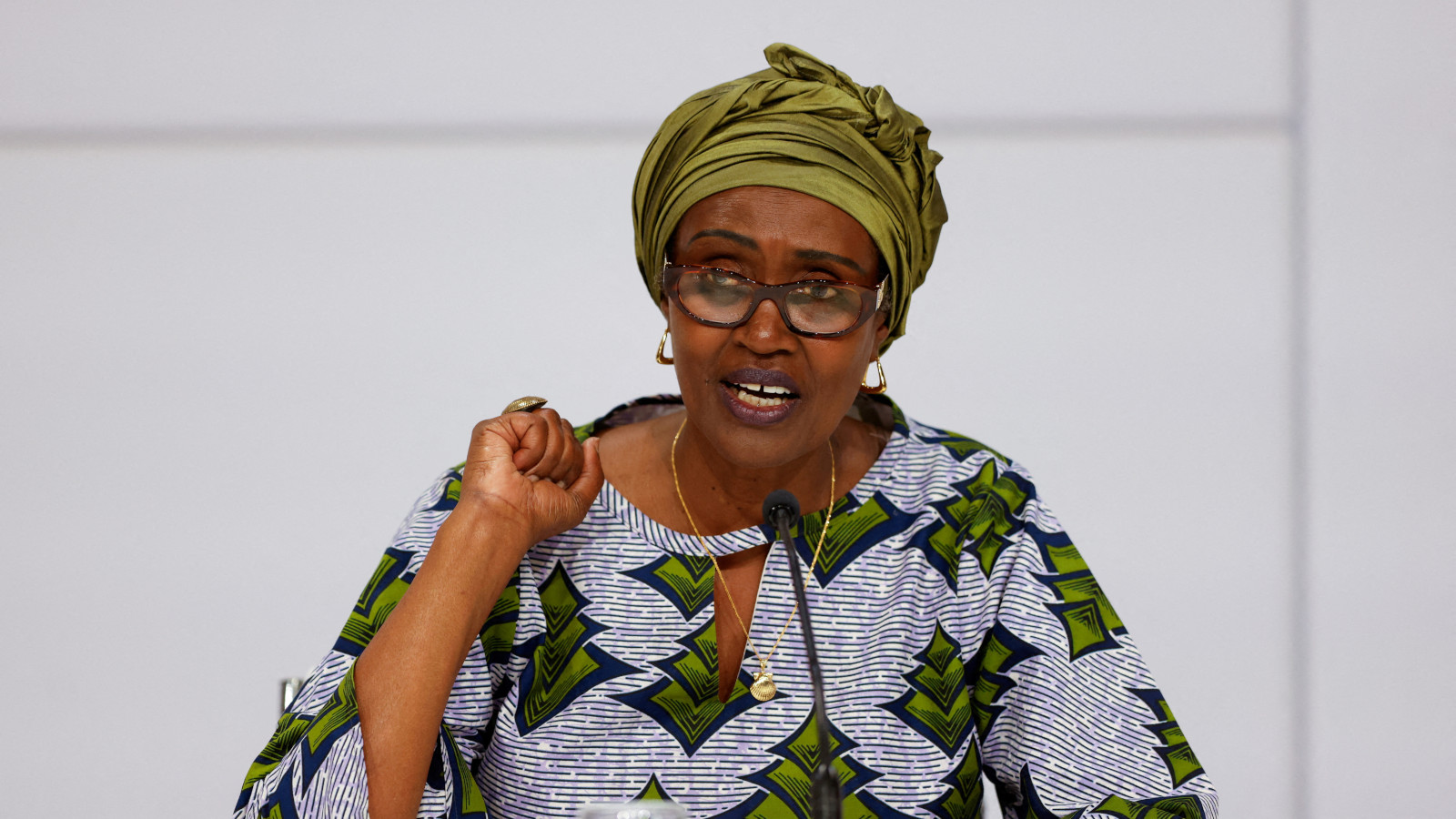
“I’m sad about that,” Byanyima said, when asked about the US move.
“Taking [PEPFAR] away is taking away life-saving support from the most vulnerable people. So, that is sad. And I would ask the United States to reconsider its position.”
US President Donald Trump froze many foreign aid programs early in his presidency, before reinstating some lifesaving assistance, including parts of PEPFAR.
South Africa does not rely on US funding for its HIV drugs, but PEPFAR previously provided the country with over $400 million a year and paid about 15,000 health workers’ salaries.
Byanyima said South Africa has about 8 million people living with HIV, the most in the world, and the U.S. program had been providing up to 17% of its HIV funding.
She pointed to a steep drop in overall global development assistance from traditional donors in Europe and North America.
“Please do not take money away because you are taking lives away. Have a planned transition,” she said.
She noted a target to end AIDS as a public health threat by 2030 and said the global response had achieved major gains, with 32.1 million of roughly 40 million people living with the virus that causes AIDS receiving treatment.
But she cautioned that progress was uneven and fragile.
UNAIDS data show 9 million people still lack treatment, and 1.2 million people were newly infected last year.
Byanyima warned that recent funding cuts were already disrupting services and could lead to a rebound in infections.
She said HIV testing in countries with high infection rates had fallen by 22%, and in some countries there had been a 90% drop in condom distribution.
“We are seeing early signs of serious reversals in our progress… the trend that has been going down may now reverse and start rising,” she said.
With Reuters















 Loading ...