

Make or break for the South African Reserve Bank


The recent decision by the South African Reserve Bank to keep interest rates unchanged has placed the central bank under the microscope over its ability to hit its new 3% inflation target.
The South African Reserve Bank decided to keep interest rates on hold at its July Monetary Policy Committee (MPC) meeting, leaving the repo rate at 7.0% and the prime rate at 10.5%.
The six-member MPC were split over the decision, with four calling for a hold and two calling for a 25 basis point hike.
The move came one day after Stats SA data showed that inflation reached 5.0% in June, which is well above the one percentage point tolerance band for the new 3% target.
Finance Minister Enoch Godongwana reduced the inflation target from its previous 4.5% midpoint to 3% last year, following widespread requests from the SARB.
The decision was supported by muted inflation in South Africa, with inflation averaging around 3% for much of 2024 and 2025.
The SARB was even expected to cut interest rates at the start of the year as inflation was largely contained.
However, the US and Israel’s attacks on Iran and the subsequent closure of the Strait of Hormuz led to a massive rise in oil prices and a massive rise in petrol prices.
While the Reserve Bank hiked rates in May, the MPC decided to keep rates unchanged at its July meeting.
The central bank noted that the country’s monetary policy was restrictive enough to make a second consecutive rate hike unnecessary. The surprise decision led to a weakening of the rand.
Reputation on the line
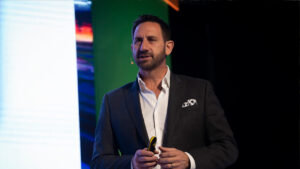
Sean Neethling, Head of Investments at Morningstar Investments South Africa, told BusinessTech that the Reserve Bank is now facing a test of its credibility.
Given the SARB’s push to lower the inflation target, it will be scrutinised for every interest rate decision and its ability to reach the 3% target.
Neethling noted that inflation is well above the SARB’s 3% target range. This places the SARB in a tough situation, as higher interest rates would theoretically bring inflation down, but also limit economic growth.
He added that South Africa has to be a price-taker for interest rates. To attract capital, South Africa often needs to offer real returns that are attractive to investors.
If the United States Federal Reserve were to hike rates, Neethling believes this would force the SARB to do the same.
Neethling admitted that predicting US Monetary Policy has become more challenging, given the recent appointment of Kevin Warsh as chair.
While the US has also seen elevated inflation, the Fed decided to keep interest rates unchanged last week.
The Reserve Bank itself has warned that additional interest rate hikes are possible for the future, especially if inflation expectations remain elevated.
The central bank also stated that if oil prices remain high, another interest rate hike would be possible. This would be the case if global oil prices remain around $100 per barrel and only drop lower in 2029.
However, if oil prices fall to roughly $78 per barrel and decline further, an additional interest rate hike may not be necessary.











 Loading ...