

South Africa has something the United States wants, and ‘secret’ mafia exploiting collapsing services



Markets will be keeping an eye on three key data points this week: consumer inflation and retail sales data on Wednesday (19 August), and wholesale trade data on Thursday.
However, other data will also be coming this week, with Stats SA’s returning insolvencies data being published on Tuesday, giving an indicator of the health of the business environment.
South Africa’s headline inflation is expected to ease when Stats SA reports it next week, helped by a sizeable petrol price cut in July.
Stats SA will publish the latest inflation data for July 2026 on Wednesday, 19 August, with economists anticipating a cooler figure.
Projections are for inflation to be between 4.3% y/y and 4.8% y/y, down from 5.0% y/y in June.
For retail sales, economists expect the figure to pick up from 2.3% in May to 2.5% in June, supported by a low base.
Looking at global markets, more ships have come under attack in the Strait of Hormuz as talks to end the war in the Middle East remain stalled.
The United States is now readying new economic measures to force Iran to capitulate.
The Strait, through which a fifth of the world’s oil and gas transited before the war, has emerged as a key sticking point in negotiations to bring a lasting end to almost six months of fighting.
The US is adamant free passage along the route linking the Persian Gulf to the Gulf of Oman and the Arabian Sea should be restored, but Iran insists it will retain control.
US President Donald Trump made flippant comments about “declaring the Hormuz Strait a territory of the United States,” but is struggling to find an off-ramp to the war that he started.
Volatility in the Middle East extends beyond the US-Iran conflict.
Israel continues to clash with Hezbollah in southern Lebanon and Hamas operatives in Gaza, while the Houthis have attacked ships in the Red Sea. All three groups are backed by Iran.
The conflicts have led to turmoil in global markets, especially the oil price, which has had a heavy impact on fuel prices, including in South Africa.
As things stand, oil is currently trading at $88 a barrel, with analysts anticipating it sticking to a $80-$90 range for as long as the war continues.
The rand has maintained its resilience, trading at R16.17/$, amid stronger local fundamentals and a softer dollar.
5 important things happening in South Africa
South Africa’s Trump card: South Africa is the largest supplier of platinum, rhodium, chromium, and military-grade vanadium to the United States, and the second largest for various other critical minerals. If the United States wanted to cut ties with South Africa, it would have to rely on rivals like Russia and China for some of the minerals. [Newsday]
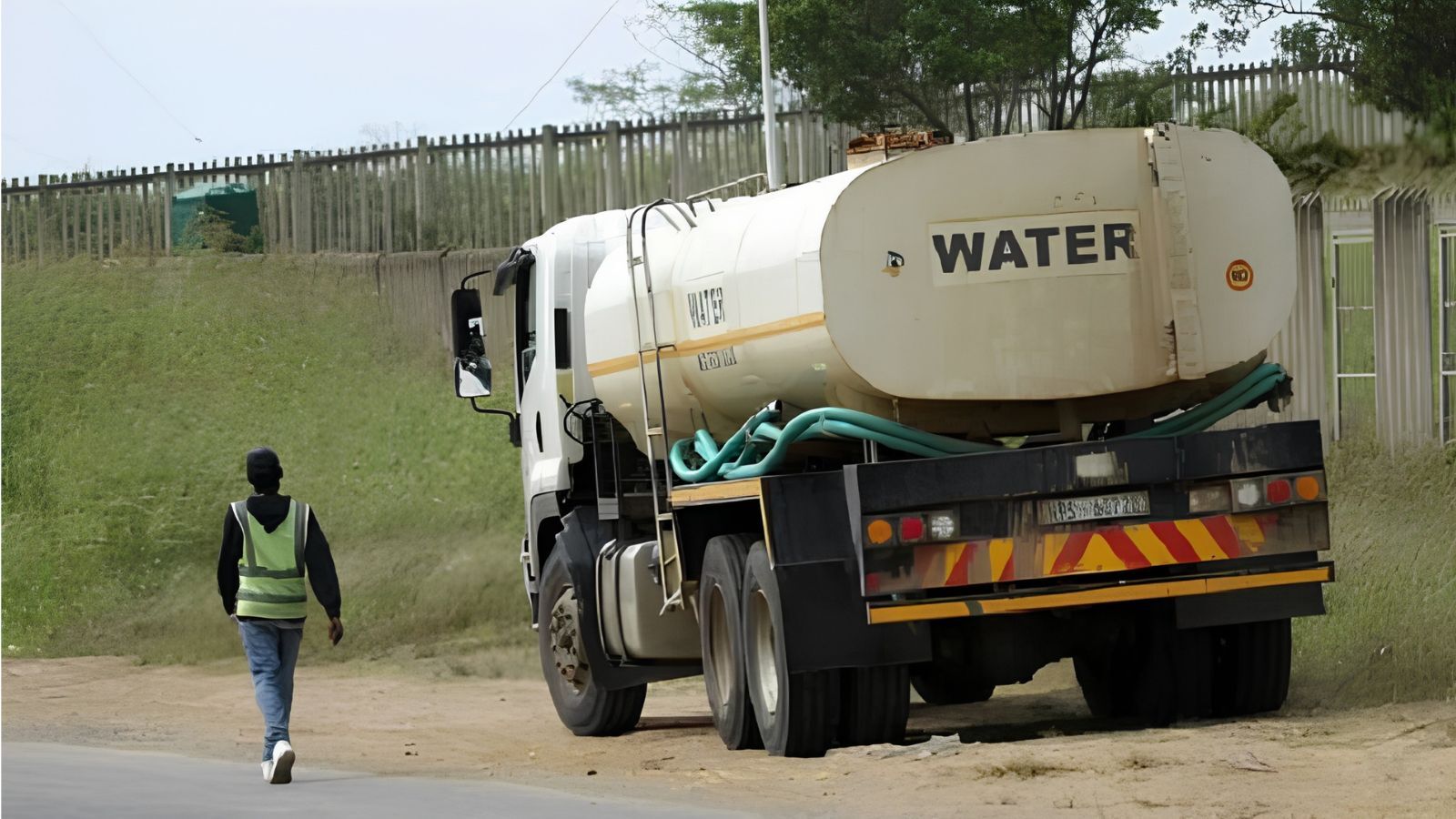
Secret tanker trade: Joburg Water has refused to provide details on tenders and related procurement for the use of water tankers in the city, with the SAHRC raising concerns about corruption and ‘mafia-like’ sabotage. Over five years, Johannesburg spent at least R650-million on water tankers as city services collapsed. The city said it is phasing out tanker use by the end of 2028/29. [GroundUp]
Banking app warning: Mobile banking apps have become an increasingly popular target for cybercriminals, as more than 21 million South Africans adopt them. Security experts warn that criminals aren’t compromising the apps themselves, but rather target the people using them to scam them into revealing the details they use to access them. [MyBroadband]
R900 million investment: South African mining and chemicals company AECI is preparing to invest between R700 million and R900 million to modernise its Modderfontein facility. AECI is South Africa’s largest manufacturer of explosives for commercial mining and has operations across Europe, Asia, North and South America, and Australia. [Daily Investor]
Petrol price pain: The expected petrol price hikes for September have gotten worse, with motorists facing a larger hike next month due to the volatile situation in the Middle East. This is according to data from the Central Energy Fund (CEF) for the end of the second week of August, which shows an under-recovery for both petrol and diesel. [Top Auto]














 Loading ...