

R50 billion failed state fund in South Africa under investigation


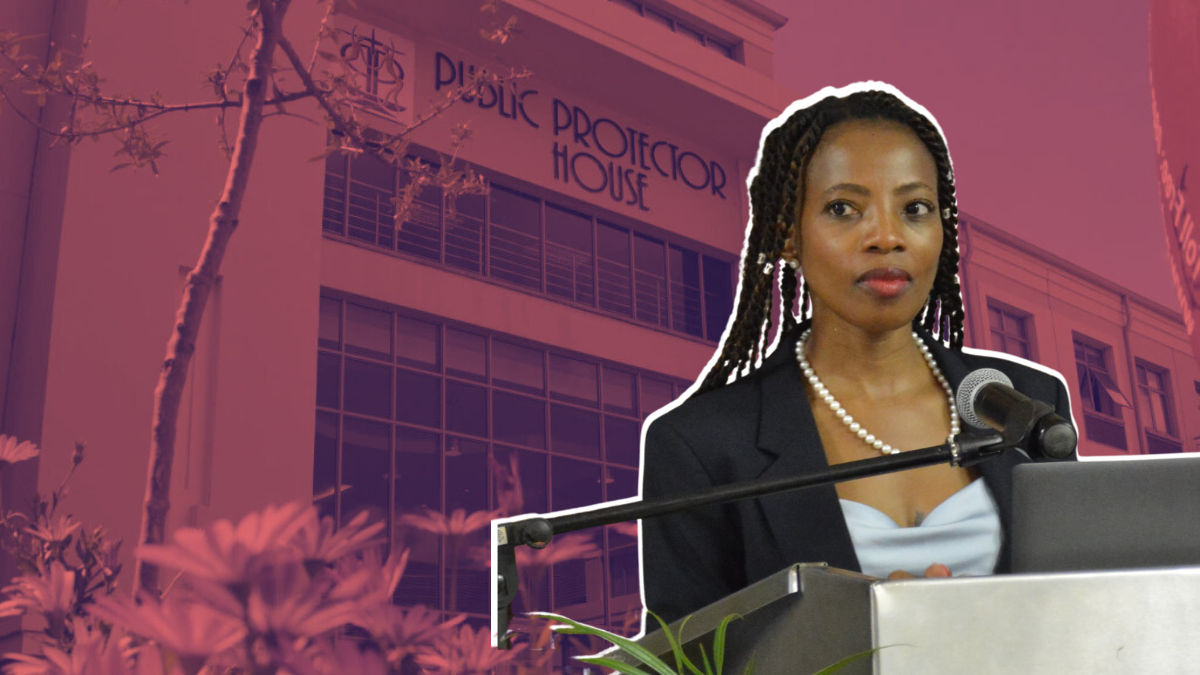
The Public Protector, Advocate Kholeka Gcaleka, says her office has evidence that the National Student Financial Aid Scheme (NSFAS) has failed in its mandate, leaving students destitute.
She has now urged three parties to work together to remodel South Africa’s student financial aid scheme.
There are the Minister of Higher Education, the Finance Minister, and the South African Revenue Service (SARS).
They have been called to collaborate to address the growing crisis in the student financial aid scheme and develop a more effective benchmarking model for NSFAS.
This comes after the Public Protector’s office launched an investigation into the financial aid scheme in 2021.
This investigation cited findings by the Special Investigating Unit that more than 40,000 students across 76 institutions were not properly funded.
The improper funding for these students cost the financial aid scheme R5.1 billion. Due to these findings, the Public Protector sought to conduct a deeper search into the financial aid scheme.
“We have evidence that NSFAS has failed to execute its mandate. It has left many students destitute,” said Gcaleka.
Unsettled accounts have also forced higher education institutions to withhold academic qualifications from graduating students.
The issues have been worsened by ongoing administrative inefficiencies, such as delays in confirming funding and processing allowance payments. Gcaleka has not yet released her final report.
She has initiated a proactive follow-up investigation into irregularities related to student accommodation and housing.
Professor Linda Meyer, member of the National Council on Higher Education, said that 26 universities are suffering due to inefficiencies at the NSFAS.
She indicated that funding shortfalls are jeopardising salaries, university operations, and academic programs.
“This crisis affects all of the 26 public South African universities, although not every institution is affected equally,” she said.
“NSFAS owes public institutions well over R10.5 billion in tuition payments for funded students.”
She said that universities have already provided teaching support and other services, but that the expected funding has not followed.
Meyer noted that there is still uncertainty regarding the resolution of the funding backlog.
She explained that long-term measures include an audit improvement plan, enhanced data integration, and investigations into irregular payments.
She said that the number of funded students should align with the available budget.
“Access cannot be expanded through policy commitments that are not supported through adequate funding, dependable systems and the institutional capacity to deliver,” she said.
NSFAS must be shut down
Earlier this month, the R54.3 billion National Student Financial Aid Scheme (NSFAS) came under increased scrutiny.
This is because it still needs to address funding issues in 10,000 cases, with over 4,000 students awaiting resolution.
Many students reliant on NSFAS funding to complete their studies have been left unable to register for the following academic year of their tertiary studies.
NSFAS revealed that it is still awaiting academic information from institutions for 4,138 students whose cases are under investigation.
The state-owned funding scheme said it had processed 2,361 investigations and restored funding to the affected students.
“The Deputy Minister emphasised that he respected the GAP investigations and vetting processes conducted by NSFAS,” said the Department of Higher Education and Training.
The Department said that the vetting process includes verifying student registration, enrollment, accommodations, and academic results to eliminate potential fraud and confirm beneficiaries’ academic eligibility.
However, the minister said it is unacceptable for students to wait up to five months for their GAP investigations to be completed.
The government has placed NSFAS under administration and appointed advisors to help fix the problems and restore some confidence in the system.
Earlier this month, Deputy Minister of Higher Education Yusuf Cassim submitted written complaints and inquiries from students at the University of South Africa (Unisa) to the institution’s management.
These complaints address concerns over delays in the NSFAS Personal Care Allowance payments and the discontinuation of monthly data allowances.
The complaints revealed widespread frustration among students over delayed Personal Care Allowance payments for July and ongoing data and connectivity issues.
These issues are particularly critical for distance-learning students. More than 93,000 Unisa students have been affected by these delays.















 Loading ...