

Criminals targeting another group of people in South Africa


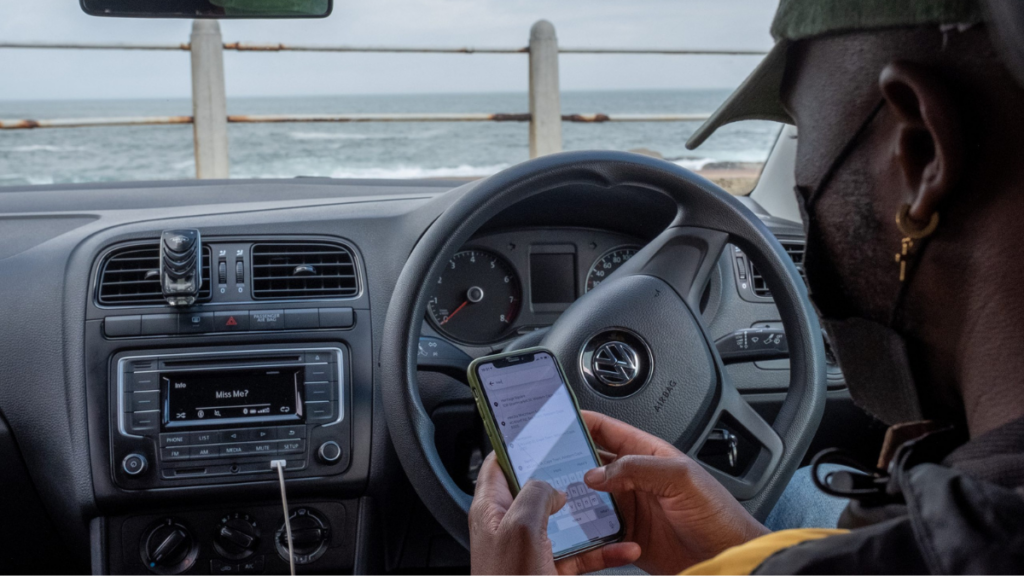
Criminals are targeting e-hailing drivers in South Africa daily, with dash cameras increasingly bringing incidents into the public spotlight.
In an interview with 702 Drive, Melithemba Mnguni, secretary general of the E-hailing Partners Council, said the attacks should not necessarily be viewed as a recent increase.
It should be viewed as a long-standing problem that is now being documented more frequently because more drivers are installing dash cameras.
“The robberies, like we always say, are on a daily basis. I wouldn’t really say they are increasing, because they’ve been constant for a long time,” he said.
The council had hoped that the growing use of dash cameras would discourage criminals from targeting drivers.
However, Mnguni said the footage emerging from these devices showed how brazen some attackers had become.
“We’ve been hoping—now that a lot of people are moving to dash cameras—that [robberies] would subside and go down, but seemingly that’s how brazen these guys are,” he said.
He referred to a recent incident in which a female driver was robbed despite the attackers being aware that they were being recorded.
“I was just watching this one where they robbed the lady. They could see the camera, and he was actually insulting the camera,” Mnguni said. “So it’s really getting out of hand.”
According to Mnguni, e-hailing drivers are particularly vulnerable because criminals can use the platforms themselves to arrange a meeting with their intended victim.
Instead of having to find a driver on the street, a criminal can request a trip to a location where the driver may be isolated.
Mnguni said another major concern was criminals’ ability to infiltrate some e-hailing platforms by creating passenger profiles and masquerading as legitimate customers.
While dash cameras have provided valuable evidence of attacks, Mnguni said they had not deterred criminals to the extent the council had hoped.
More support for drivers is needed

Mnguni also criticised what he described as insufficient support for drivers from some e-hailing companies.
He said the council had previously pushed for drivers to receive compensation when they were robbed or injured while working.
“Unfortunately, there is no support. We actually fought and said that they should be able to compensate drivers when they are robbed during trips, injured, and so forth,” he said.
He said some medical cover that companies had previously agreed to provide had since been withdrawn.
“So right now, when you lose your phone, it’s on you. You lose whatever possessions you have or get injured, and they don’t intervene,” Mnguni said.
He argued that the lack of adequate support contributed to concerns about whether companies had enough incentive to implement stronger security measures.
Mnguni made an exception for Uber and said the platform’s passenger verification requirements appeared to make it less attractive to criminals.
He said attacks were more prevalent on other platforms where users could allegedly register with fewer identifying details.
“On the Uber platform, that’s why a lot of criminals wouldn’t commit that crime—because they know that there is that verification. But you don’t get the same on the other platforms,” he said.
Mnguni also raised concerns about law enforcement’s ability to trace criminals using certain platforms.
He said some operators were not sufficiently connected to law enforcement authorities, making it more difficult to investigate incidents.
“We don’t know where they operate from. They are not accountable to anyone, and so forth,” he said.
Rather than relying primarily on self-defence measures, Mnguni said the council wanted companies to introduce preventive measures that would make it harder for criminals to use their platforms.
“What we always advocate for are preventative measures, where what we are saying about Uber should be a standard across all platforms,” he said.


















 Loading ...