

Friends and family are landing South Africans in hot water with SARS


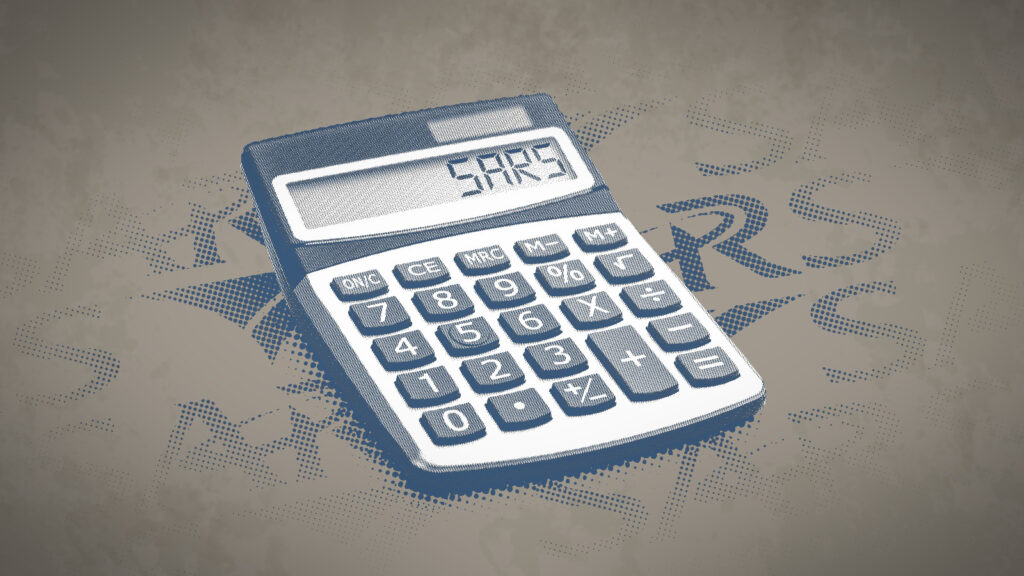
Data has shown that South Africans turning to friends and family for tax advice is one of the leading causes of non-compliance.
The information comes from Tax Consulting South Africa, one of the country’s largest tax consultancy and advising firms.
The firm said that while the majority of South Africans know they are tax-compliant, many still turn to others for advice.
“‘family and friends’ being somewhere involved is the clear top-ranking non-compliance indicator,” the firm said.
It explained that while help from others may be meant as a favour, “The long-term tax and financial implications must be taken into account.”
“As well-intentioned as the offers from friends and family members may be to assist with SARS matters and compliance, tax requires far more than completing forms and submitting documents to SARS,” it said.
“The reasons for non-compliance vary. This can be as simple as incorrectly navigating SARS e-filing or making a technical error on a law that has changed.”
“It could be misunderstanding an area of tax and the requirements, for example getting a South African non-residency certificate under the incorrect category.”
Tax non-compliance is a large issue in South Africa, with compliance interventions generating approximately R316 billion in revenue for SARS in 2026.
Tax Consulting South Africa noted that while many compliance issues from asking for help from friends and family may be unintentional, other instances may be deliberate.
“There are also more sinister cases, where tax returns are submitted as a ‘nil return’, meaning that the tax return is completed with just zeros,” it said.
“This often allows a SARS statement of account to be issued showing no tax due to SARS or even allow a taxpayer to obtain a tax clearance certificate, demonstrating a job well done.”
“However, your tax residency status ultimately determines what income must be declared to SARS and how your tax returns should be completed.”
The compliance issue

Improving tax compliance has been a focus area for SARS in recent years, particularly under the tenure of its former commissioner, Edward Kieswetter.
In a speech in April 2026, Kieswetter discussed the impact of the service’s ongoing efforts on the compliance rate.
“I am pleased that through our focused compliance programme efforts over the past seven years, we have seen a pleasing improvement in voluntary compliance,” he said.
“For the 2026 financial year, the SARS VAT voluntary compliance index reached 67.19%, an approximately 0.5% increase from the previous year.
In his speech, Kieswetter also said that payment compliance had reached roughly 75%, which he highlighted as good news for ongoing compliance efforts.
“That is the compounding effect of our compliance efforts,” he said. “When taxpayers who are non-compliant in a particular year, we engage with them, and their behaviour changes.”
This creates an “ongoing compliant dividend” according to Kieswetter, which represents consistent gains through ensuring compliance.
The compliance efforts were reflected in SARS’s revenue for the 2026 financial year, which exceeded R2 trillion.
Revenue increased from the previous year and was approximately R24.7 billion higher than previously estimated.
In a statement on 1 April 2026, Kieswetter said, “Collecting over R2 trillion is not an accident, but the outcome of the more than 14,500 employees who diligently perform millions of activities meticulously to achieve this record collection.”
“Every rand not only helps build a capable state that honours the social contract but also enables the state to deliver for all South Africans and strengthen the fiscal integrity of South Africa.”
The compliance efforts by SARS show why it is vital for South Africans to take appropriate steps to be above board, rather than turning to friends and family.

















 Loading ...