

The one province in South Africa where the rich are buying homes for over R4.5 million


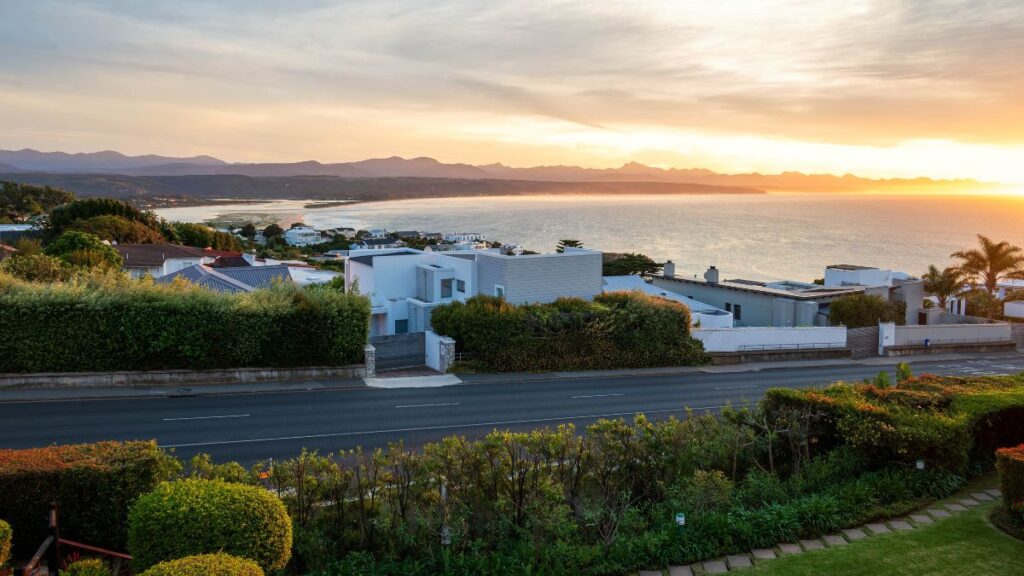
South Africans are increasingly buying luxury property in South Africa, with properties valued at over R4.5 million seeing increasing activity, especially in the Western Cape.
This is according to Absa’s latest Homeowners Sentiment Index (HSI), which showed that more luxury properties are being bought in South Africa.
Absa said that the upper end of the residential market has seen a noticeable increase in activity over the past year.
Homes valued above R4.5 million accounted for 5.2% of transactions in Q2 2026, up from 4.0% a year ago. These properties account for more than a quarter of the market by value.
Most of this growth is coming in the Western Cape, where luxury properties account for 9.9% of transactions during the quarter.
This means that close to one in 10 properties in the province now falls within the luxury segment.
Absa also noted that high-net-worth customers and entrepreneurs are also increasingly using legal entities to buy property, as part of broader wealth-planning considerations.
Legal entities accounted for 27% of property market activity in the latest quarter, highlighting another feature of how wealthier buyers are approaching property ownership.
“What we have seen is that consumers and investors are well aware of the ongoing economic and political shifts around them,” said Tshepo Mashashane, Head: Business Strategy at Absa.
“They are cognisant that these changes will influence their buying power and the financial commitments of homeownership.”
Mashashane added that property ownership and investment remain desired goals, but the decision to enter the market is being approached more carefully and strategically.
Confidence down – but still elevated
While there are green shoots in the luxury segment, overall confidence in South Africa’s property market decreased slightly by one percentage point to 87% in Q2 2026.
The softening reading comes amid uncertainty around interest rates, the economy and the political environment, impacting decisions to buy, invest in and renovate property.
Confidence dropped in all subindices over the quarter, with buying sentiment falling by 7 percentage points, renovating by 6 points, investing by 5 points, renting by 4 points and selling by 3 points.
The decline in buying sentiment was the largest quarterly drop since Q4 2022, with respondents citing economic concerns, heightened interest rates and high property prices.
“Affordability is the single biggest constraint on property ownership. Respondents repeatedly link the difficulty of buying and keeping property to high costs relative to income,” said Mashashane.
“Many cannot afford deposits, bonds and rising ongoing costs such as rates, levies, utilities and maintenance.”
This is causing many to delay or entirely abandon buying or deciding to downscale or sell their properties.
Respondents also said that bond repayments, possible rate increases and strict lending criteria are stresses to entering or staying in the market.
Crime and area safety were also seen as major considerations, with high crime levels associated with lower property values, difficulty selling and higher security costs.
Many buyers prefer secure estates and better-policed areas when considering where to purchase a property.
“Many South Africans still see property as a safe long-term investment with the potential to appreciate in value and build wealth,” added Mashashane.
“But that value is now being judged more carefully against factors such as location, demand, political confidence, service delivery and expectations for the future.”
However, while confidence is down, it is still far higher than in previous years, with 87% confidence the second-highest level recorded over the last decade.
The 88% confidence level recorded in Q1 2026 was the highest since 2016, with the concerns highlighted by Absa having only a minor impact on the confidence reading.
| Quarter | HSI (%) |
| Q1 2016 | 73% |
| Q2 2016 | 78% |
| Q3 2016 | 83% |
| Q4 2016 | 81% |
| Q1 2017 | 75% |
| Q2 2017 | 74% |
| Q3 2017 | 81% |
| Q4 2017 | 82% |
| Q1 2018 | 75% |
| Q2 2018 | 73% |
| Q3 2018 | 72% |
| Q4 2018 | 77% |
| Q1 2019 | 73% |
| Q2 2019 | 77% |
| Q3 2019 | 75% |
| Q4 2019 | 76% |
| Q1 2020 | 73% |
| Q2 2020 | 74% |
| Q3 2020 | 76% |
| Q4 2020 | 80% |
| Q1 2021 | 81% |
| Q2 2021 | 77% |
| Q3 2021 | 82% |
| Q4 2021 | 79% |
| Q1 2022 | 81% |
| Q2 2022 | 78% |
| Q3 2022 | 82% |
| Q4 2022 | 79% |
| Q1 2023 | 73% |
| Q2 2023 | 78% |
| Q3 2023 | 81% |
| Q4 2023 | 78% |
| Q1 2024 | 82% |
| Q2 2024 | 84% |
| Q3 2024 | 84% |
| Q4 2024 | 87% |
| Q1 2025 | 85% |
| Q2 2025 | 86% |
| Q3 2025 | 85% |
| Q4 2025 | 87% |
| Q1 2026 | 88% |
| Q2 2026 | 87% |

















 Loading ...