

State-owned company swings into a R4.6 billion loss


The Industrial Development Corporation (IDC) recorded approximately R4.6 billion in losses in the 2026 financial year, largely due to the performance of its subsidiaries.
The IDC is a state-owned company responsible for providing funding and strategic partnerships to grow South Africa’s industrial capacity.
The company funds new and existing businesses through venture capital, equity, bridging finance and other methods.
It is also responsible for supporting job creation in the country and supporting several industrial sectors, including agriculture, mining, and energy.
For the 2025/2026 financial year, the company laid out 18 key performance indicators and achieved eight of them.
One of the company’s biggest achievements is the number of jobs created, with the initial target being just under 30,000 for the year.
The IDC ultimately created over 71,000 jobs during the year and met its targets for work opportunities through the Social Employment Fund (SEF).
Some of the indicators the group failed to achieve include the value of on-balance funding disbursed and the exit of its subsidiary, Foskor, from business rescue.
In its results for the 2026 financial year, the IDC reported group revenue of R20.6 billion, a slight decrease from R21.7 billion in 2025.
The group reported a loss of approximately R4.65 billion for the year, swinging from its R329 million profit in 2025.
Despite the group’s overall losses, the IDC’s core company posted R2.3 billion in profit from its R11 billion in revenue.
The company had significantly lower operating expenses than the overall group, with the group’s operating expenses amounting to R15.8 billion and the company’s reaching R3.2 billion.
A major contributor to the IDC group’s overall losses was taxation, with pre-tax losses amounting to only R1.5 billion.
Losses for the IDC’s subsidiaries
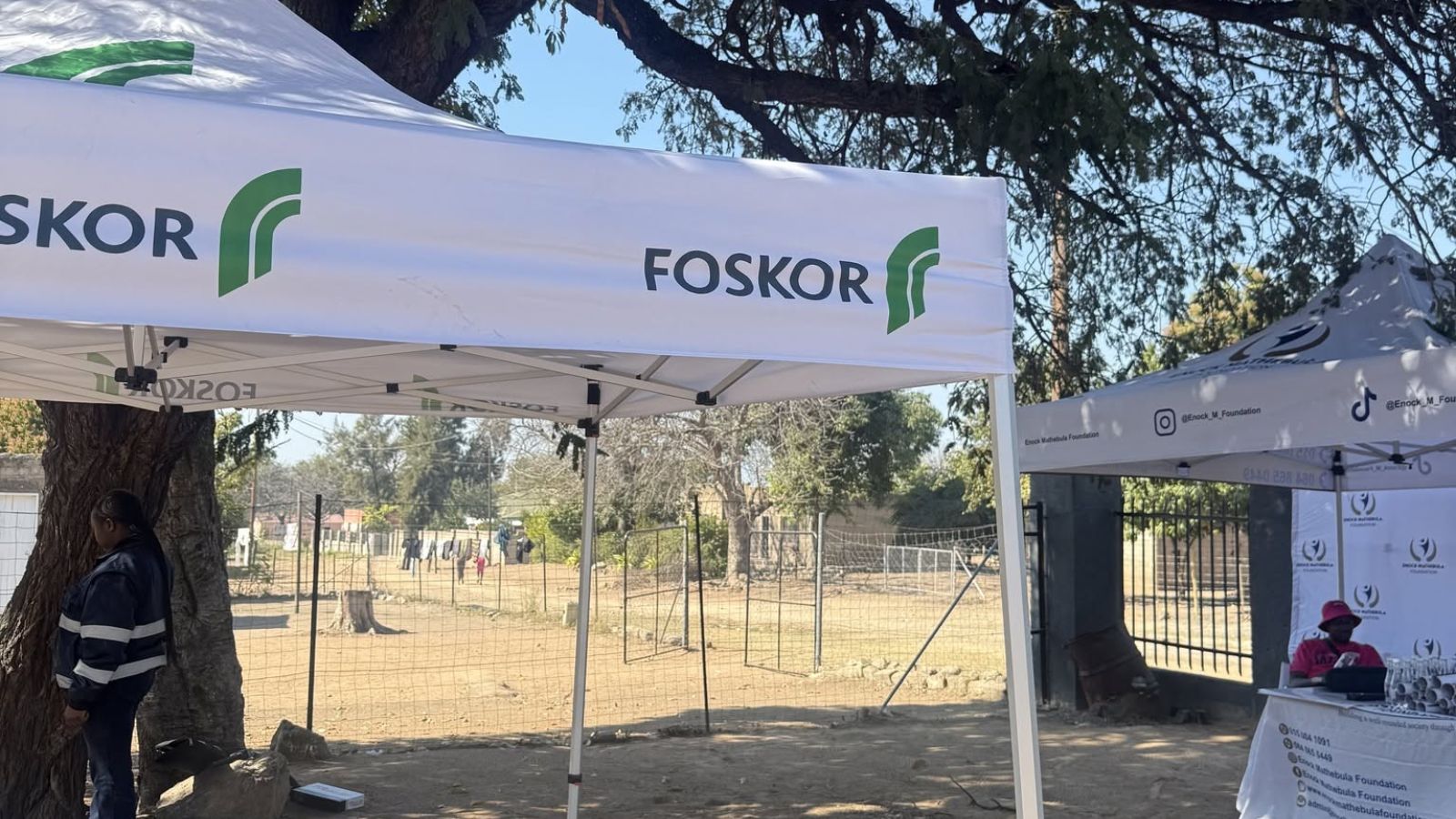
The IDC’s R4.65 billion in losses was largely due to the performance of several subsidiaries, including Foskor.
Foskor is a phosphate and phosphoric acid producer in South Africa, a vital component in producing fertiliser.
The company has mining operations in Phalaborwa, Limpopo, and processes materials at its acid division in Richards Bay.
The company has faced several financial difficulties and has consistently recorded losses in recent years.
Foskor struggles with a dependence on several other companies to continue operations, such as Transnet for transporting raw materials to its acids division in Richards Bay.
The company reported approximately R2.8 billion in losses for the 2026 financial year, extending its 2025 losses of R277 million.
The company saw its income from fertiliser and acid sales slightly decrease to R5.4 billion in 2026 from R5.9 billion in 2025, and a slight drop in income from mining operations.
The IDC set targets to improve Foskor’s performance, including increasing production in its acid division and achieving 90% of operating profit.
Foskor failed to meet either of these targets and only improved production in its acid division by 65% of the board-approved goals.
The IDC is estimated to own between 59% and 85% of Foskor, and has historically tried to reduce its ownership in the business through sales to other investors.
In its efforts to keep South African jobs, the IDC also committed approximately R2.5 billion to Tongaat Hulett after it entered business rescue.
The post-commencement funding was provided to prevent the company’s liquidation and will result in the IDC holding a large, but not controlling, stake in the business.
The IDC said it entered into the agreement with Tongaat Hulett and Vision Group to “support implementation of the approved business rescue plan, preserve trading operations and avoid liquidation.”
Since the end of the 2026 financial year, the IDC has also approved R500 million in funding to ArcelorMittal South Africa.
The transaction will result in the IDC holding a minority stake in the company and, if completed, is expected to have a major impact on the IDC’s financial position and strategic direction.









 Loading ...