

New cannabis laws in South Africa – you’re allowed to have up to 1,500 joints


South Africans could soon have clearer rules on how much cannabis they are legally allowed to possess, with draft regulations proposing a limit of 750 grams per person.
The proposed regulations form part of the implementation of the Cannabis for Private Purposes Act.
The Act is intended to establish a legal framework following the Constitutional Court’s landmark 2018 judgment that decriminalised the private use and cultivation of cannabis by adults.
Paul-Michael Keichel, Specialist Cannabis and Environmental Lawyer at Cullinan & Associates, said the regulations are still in draft form and that the legal framework is not yet fully in effect.
He explained that the 2018 Constitutional Court judgment made private possession, cultivation and use of cannabis legal within certain limits.
However, the legislation intended to formally regulate these rights has not yet been fully activated.
The proposed regulations now seek to provide greater clarity on quantities, including how much cannabis an individual may carry. “At this point, it is being placed at 750g,” Keichel said.
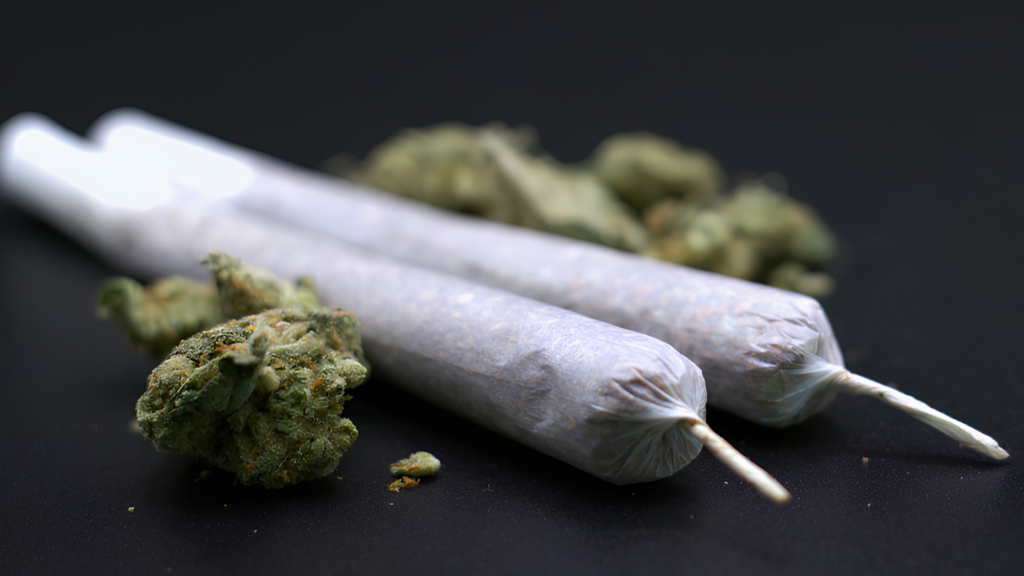
To put this amount into perspective, 750g is the same as a standard loaf of bread. If you roll standard 0.5-gram joints, 750g would make 1,500 joints.
However, Keichel cautioned that the current situation should not be interpreted as a complete free-for-all.
People must still be able to show that their cannabis is intended for personal and private use and that their possession, cultivation or consumption falls within the boundaries established by the Constitutional Court.
According to Keichel, if police can establish that a person’s conduct falls outside those constitutional protections, there can still be serious consequences.
He explained that the 2018 Constitutional Court judgment effectively amended the application of the Drugs and Drug Trafficking Act insofar as private cannabis use is concerned.
The proposed 750g limit is therefore significant because it would provide a clearer statutory benchmark, although Keichel said opinions will differ on whether the amount is appropriate.
“It depends on who you ask as to whether or not that’s reasonable. Ultimately, Parliament and our lawmakers had to settle on some or other number,” he said.
The new laws are on their way

He added that while some people may regard 750g as insufficient, he expected most people to be satisfied with the proposed limit.
There are, however, several issues that still need to be clarified before the regulations are finalised. One of the most important is whether the 750g limit applies to wet or dry cannabis.
Keichel said this distinction is important because wet cannabis contains a significant amount of water. “There has been no distinction made in relation to whether that 750g relies on wet or dry cannabis,” he said.
“If it’s 750g of wet cannabis, you’re potentially committing a crime for possessing water or water content.”
He also highlighted uncertainty around cannabis products such as extracts, oils, vapes and edibles. Previous draft regulations did not adequately address these products, which could create difficulties for law enforcement.
Another outstanding question concerns shared private spaces. Keichel said the regulations need to clarify whether cultivation limits apply per property, per private space, or per individual living in that space.
“These sorts of things need to be clarified, otherwise it’s going to be an enforcement nightmare,” he said.
He warned that unclear rules could result in both legitimate users being prosecuted and people who should face consequences escaping liability.
The lawyer also stressed that the proposed rules do not mean cannabis shops operating openly in shopping centres are currently legal.
According to Keichel, the private-use exemption created by the 2018 judgment does not extend to commercial cannabis dealing.
Keichel said the Cannabis for Private Purposes Act will not itself create a fully legal commercial cannabis industry.
Instead, it could pave the way for further legislative amendments to establish a licensing system for commercial cannabis businesses.
“Presently, because no licensing regime exists for a cannabis outlet or a cannabis shop, those people are broad daylight drug dealers in the eyes of the law anyway,” he said.
Despite the slow progress in finalising the regulatory framework, Keichel believes South Africa is likely to adopt more practical cannabis laws eventually.
He said the delays were not necessarily the result of opposition to cannabis, but rather the slow pace of government processes and shifting priorities.


















 Loading ...