

The man who made South Africa’s most valuable company over R3 trillion and still lost his job



Hans Hawinkels helped Naspers, South Africa’s most valuable company today, make one of the most successful investments in corporate history.
He is credited with a $32 million (about R250 million at the time) investment in a little-known Chinese technology company that grew into a stake worth $200 billion (around R3 trillion) at its peak.
However, Hawinkels did not remain at Naspers long enough to see the extraordinary returns. His employment contract expired about a year after the Tencent deal was completed and was not renewed.
Speaking at the 9th BizNews Conference, Hawinkels detailed the investment in Tencent and the circumstances surrounding his departure from Naspers.
Asked why his contract was not renewed after completing the deal, he was blunt: “Of course, I don’t know. I really don’t know.”
He acknowledged that the decision left a scar, but said he refused to let it shape the rest of his life.
“I came back to South Africa, but I didn’t allow that scar to fester and control my life thereafter. I put it behind me,” he said.
Hawinkels’ path to Tencent began with his work at M-Net and MultiChoice. He was headhunted by M-Net in 1993, when the company had about 500,000 subscribers and had only recently broken even.
He helped establish MultiChoice as M-Net’s distribution arm and worked on expanding its television operations across Africa.
Those efforts brought him into contact with China. During a trip to Beijing in the mid-1990s, Hawinkels developed relationships with Chinese officials and state broadcaster CCTV.
“We developed what we call guanxi, which is a relationship of trust and work with these people,” he said.
Naspers subsequently sent Hawinkels and his family to Hong Kong in 1997, where his role shifted towards identifying investment opportunities in Asia, particularly China, Thailand and Indonesia.
Initially, Naspers wanted to control the companies it invested in. That requirement caused it to miss several opportunities.
The deal of a lifetime
Hawinkels said he met Alibaba founder Jack Ma and had the opportunity to buy a 77% stake, but Naspers’ control requirement meant he had to walk away.
“I had to turn it down. Eventually, Goldman Sachs bought it,” he said. He also rejected an offer to buy 10% of Chinese gaming company NetEase.
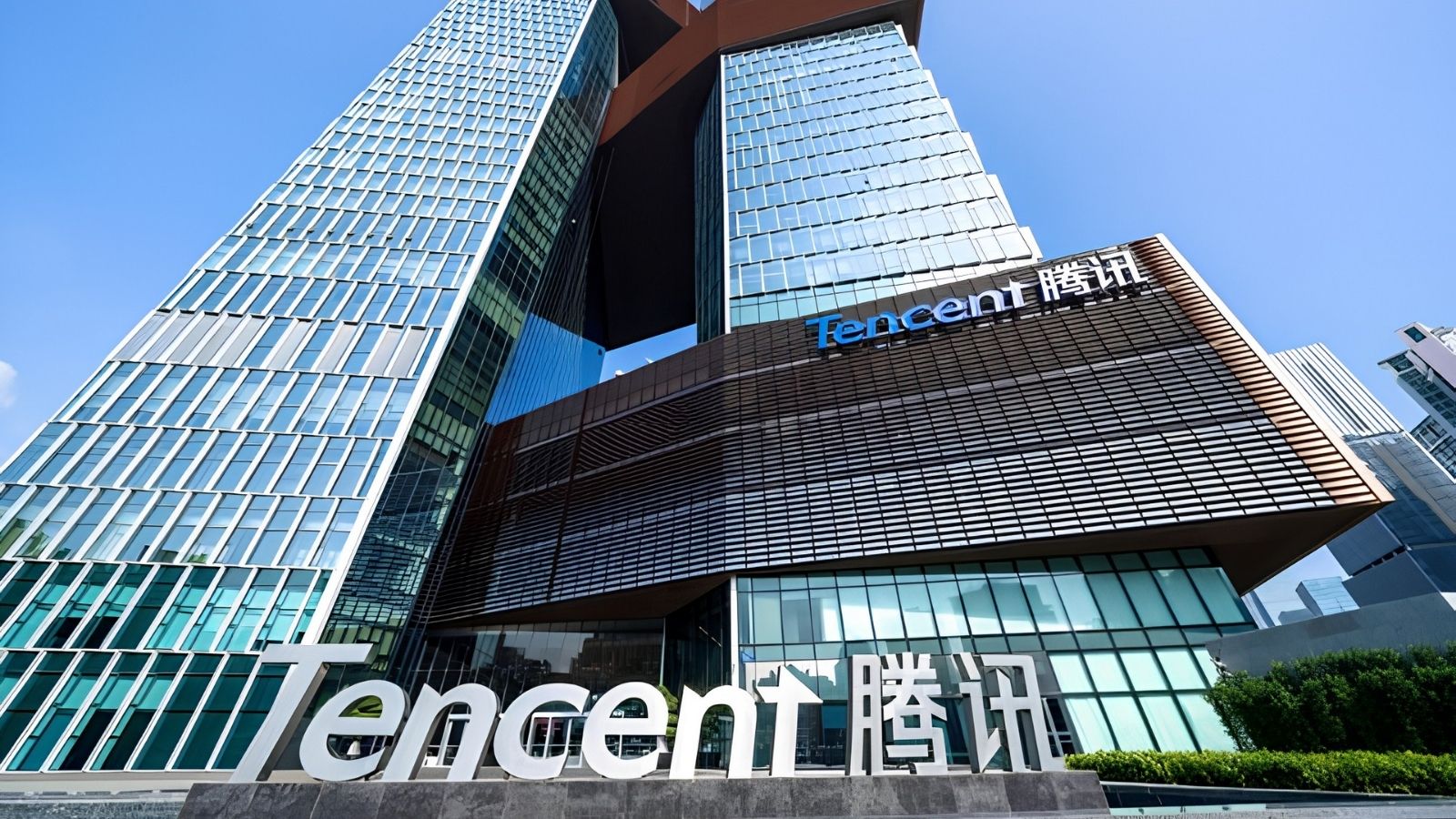
However, Tencent was different. Hawinkels was approached by IDG Ventures, which owned 25% of the young company and wanted to sell. He subsequently persuaded another shareholder, PCCW, to sell its 25% stake.
The final negotiations were not easy going. PCCW gave Hawinkels an ultimatum to buy the shares at a $66 million valuation without conducting due diligence, or walk away.
“He said to me, Hans, we’ll sell our shares to you. The valuation of the company will be $66 million,” Hawinkels recalled. “I’m giving you no time to do any due diligence. Take it or leave it.”
Naspers needed about $33 million to acquire the combined 50% stake. At the time, Tencent had around 20 million users but little meaningful revenue. “It was a big punt,” Hawinkels said.
What persuaded him was Tencent’s management team, particularly co-founder Pony Ma.
“I liked the management team. I mean, you back the jockey, and those jockeys, those guys were really, really impressive.”
He also believed Ma wanted a partner who could help Tencent turn its large user base into a profitable business.
“He actually wanted a partnership. Somebody that could help him monetise that 20 million user base,” Hawinkels said.
During his remaining year at Naspers, Hawinkels helped Tencent become more corporate and worked on developing its first meaningful revenue stream.
A breakthrough came through China Mobile, allowing Tencent users to access its services on mobile phones for about $1 a month.
China Mobile retained 15% of the subscription revenue and passed the remaining 85% to Tencent. “That was the start of a revenue source,” Hawinkels said.
Tencent continued expanding as broadband and mobile adoption accelerated in China. About six years after Naspers’ investment, Tencent launched WeChat, which Hawinkels said “just exploded and grew massively”.
The investment eventually became the foundation of Naspers and its international investment group Prosus. At its peak, Naspers’ Tencent stake was worth about $200 billion, or roughly R3 trillion.
The stake has since been reduced as shares were sold to fund other investments, but it remains worth roughly $100 billion to $120 billion.
After leaving Naspers, Hawinkels went on to become CEO of Virgin Active and worked with MTN and international investors before later joining the board of Truworths.
He said Naspers chairman Koos Bekker eventually contacted him and that they discussed his departure. “I think they recognise that a mistake was made,” Hawinkels said.
However, for Hawinkels, the success of Tencent ultimately mattered more than the fact that he was no longer at Naspers to experience it.
“There’s no way in our wildest dreams could we have imagined that this little budding company would be so valuable today,” he said.















 Loading ...