

Don’t hold your breath for any tax relief


With petrol prices expected to rise in South Africa, the government may not be able to reduce taxes as it has in the past.
Bureau for Economic Research economist Tracey-Lee Solomon spoke about the issue facing South Africa’s government on CapeTalk.
She said that if petrol prices increase in the coming months, the National Treasury may not be able to reduce the General Fuel Levy as it did earlier this year, or during the last crisis spike in 2022.
In April 2026, the National Treasury reduced the fuel levy by R3 per litre to soften the blow of surging petrol and diesel prices.
The intervention was phased out starting in June 2026, with the levy increasing by R1.50 that month and the remaining R1.50 added back in August, thereby terminating the relief.
Solomon said the Treasury might not be able to do this again, as current forecasts place petrol prices close to R29 per litre in October.
“It seems as though there isn’t enough scope for our national treasury to actually decrease our fuel levy as they did previously,” she said.
The general fuel levy is a major source of income for South Africa’s government, with the temporary reduction at the start of the year amounting to roughly R17.2 billion in lost tax revenue.
Without the cushion of a lower fuel levy, Solomon said South African households are increasingly facing pressure from inflation.
“The price of public transport has increased quite drastically,” she said. “The prices of public transport have increased by over 11% year-on-year.”
“We are seeing some upward pressure in core inflation. So the longer this continues, the bigger the impact would be on inflation.”
Record high prices at the pumps

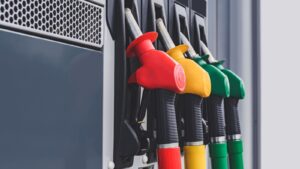
Based on current global oil prices, South Africa’s fuel prices are forecast to hit record highs in October, with petrol over R29 per litre and diesel exceeding R31 per litre.
Oil prices recently hit the $100-a-barrel mark, the first time they have reached this level since the onset of the US-Iran war.
The high oil prices have resulted in diesel under-recoveries of R2.04 and R2.41 per litre for 0.05% and 0.005% sulphur, respectively.
For petrol prices, South Africa currently has an under-recovery of R2.29 for petrol 93 and R2.41 for petrol 95.
Solomon said these high fuel prices could place pressure on the South African Reserve Bank (SARB) to increase interest rates later this year.
“Our Reserve Bank sort of kept its face and kept interest rates unchanged at its last meeting. But there is a lot of pressure in this meeting,” she said.
Europe’s central bank recently raised interest rates for the continent, with the US also expected to hike rates later this week.
Solomon said that if the US Federal Reserve opts to raise interest rates, it could place pressure on the rand and lead to higher fuel prices.
“If the Fed does increase rates and we don’t, it could be more pressure on the rand, which again, would be something that increases the impact of high oil prices on our fuel price.”
The SARB’s monetary policy committee is scheduled to meet on 23 September 2026 to deliberate on South Africa’s interest rates.
In its last interest rate announcement, where rates were held unchanged, Reserve Bank governor Lesetja Kganyago said future rate hikes would depend in part on oil prices.
He said the MPC had forecast two scenarios for oil prices, one where they remained high and one where they fell throughout the year.
For higher oil prices, he said further interest rate increases were on the cards for South Africa in 2026, before entering a cutting cycle in 2027.













 Loading ...