

South Africa heading for disaster


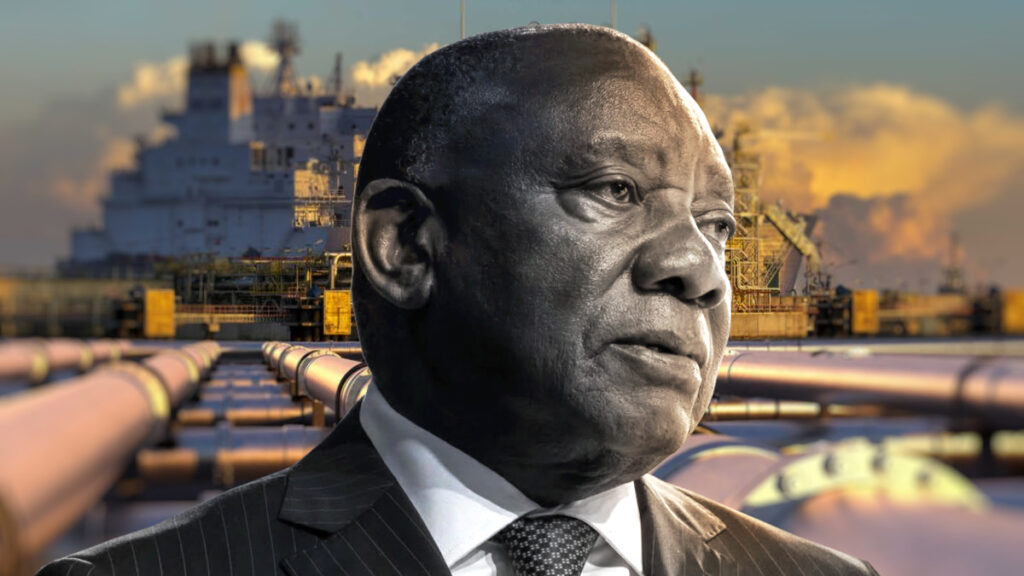
South Africa’s government has resolved the country’s recurring power outages and is racing to fix its crumbling water infrastructure.
But, business leaders warn, it’s sleepwalking into another crisis: a “gas cliff.”
Combined, glassmakers, tile manufacturers, food processors and other industries that rely on gas account for 8% of the economy and R700 billion in annual economic output, and provide 75,000 jobs.
Almost all of their needs are currently supplied by Sasol, the country’s biggest petrochemicals company, from its fields in central Mozambique.
Sasol warns that in two years’ time there will only be enough gas coming from those fields for its own needs, leaving industries holding back their investments and clamouring for the government to find solutions.
“South Africa doesn’t do anything until it’s an absolute crisis. And this is one crisis that’s still too far away” for the government to take seriously, said Thomas Shaw, chief commercial officer of Ardagh Glass Packaging-Africa, the continent’s biggest glassmaker.
“It’s frightening how much investment has been put on hold because nobody knows if there is going to be gas beyond 2030 and at what price.”
Attempts to get the private sector to build gas import infrastructure that would bridge the gap have been frustrated because there’s not enough demand from industrial users alone to justify the investment.
TotalEnergies, together with South Africa’s Gigajoule Group, has been planning a gas import terminal in Matola, but has been struggling to secure the demand needed to justify it since at least 2025.
That terminal could link to existing pipeline infrastructure that runs to South Africa’s industrial hub of Gauteng, where the cities of Johannesburg and Pretoria lie.
“We need at least three years to develop a project like that,” said Magali Pailhé, head of Total’s exploration and production business in South Africa.
Pailhé added that the company needs “the uptake to be able to secure the cash flow over a period of time and the reimbursement of the investment.”
Investing in gas-fired power generation would help make the economics of liquefied natural gas terminal projects stack up.
The country has a few small plants, and while its long-term strategy is to encourage the construction of more renewable power plants, its national energy plan also envisages using gas as a transition fuel, with 16 gigawatts of gas-fired power generation by 2039.
The government is currently considering bids from private investors for 2 gigawatts of gas-fired power plants, but there’s no certainty about when they will be built.
National power utility Eskom is considering a 3-gigawatt plant in the eastern port of Richards Bay, which would require the construction of an LNG terminal; there’s no pipeline to Gauteng from there.
Offshore options
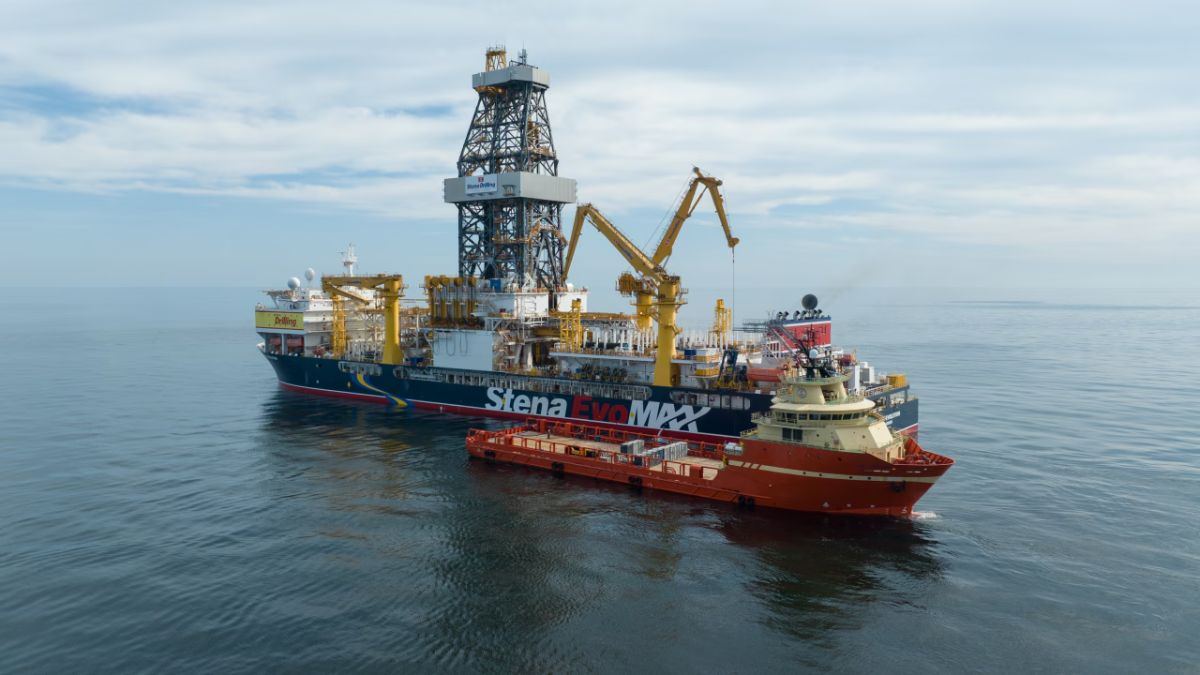
South Africa also has reserves of gas onshore and offshore, but ocean exploration has been held up by legal challenges and disputes with environmental groups.
In August, Shell was told by the country’s highest court that it wouldn’t be allowed to renew an exploration right off the country’s Wild Coast region.
This was the culmination of a five-year legal fight with activists — just one of a number of courtroom battles that have been fought over hydrocarbon exploration off South Africa over the past decade.
Requests by industry associations to have specialist courts set up to adjudicate on oil and gas matters to speed up the process have not been acted on by the government.
“The potential in terms of domestic resources is huge,” said Pailhé, who is also chairwoman of the Offshore Petroleum Association of South Africa.
“But today the industry is basically stuck and cannot progress. We cannot even say if the resources are there or not, as we cannot explore.”
Sasol has offered a stopgap option, but it comes with an environmental cost. The company has applied to the energy regulator to set pricing for methane-rich gas produced from coal.
Methane is a significantly more powerful climate-warming gas than carbon dioxide.
Sasol’s chief executive officer, Simon Baloyi, acknowledged the environmental concerns, but said they need to be weighed against economic and social considerations.
“It’s a country decision where we have to say: ‘Do you prefer to push 700,000 people out of a job?’” he said. “Because it’s purely going to boil down to that.”
Some industrial users aren’t convinced.
“It’s not a sustainable long-term solution from a security-of-supply, economic or environmental perspective,” Julian Singonzo, managing executive for sustainability at Premier, South Africa’s biggest bread producer, said.
“Sasol has indicated future MRG pricing at levels that are very expensive and potentially above imported LNG.”
Even so, Singonzo said, something has to be done. “Any disruption to gas supply would impact our ability to operate ovens efficiently and keep bread affordable and available,” he said.
Brandon Wood, CEO of South Africa’s biggest tile producer, Italtile, said the fuel is “critical” to its manufacturing processes and expressed concern about future supply.
The Industrial Gas Users Association Southern Africa, or IGUA-SA, a lobby group, has called for the office of President Cyril Ramaphosa to set up a task team to resolve the impending gas shortage, much as it did to resolve the electricity outages.
“South Africa has no practical plan to replace declining gas supply,” the group said in a recent report.
There is a “big void in terms of state coordination, policy positions and practical ways to tackle this issue,” said Jaco Human, IGUA-SA’s executive officer.
“The government is simply not engaging.”
Vincent Magwenya, Ramaphosa’s spokesman, referred queries to the Department of Electricity and Energy.
That department, and the Department of Trade, Industry and Competition, acknowledged questions from Bloomberg but didn’t respond.










 Loading ...