

Man who almost took André de Ruyter’s job has a message for people staying in South Africa



Energy expert Andy Calitz says South Africans have been too lenient on Eskom, and that reliable electricity should not be regarded as a luxury or an optional extra, but as a basic requirement of a modern democratic economy.
Calitz said South Africans have a right to demand reliable electricity and should expect the country’s energy system to provide 8,760 hours of supply each year.
Calitz, who previously ran South Africa’s national transmission grid at Eskom, was shortlisted for the utility’s CEO position that ultimately went to André de Ruyter.
He has since built an international career in the energy industry, including working in countries across Africa, Europe, Asia, the Middle East and North America.
Speaking about the lessons he would want South Africans to take from his experience, Calitz said electricity should be viewed as a fundamental requirement of a functioning economy and society.
Asked what he wished every South African voter understood about electricity in an interview with BizNews, he said citizens should not simply accept unreliable supply.
“Every farm, every restaurant, every school, every university, every business, has a right to demand 8,760 hours of supply per year,” he said.
Calitz said this right was particularly important because South Africa operates its energy system within a democracy, meaning citizens have a role in holding those responsible for electricity supply to account.
“In South Africa, energy operates under democracy. This is a noisy democracy as the president likes to describe it, and it’s noisy, but South Africans have a right to electricity supply every hour,” he said.
His comments come after South Africa spent years dealing with load shedding, which placed pressure on households and businesses and highlighted the importance of electricity to virtually every part of the economy.
Calitz has a broad international perspective on the issue, having worked in the energy industry in countries including China, Russia, Canada and the Middle East.
He said his experience had reinforced his view that energy is not simply another sector of the economy, but the foundation on which much of modern society operates.
South Africa needs more specialists
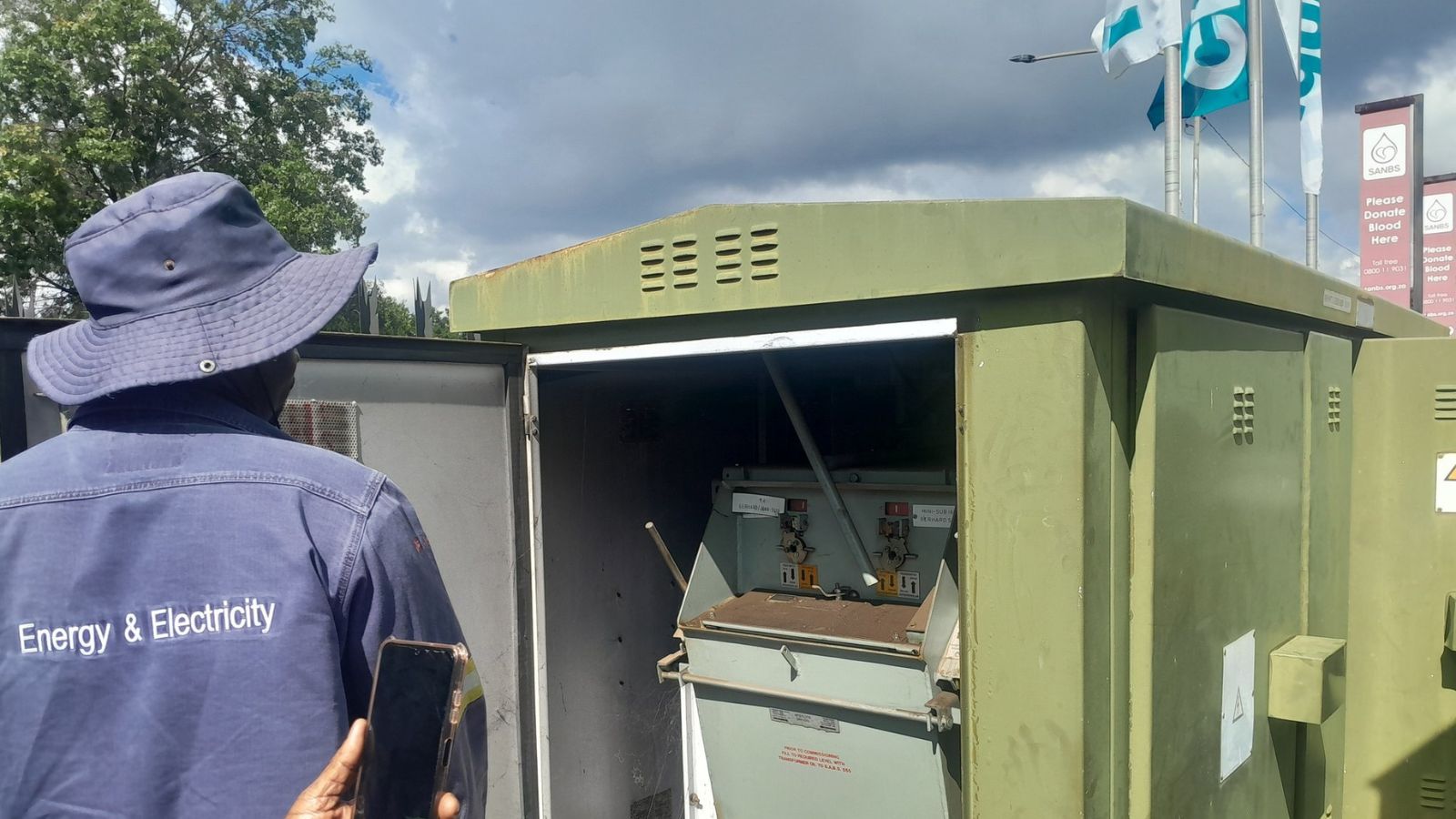
He explained that energy enables economies to function, but also supports education, communications, healthcare, and other essential services.
For South Africa, Calitz believes the central objective should be to ensure that energy availability does not hold back economic growth.
“We need to say that in South Africa, the availability of energy must not constrain economic growth in this country,” he said.
Calitz also warned against viewing the country’s energy future as a simple choice between individual technologies.
South Africa has significant renewable resources, particularly solar and wind, but he said the country would need a broader energy mix to provide sufficient and secure power.
He said South Africa needed to consider environmental sustainability, affordability and energy security when deciding which resources to develop.
His view is that no energy source can be accurately described as completely clean, because every technology has an environmental impact somewhere along its lifecycle. “There are no clean energies,” he said.
Calitz explained that coal has well-known environmental impacts, but that solar panels and wind turbines also have impacts associated with mining, manufacturing, operation and disposal.
The country’s future energy requirements will also depend on having enough skilled people to build and operate the infrastructure required for economic development.
Calitz said South Africa and the wider African continent need substantially more engineers and technical specialists, particularly as populations grow and more cities and industries require reliable electricity.
“We need 10 times more engineers who are not only trained by our universities and technikons and technical colleges, but they also need to find employment in the country to stay, and so that we don’t have a brain drain,” he said.
He also pointed to the growth of private-sector electricity generation as one of the most significant developments in South Africa’s energy market.
The rapid growth of rooftop solar and larger renewable-energy projects has changed the relationship between consumers and the electricity system, creating what Calitz described as a new group of “prosumers”—consumers who also produce their own electricity.
He said the shift showed that South Africans were increasingly taking a direct interest in the cost and reliability of their electricity.















 Loading ...