

South Africa’s biggest public pension fund manager loses R300 billion in a month


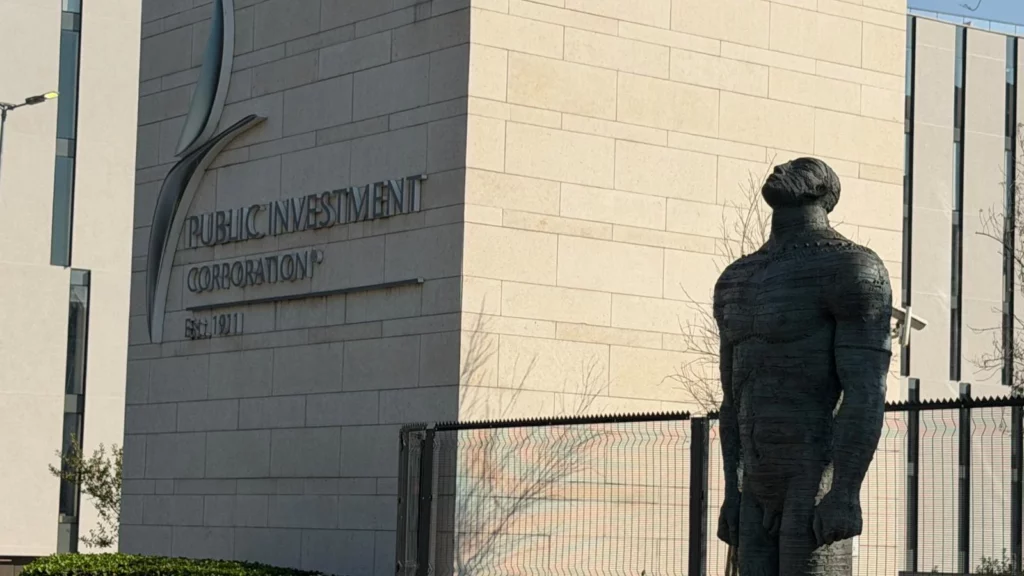
South Africa’s biggest public pension fund manager saw the value of the assets under its management fall by more than R300 billion in the weeks after tensions in the Middle East escalated.
This was revealed in the Public Investment Corporation (PIC)’s 2025/26 Integrated Annual Report, despite delivering strong returns for its clients over the period.
The PIC manages money on behalf of millions of public-sector workers, pensioners and social security beneficiaries.
It reported a strong year, with its assets under management (AuM) increasing by R608 billion, or 20%, to R3.657 trillion at 31 March 2026.
However, the PIC said its total AuM had reached R3.958 trillion by February 2026, putting it within reach of the R4 trillion mark.
This subsequently dropped by more than R300 billion in one month as heightened geopolitical tensions in the Middle East triggered a sharp sell-off in financial markets.
The decline came after the JSE’s All-Share Index had reached a record level of around 129,000 points before the conflict. It has since fallen to below 110,000 points.
The market decline also came after a particularly strong year for South African equities. The All-Share Index gained 33.6% over the 12 months to the end of March.
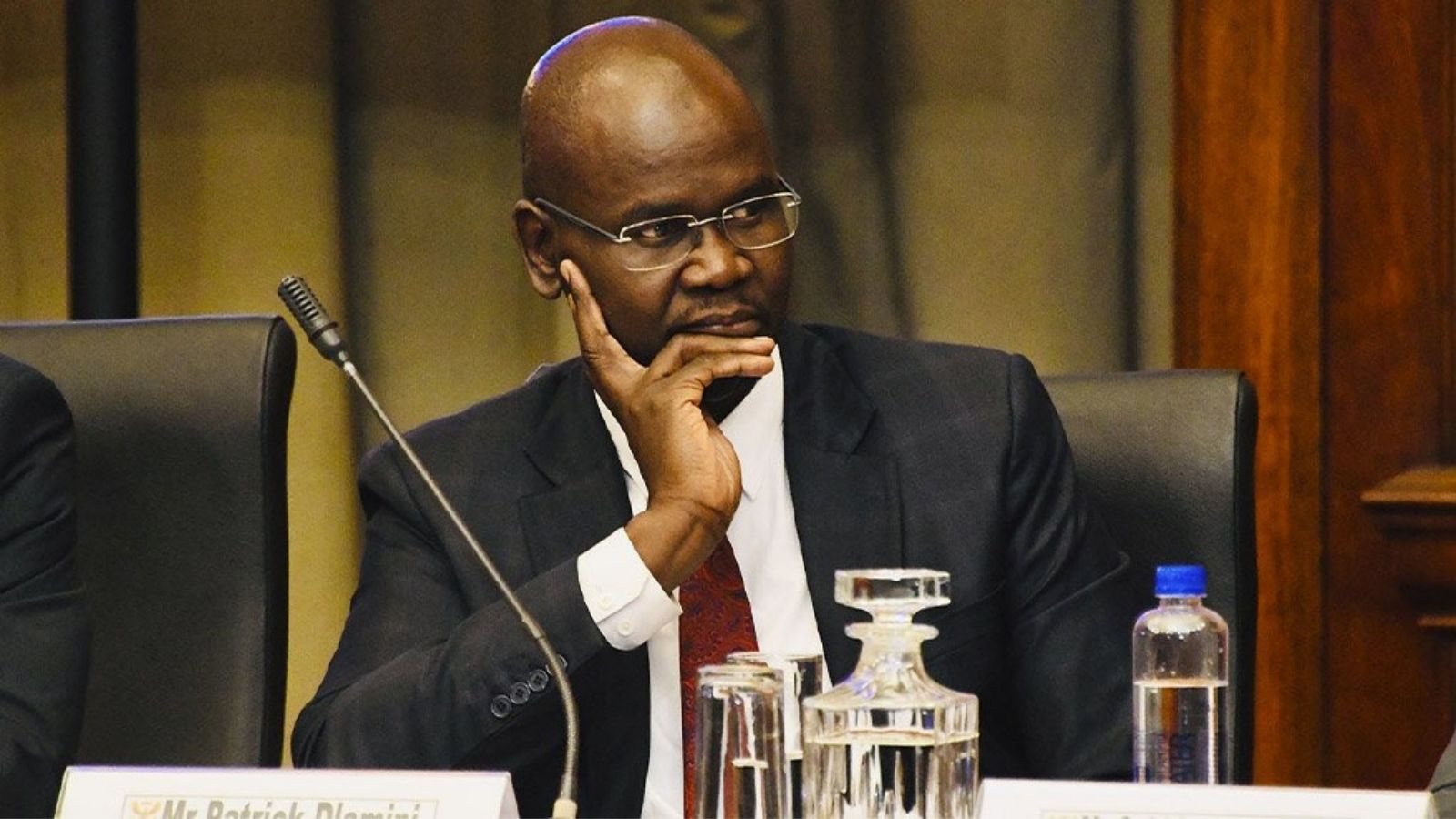
This helped lift the value of the PIC’s portfolios despite significant client withdrawals. PIC CEO Patrick Dlamini said the organisation had delivered a strong performance despite difficult global conditions.
“This has been a year of robust performance, resilience and value creation across our entire investment portfolio,” said Dlamini.
The Government Employees Pension Fund (GEPF), by far the largest portfolio managed by the PIC, increased by 20.24% during the year to R3.244 trillion.
It accounted for 88.7% of the PIC’s total assets under management at year-end.
This growth was achieved despite R160 billion in withdrawals from the GEPF and an ongoing strategic shift in its investment allocation, which is expected to be completed by 2028.
Significant improvement in its financial position
The PIC said the GEPF’s local listed equity allocation remained above its benchmark target, driven by the strong performance of South African shares.
The Unemployment Insurance Fund (UIF) portfolio grew by 14.71% to R195 billion, while its listed portfolio delivered a 19.95% return, outperforming its benchmark by 106 basis points.
The Compensation Commissioner Fund and Compensation Commissioner Pension Fund also recorded growth of 22.54% and 24.19%, reaching R87 billion and R77 billion, respectively.
The PIC said its overall growth was achieved despite net outflows of R172 billion from client portfolios during the year.
The sharp reversal in asset values following the February market peak highlighted the impact that global events can have on South Africa’s public savings.
The PIC said the period demonstrated the importance of diversification, disciplined investment and maintaining a long-term approach to asset allocation.
Dlamini said investment decisions needed to remain focused on the interests of the people whose savings the PIC manages.
“Every investment decision, governance structure and accountability mechanism must ultimately serve the long-term interests of our clients and their beneficiaries,” he said.
Despite the market volatility, the PIC itself reported a significant improvement in its financial position. Net profit increased by 70%, from R512 million to R869 million.
Corporate income rose by 32% to R1.726 billion, while operating costs increased by 15% to R1.427 billion, driven mainly by employee costs and investment in long-term information technology systems.
The PIC’s own investment fund also performed strongly, recording an unrealised gain of R501 million. The fund returned 20.66%, beating its composite benchmark of 19.50%.
The PIC said it will now place greater emphasis on technology-led operations and dynamic risk management, including the use of artificial intelligence in investment decisions and interactions with stakeholders.
It ended the financial year with an unqualified audit opinion from the Auditor-General, although the audit included material findings relating to performance information and selected legislative requirements.












 Loading ...