

The rural municipality with the lowest prices for groceries in South Africa


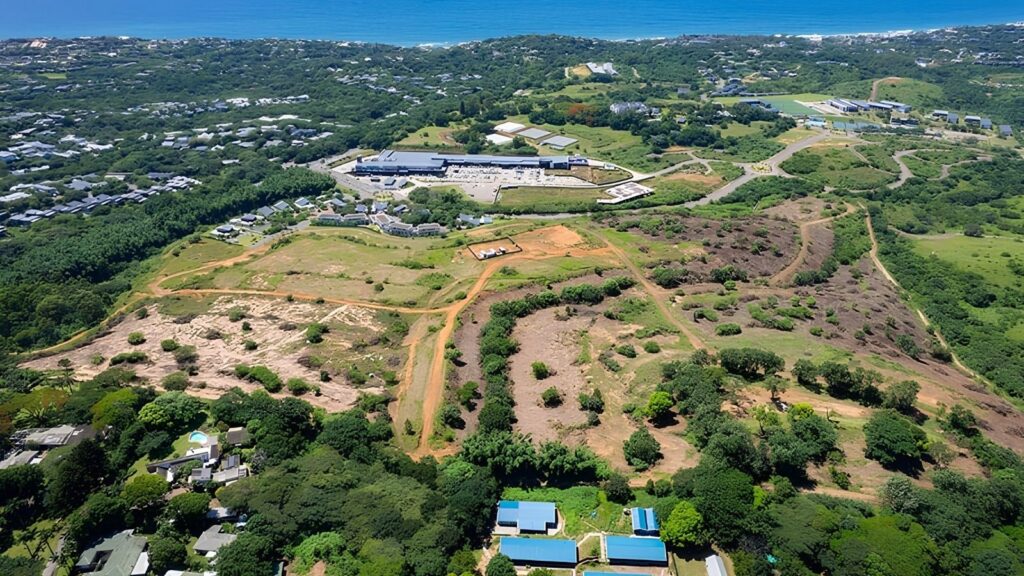
As of the end of September 2026, Mtubatuba in KwaZulu-Natal remains the cheapest municipality among South Africa’s major metros and towns for groceries.
This is according to data from the Pietermaritzburg Economic Justice and Dignity (PMBEJD) group, which tracks the cost of a household food basket across the three major provinces.
The PMBEJD report found that while 24 of the 44 tracked food items became cheaper or showed no year-on-year increases, the other 20 experienced price hikes, with eight items seeing double-digit inflation.
Annual consumer price inflation rose only marginally in August 2026, with Stats SA recording the figure at 4.4%, up 0.1 percentage point from 4.3% in July 2026.
Food and non-alcoholic beverage prices rose 0.7% y/y and 0.0% m/m, with deflation still feeding through from agricultural food production, which fell 6.6% y/y in July.
Producer prices have about a one-month lag relative to consumer prices. July saw grains and other key products keeping consumer food price inflation at these lower levels, which are mainly grain-related, fruits and vegetables, which are all currently in deflation.
Grain mill products, starches, and animal feeds remained in deflation (down 9.6% year-on-year) due to a record 2025/26 summer grain and oilseed harvest of 21.6 million tonnes.
Meat price inflation has also continued to moderate, suggesting slaughtering activity remains steady. However, fears of foot-and-mouth disease have added upside pressure on red meat prices over the past few months.
The only products that nudged up in August were fish and seafood, milk, dairy products and eggs. Still, these products have lower weightings and therefore do not materially increase the headline food price inflation figure.
Fish and seafood accelerated to 7.5% in August (with hake up 12% and frozen fish fingers up 11.3%). Pork increased 6.6%, while ham and bacon were 8.6% higher.
Cheapest grocery basket

As of July 2026, the average cost of a household food basket in South Africa, comprising 44 essential items that reflect typical purchasing patterns, reached R5,488.06.
This is a 2.9% annual increase of R82.07 compared to September 2025. Month-on-month, the basket price increased by R36.30 compared to August 2026.
However, a breakdown of costs in different areas shows that the change in food prices is greater in some areas than others.
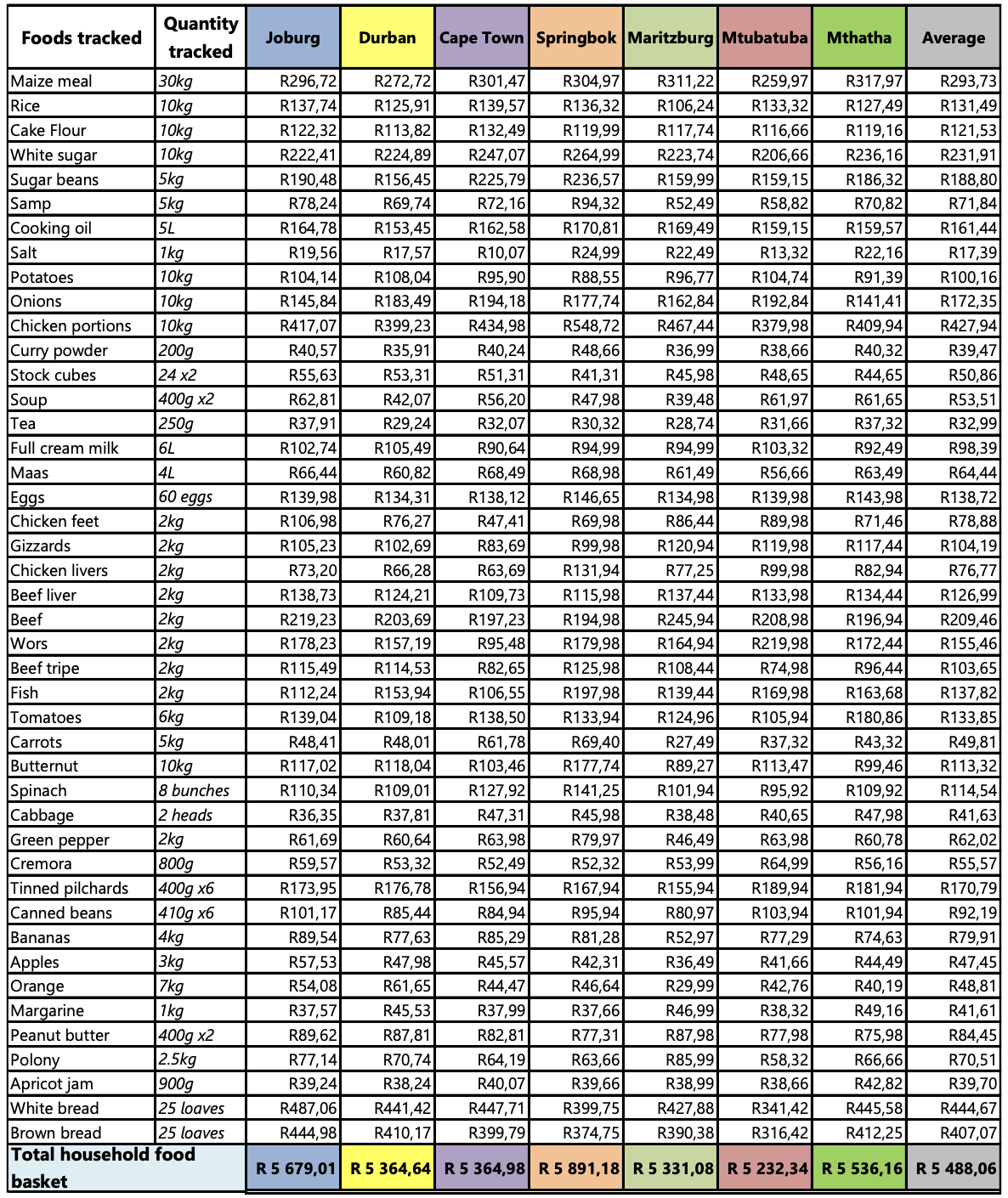
In September 2026, Mtubatuba had the lowest basket cost at R5,232.34, which is R255.72 below the national average. It also experienced the largest month-on-month cost reduction of R76.85.
Mtubatuba is a developing commercial town and administrative centre located in the northeastern reaches of KwaZulu-Natal, South Africa.
It functions as the official seat for both the Inkosi Mtubatuba Local Municipality and the broader uMkhanyakude District Municipality.
Mtubatuba presents a unique two-tiered economy. While widespread poverty and subsistence farming characterise much of its geographic footprint, it features a highly concentrated, formally employed middle class.
Regarding its food prices, Mtubatuba records significantly lower costs for core items. For instance, a 30kg bag of Maize Meal costs R259.97 in Mtubatuba compared to over R300 in Cape Town, Springbok, and Pietermaritzburg.
Additionally, retailers in Mtubatuba aggressively price staple carbohydrates and frozen chicken portions (R379.98 for 10kg) lower to capture the buying power of the vast surrounding rural population.
Bulk protein alternatives like beef tripe (R74.98 for 2kg) and fresh produce items like spinach (R95.92) are also cheaper in Mtubatuba than in the major metros, keeping the overall aggregate cost of the 44-item basket down.
Durban (R5,364.64) and Cape Town (R5,364.98) had virtually identical basket prices in September 2026, separated by only 34 cents.
Springbok in the Northern Cape had the highest food basket price at R5,891.18, standing R403.12 above the weighted national average and R658.84 more expensive than Mtubatuba.
Johannesburg ranked as the second most expensive region overall at R5,679, beating the national average by R190.95.
Grocery basket comparison July 2026
















 Loading ...