

Government takes R7,900 from every person filling up at the petrol station in South Africa


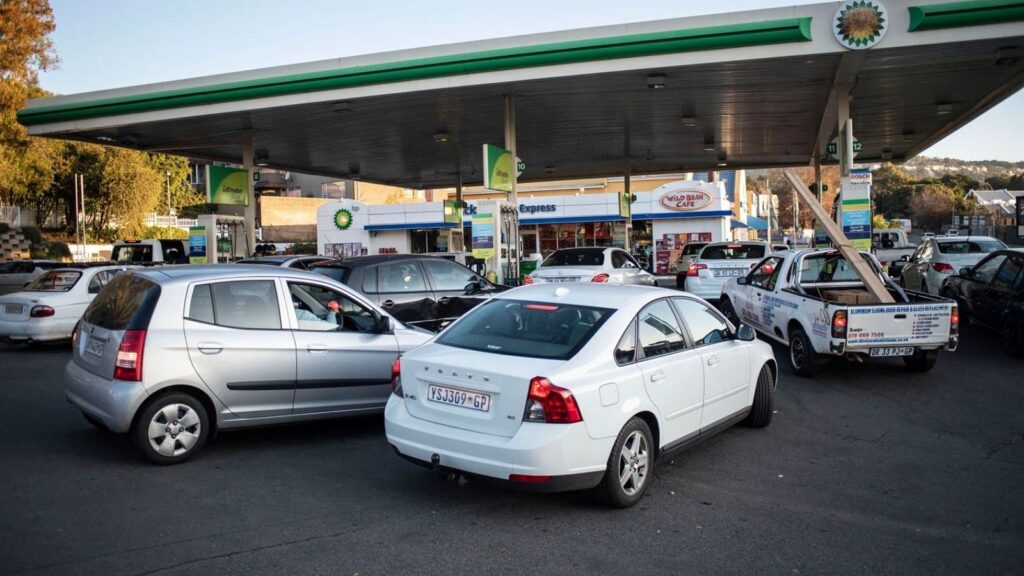
In the 2026 financial year, the South African Revenue Service (SARS) collected over R95 billion in revenue from fuel levies.
According to the latest data from the Road Traffic Management Corporation, the number of motorised vehicles exceeded 12 million.
Nearly 1.3 million of the vehicles on South Africa’s roads are towed, which includes caravans and trailers, boosting the overall population to just under 14 million.
Almost 100% of the General Fuel Levy revenue is generated by these 12 million vehicles.
This is because the fuel levy is a consumption tax charged on every litre of petrol and diesel sold at the pump.
It is paid entirely by motorists and transport operators who keep those vehicles moving, meaning each one of these vehicle owners pays an estimated R7,900 a year on the fuel levy alone.
This comes from the tax collection service’s 2025/2026 financial results, which showed an increase in the service’s revenue.
In total, SARS generated a gross revenue of R2.47 trillion in the last financial year, 7.2% more than in 2025, with the majority coming from personal income tax.
Personal income tax accounted for 39.5% of the gross revenue which SARS generated, while the second-largest contributor was Value-Added Tax (VAT).
From gross revenue, the service paid roughly R458 billion in refunds to South African citizens and businesses, resulting in a net revenue of R2 trillion.
Overall, the net revenue generated by SARS was roughly R24.7 billion higher than its printed estimate for 2025 and R3.4 billion higher than its revised estimate for 2026.
The fourth-largest contributor to SARS’ revenue was income from fuel levies, which totalled R95.2 billion in the 2026 financial year.
This represented a 10.9% increase from the previous financial year, which totalled R85.9 billion.
The revenue generated by SARS, combined with other non-tax revenue, means that South Africa’s total budget revenue was nearly R2 trillion.
This gave the government a surplus of roughly R44.9 billion compared to its 2025 printed estimate, and a R16 billion surplus from its 2026 revised estimate.
In its financial results, SARS noted that R73.6 billion had been deducted from the overall budget for the South African Customs Union (SACU) agreement.
“Payments to Botswana, eSwatini, Lesotho, and Namibia (BELN), in terms of the SACU agreement, are deducted,” the service said.
SARS revenue for the 2026 financial year
| Tax type | 2026 revenue | 2025 revenue | Change % |
| Personal income tax | R793.9 billion | R733.2 billion | 8.30% |
| Value added tax | R500.6 billion | R457.8 billion | 9.30% |
| Company income tax | R349.3 billion | R323.2 billion | 8.10% |
| Fuel levy | R95.2 billion | R85.9 billion | 10.90% |
| Import duties | R81.5 billion | R76.7 billion | 6.30% |
| Specific excise | R61.7 billion | R59.7 billion | 3.40% |
| Dividends tax | R45.9 billion | R43 billion | 6.70% |
| Other taxes | R55.8 billion | R53.3 billion | 4.50% |
| Taxes on Property | R26.3 billion | R22.5 billion | 17.10% |
Focus on compliance
In recent years, SARS has sought to increase voluntary compliance as a means to generate more tax revenue.
SARS commissioner, Johnstone Makhubu, said that these compliance initiatives had been a large part of the services’ improved revenue in the 2026 financial year.
“Compliance revenue remained a significant contributor to fiscal outcomes,” he said, highlighting that compliance activities had secured R319 billion in revenue.
“Identifiable compliance activities secured R319.2 billion, comprising R166.8 billion in cash collections and R152.4 billion in leakage protection,” he said.
Enforcement and verification efforts continued to strengthen deterrence, while targeted interventions against illicit trade, organised tax and customs crime, and complex financial schemes protected the revenue base and reinforced the fairness of the tax system.”
While the service had focused on compliance, Makhubu said it had still faced challenges from illegal activities in South Africa.
“Illicit trade, organised economic crime, refund abuse, cyber threats, data complexity, and evolving taxpayer behaviours continued to test SARS’ compliance and enforcement capabilities,” he said.
While SARS had seen improved performance in 2026, Makhubu said the service still has to improve and build trust.
“The 2025/26 financial year demonstrated that SARS is making substantial progress to restore, strengthen, and modernise the institution,” he said.
He said the results were a “platform from which SARS must continue to build trust, deepen voluntary compliance, strengthen enforcement, facilitate legitimate trade, and protect the revenue base.”
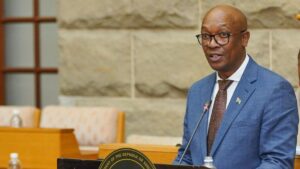
South Africa’s Finance Minister, Enoch Godongwana, said the revenue generated by SARS was impressive considering the difficult economic environment.
“Despite global challenges experienced during the latter part of the financial year 2025/26, SARS collected net revenue of R2 010.3 billion, representing 8.4% growth from the previous fiscal year’s collection of R1 855.3 billion,” he said.













 Loading ...