

One group of households getting nailed in South Africa


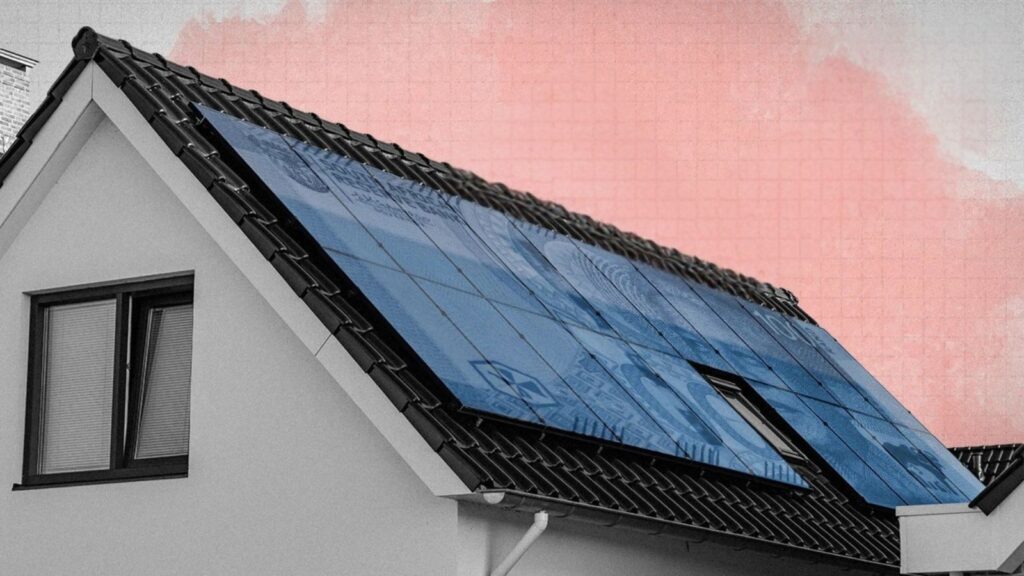
Solar users in South Africa face steep fixed fees and higher electricity rates as a thank-you for reducing demand on the country’s grid during Eskom’s load shedding crisis.
Minister of Energy and Electricity Kgosientsho Ramokgopa has revealed that behind-the-meter solar installations in South Africa have reached 9.4 GW, adding to 7.9 GW of other renewable sources connected to the transmission system.
Behind-the-meter capacity is that which is installed on the consumer’s side of the distribution chain, and includes residential rooftop solar as well as commercial and industrial installations.
This marks a rapid escalation in solar use in the country, from a few hundred megawatts in 2016.
Installations surged during the years of load shedding, when the government was forced to open the market as Eskom’s grid fell apart.
Notably, the rapid growth of customer-side solar has contributed to Eskom’s strong operational performance in recent years, where reduced demand has given the utility room to stabilise the grid.
This has now led to a point where Eskom has kept load shedding at bay for over 500 consecutive days and is, in fact, running with excess capacity.
Responding to a parliamentary Q&A, Ramokgopa said that Eskom is forecast to have a capacity surplus of between 2 GW and 3 GW over the next few years, which can be deployed to stimulate economic growth.
While the utility has not yet consistently met its Energy Availability Factor (EAF) target of 70% (by March 2025), it has averaged 68% so far in 2026, with some daily and weekly averages passing the missed target.
“Eskom’s current net generation capacity stands at 48.5 gigawatts,” Ramokgopa said.
“This represents a marked reversal of the constrained system margins of recent years, and we are now at a point where we have excess capacity that can be used to drive economic growth.”
According to the minister, the power utility is now moving ahead with its plans to expand its energy mix and further boost capacity.
This includes the launch of Eskom Green, its renewable energy branch, which is designed to accelerate the development of utility-scale renewable energy projects and support larger customers.
Eskom is targeting overall renewable builds of 5.6 GW by 2030, 21 GW by 2035, and 32 GW by 2040, he said.
“Eskom Green is expected to have approximately 6 GW of carbon-free electricity available up to 2030, as a result of Eskom’s broad pipeline of renewable energy and storage initiatives currently under development,” he said.
Further, a total of 17 high-priority projects have been identified for implementation across Eskom’s existing coal-fired power station footprint.
This will leverage established infrastructure to deliver approximately 6 GW of additional capacity by 2030.
This includes at least 2 GW of renewable energy and pumped storage projects expected to advance from 2026, anchored by developments such as the 75 MW Lethabo solar PV project in the Free State.
The minister said that new renewable projects will increasingly be integrated with existing infrastructure, with the next project planned for the Komati Power Station.
“These projects leverage existing infrastructure to support faster deployment, improve cost efficiencies, and strengthen grid resilience,” he said.
Solar users being punished
As Eskom moves to boost its own renewable builds and increase its capacity, the 9.4 GW of “breathing room” given to the utility by private solar users will not go unrewarded.
As a thank-you to those who spent their own money to generate electricity while Eskom worked to repair its collapsing grid, the utility has revised its pricing structure to ensure they pay more, even if they use no electricity.
Until recently, it had also hounded solar users to register their systems with the utility, using the threat of registration fees and penalties as a “stick” to get it done.
Following months of backlash and challenges from groups like Outa, Eskom has now waived the fees indefinitely, but still insists that the solar systems be registered.
Registration comes with a nice catch, however.
Any solar users whose systems are connected to the grid and are registered with Eskom as direct customers will be forced onto the group’s new Homeflex plan.
This time-of-use tariff plan can help mitigate expenses if customer-owned renewables and backups are used during peak hours—but the fixed fees and charges will bite in any scenario.
The power utility previously explained that it needed to charge a monthly grid connection fee to recover its costs for maintaining the infrastructure that connects to people‘s homes.
“Customers with solar rooftop PV connected to the grid who use Eskom-supplied energy as a backup will still be required to pay for using the Eskom network,” it stated.
The company said these customers use the “Eskom battery” on cloudy days, at night, and during the morning and evening peak.
Nevertheless, these fixed monthly fees disproportionately affect households that consume little or no electricity, such as households with solar.
According to power group EnergyBee, the point is simple: any solar user connected to Eskom’s grid will pay R670 a month before even flipping a switch and using a single watt.
Eskom has also made it explicitly clear that this is by design.
In its annual financial report for the year ended 31 March 2026, the group said it will protect its revenue by relying on network charges, customer wheeling, and revised tariff structures.
On pricing, it has committed not to hike tariffs by double digits going forward—after overseeing a 1,722% surge in prices between 1994 and 2024—but its forecasts still call for hikes far above inflation.

















 Loading ...