

Coalition ‘worst-case’ scenario for South Africa is in sight


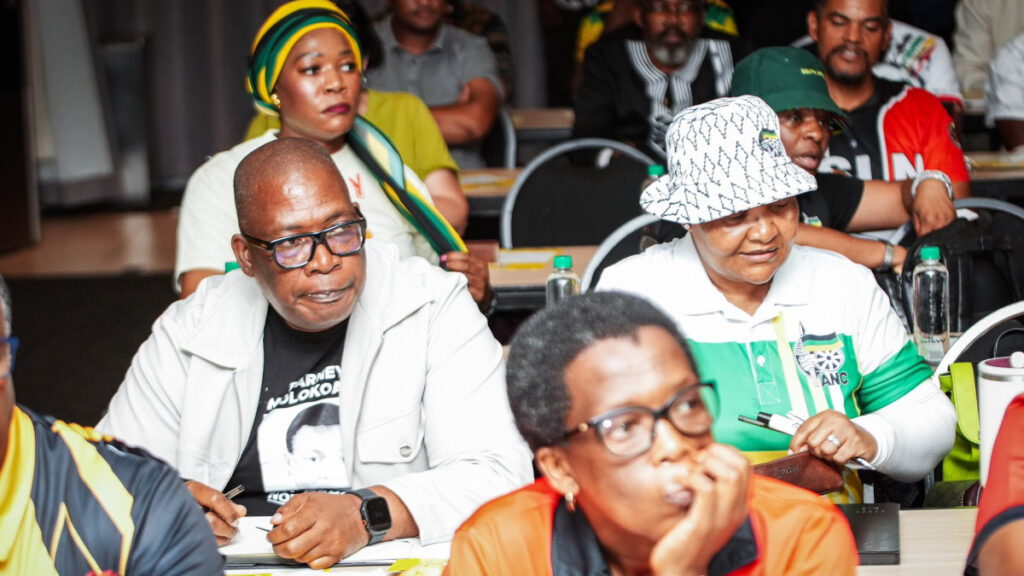
Reports emerging from the ANC’s National Executive Committee (NEC) point to a broad shift away from coalitions with the DA, with the party reportedly seeing it as a “last resort” partner.
Notably, this position would set the country on course for what is seen as the “worst-case” outcome for the elections from a business and investor perspective.
Ahead of the vote on 4 November, analysts flagged various outcomes for the election, including positive results where market-friendly parties like the DA gained more power and influence.
However, the worst-case scenario flagged was one in which the ANC lost enough support to abandon the market-friendly DA and move closer to populist parties that oppose free markets.
According to reports from the SABC and TimesLive, citing insiders at the ANC NEC, the party has reportedly adopted a position towards coalitions where the DA is a “last resort”.
No official announcement to this effect has been made by the party, with the ANC only expected to deliver the outcomes of the NEC meeting over the weekend.
However, if the party confirms that it is moving to ice out the DA from coalitions wherever it can, it would be a clear signal of its shift toward the scenario flagged by analysts.
Ahead of the NEC meeting, the ANC said it was leaning towards ‘case-by-case’ engagement on coalitions, with no ‘one-size-fits-all’ strategy appealing.
The main problem for all the parties involved is that it’s a numbers game.
Even among the leaders (ANC, DA, MK, EFF and ActionSA), the numbers don’t quite add up everywhere.
The ANC emerged as the biggest loser in the 2026 elections, with 30.76% of the total vote, almost 15 percentage points down from the 2021 elections.
The DA, meanwhile, showed growth, climbing 3 percentage points to 24.64%.
Despite the DA’s growth, other parties saw larger gains, including Jacob Zuma’s MK Party, which debuted with almost 10% of the national vote.
ActionSA also grew by more than 3 percentage points, capturing many ANC voters in the metros. The EFF joined the ANC in losing support.
South Africa 2026 election results
| Party | 2021 Result | 2026 Result | Change (%pt) |
|---|---|---|---|
| ANC | 45.59% | 30.76% | -14.83 |
| DA | 21.66% | 24.64% | +2.98 |
| MK | – | 9.77% | +9.77 |
| EFF | 10.31% | 6.22% | -4.09 |
| ActionSA | 2.33% | 5.67% | +3.34 |
Earlier in the week, sources speaking to Bloomberg indicated interest among parties in forming a bloc comprising the ANC, ActionSA, EFF and MK to keep the DA out of government in Gauteng.
With these parties working together, all three metros in the province—where the DA secured the top vote among the electorate—could be governed by ANC- or ActionSA-led majorities.
However, the picture becomes murkier in other metros, and in the over 100 other hung councils across the country.
Outside this bloc, DA voters have expressed approval for a tie-up between the party and ActionSA.
However, the relationship between the two parties—particularly ActionSA leader Herman Mashaba and the DA’s mayoral candidate for Joburg, Helen Zille—is seen as irreparable.
ActionSA has made it clear that it will not even consider coalition talks with the DA if Zille and the DA’s Tshwane mayoral candidate, Cilliers Brink, are part of the picture.
In a scenario where the ANC refuses to work with the DA in the metros, ActionSA becomes a kingmaker.
Without ActionSA, the ANC would have to rope in other smaller parties into the MK/EFF coalition to gain majorities in the metros.
The same is true for an ActionSA/DA coalition, but the gaps to fill are much smaller, particularly in Gauteng.
Arguably, the most stable coalitions are those where the fewest parties are involved, containing multiple conflicts of interest and ideology.
Multi-party coalitions carry significant risks for all involved, either legitimising political rivals with success or saddling the largest parties with the blame for failure.
Historically, multi-party coalitions in key metros like Johannesburg and Tshwane have collapsed, resulting in political chaos and the service delivery failures that have shaped the current election outcomes.
ANC, ActionSA, EFF and MK coalition across metros*
| Party | JHB [270] | EKU [224] | TSH [214] | NMB [120] | BUF [100] | MAN [101] | ETH [223] |
|---|---|---|---|---|---|---|---|
| ANC | 63 | 59 | 44 | 32 | 42 | 35 | 37 |
| ActionSA | 43 | 40 | 48 | 2 | 2 | 3 | 7 |
| MKP | 15 | 15 | 4 | 2 | 1 | 1 | 86 |
| EFF | 17 | 14 | 13 | 7 | 7 | 9 | 4 |
| Total | 138 | 128 | 109 | 43 | 52 | 48 | 134 |
| Needed for 50%+1 majority | 136 | 113 | 108 | 61 | 51 | 52 | 112 |
| Difference | +2 | +15 | +1 | -18 | +1 | -4 | +22 |
ANC, EFF and MK coalition across metros*
| Party | JHB [270] | EKU [224] | TSH [214] | NMB [120] | BUF [100] | MAN [101] | ETH [223] |
|---|---|---|---|---|---|---|---|
| ANC | 63 | 59 | 44 | 32 | 42 | 35 | 37 |
| MKP | 15 | 15 | 4 | 2 | 1 | 1 | 86 |
| EFF | 17 | 14 | 13 | 7 | 7 | 9 | 4 |
| Total | 95 | 88 | 61 | 41 | 50 | 45 | 127 |
| Needed for 50%+1 majority | 136 | 113 | 108 | 61 | 51 | 52 | 112 |
| Difference | -41 | -25 | -47 | -20 | -1 | -7 | +15 |
DA–ANC coalition across metros*
| Party | JHB [270] | EKU [224] | TSH [214] | NMB [120] | BUF [100] | MAN [101] | ETH [223] |
|---|---|---|---|---|---|---|---|
| DA | 91 | 66 | 74 | 53 | 17 | 34 | 57 |
| ANC | 63 | 59 | 44 | 32 | 42 | 35 | 37 |
| Total | 154 | 125 | 118 | 85 | 59 | 69 | 94 |
| Needed for 50%+1 majority | 136 | 113 | 108 | 61 | 51 | 52 | 112 |
| Difference | +18 | +12 | +10 | +24 | +8 | +17 | -18 |
DA–ActionSA coalition across metros*
| Party | JHB [270] | EKU [224] | TSH [214] | NMB [120] | BUF [100] | MAN [101] | ETH [223] |
|---|---|---|---|---|---|---|---|
| DA | 91 | 66 | 74 | 53 | 17 | 34 | 57 |
| ActionSA | 43 | 40 | 48 | 2 | 2 | 3 | 7 |
| Total | 134 | 106 | 122 | 55 | 19 | 37 | 64 |
| Needed for 50%+1 majority | 136 | 113 | 108 | 61 | 51 | 52 | 112 |
| Difference | -2 | -7 | +14 | -6 | -32 | -15 | -48 |
Bigger problems for the National Government
Another factor at play is how municipal governance could impact South Africa’s Government of National Unity (GNU).
If the ANC ices out the DA in coalition talks, it raises serious questions about the continued cooperation between the parties in the GNU.
The DA is one of ten parties that make up the GNU, but is the second-largest within the structure.
Without the DA in national government, the ANC would have to turn to other minority parties, such as the EFF or MK, to retain a GNU majority.
If the ANC opts to partner with these parties at the local level, the door opens to their involvement at the national level.
Speaking in an interview with Alec Hogg from BizNews, Patriotic Alliance leader Gayton McKenzie—party to the GNU—said this is a core dilemma for the DA.
McKenzie said the DA has “golden handcuffs” in the GNU.
He said the DA can’t walk away from the GNU, as the business community would hold it responsible for the GNU’s collapse.
But if the DA elects to remain in the GNU after being excluded from local coalitions, the PA leader said its bargaining power will be severely diminished.
“If the DA does not behave at the GNU level, the ANC will tell them that it has the option to work with the EFF and MK,” McKenzie said.
As with the warnings ahead of the 2026 vote, the ANC getting into bed with the EFF and MK was also flagged as the worst-case scenario for South Africa on a national government level.















 Loading ...