

At least 14 important South African companies forced to shut down within a year


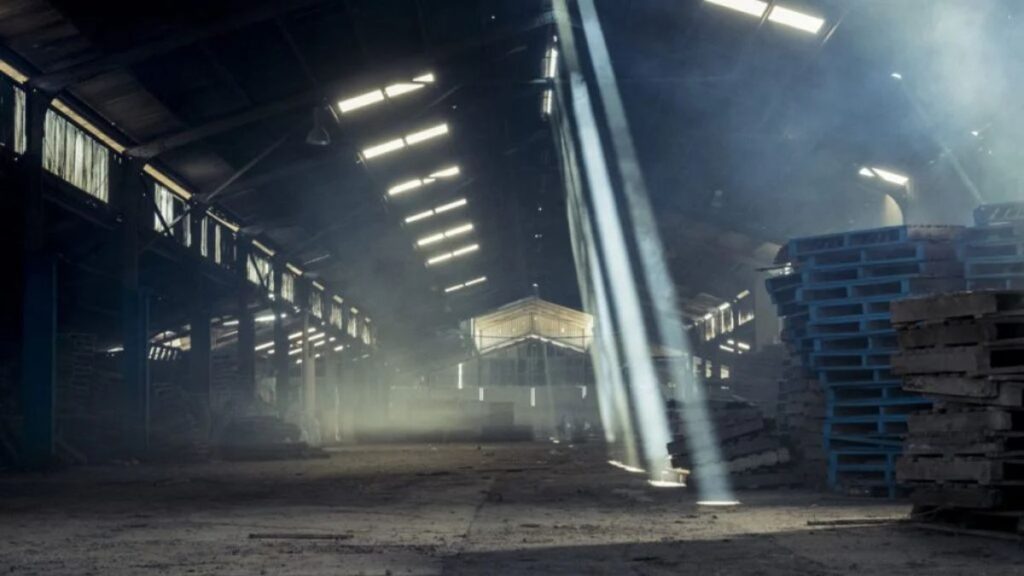
One of South Africa’s biggest trade unions has confirmed that at least 14 component companies and factories closed in 2025 due to US tariffs and competition from cheap imports.
Almost all of these companies are in the automotive industry, and used to produce tyres, seatbelts, airbags, and other components, costing the South African economy thousands of jobs.
This issue was raised by the National Union of Metalworkers of South Africa (NUMSA) general secretary Irvin Jim following the news that Nissan’s manufacturing assets will be acquired by Chinese automaker Chery South Africa.
Under the agreement, Chery will purchase the land, buildings and associated assets of the Rosslyn facility, including the nearby stamping plant.
Additionally, most of Nissan’s employees at the site will be offered employment by Chery on similar terms and conditions, a point that Nissan Africa president Jordi Vila said was central to the decision.
However, Jim warned Parliament’s trade, industry and competition portfolio committee at the end of January 2026 of the major challenges being faced by the industry.
Jim said the factories that closed produced critical automotive components, and their collapse sent ripples through an industry that remains one of South Africa’s most important employers.
“We can report that in 2025, not less than 14 component companies have closed, and 4,500 skilled workers have lost their jobs,” Jim told lawmakers.
Jim said the situation was continuing into 2026, pointing to recent consultations around the possible closure of ZEF Lifetec in Atlantis.
The company supplies seatbelts, steering wheels and airbags to the local automotive industry, and around 300 jobs are now on the line.
“We recently attended a section 189 consultation for a plant closure where approximately 300 jobs are at risk,” he said.
While Nissan Africa president Jordi Vila said retaining jobs was central to the agreement, Jim argued that NUMSA had not been consulted and remained worried about job security.
“As a union, we have not been consulted, and this is the big issue for us. Our focus and interest is going to be the job security of our members, as we hear that they might not want to take the whole workforce.”
He added that workers could also face temporary layoffs during the transition. However, he did confirm that NUMSA was due to meet both Nissan and Chery to seek clarity.
The government warned about using tariffs as a “blunt instrument”

Apart from Chery’s acquisition, Jim warned that South Africa’s broader manufacturing capacity was under siege.
In his presentation to parliament, he called on the government to raise tariffs on imported vehicles, components and tyres, arguing that cheap imports from Asia, combined with US trade barriers, were devastating local producers.
“We are facing a job-loss bloodbath. Something has to be done to make sure that the government moves at a faster pace. The trade imbalance is unacceptable. BRICS trade must be mutually beneficial,” he said.
While South Africa also benefits from inclusion in the US African Growth and Opportunity Act (AGOA), industry players have stressed that steep tariffs imposed by the US have effectively cancelled out those gains.
One such example is Jendamark Automation in Gqeberha, which designs advanced machinery and software for automotive manufacturers.
According to the City Press, the group lost contracts worth R750 million in exports to America.
The company employs around 500 people and supplies global brands including Ford, BMW, Volkswagen and Mercedes-Benz.
South Africa’s automotive manufacturing industry alone employs more than 115,000 people directly and supports over 500,000 jobs across the value chain, contributing more than 5% to economic output.
In response, the Department of Trade, Industry and Competition is reviewing measures to protect local manufacturing from a surge in imported vehicles, particularly from China and India.
Options include raising import duties on fully built passenger vehicles from 25% to as much as 50%, the maximum allowed under World Trade Organisation rules.
ITAC commissioner Ayabonga Cawe said there was still room to act within global commitments.
“For completely built-up passenger vehicles, the bound rates there are at 50%; our duties at the moment are at around 25%. On components, there is some room to manoeuvre,” he said.
However, vehicle manufacturers have cautioned against aggressive tariff hikes. BMW South Africa CEO Van Binsbergen warned that using tariffs as a blunt instrument could disrupt the market and push car prices even higher, adding pressure to already strained consumers.











 Loading ...