

New grocery trend 50% cheaper than Shoprite, Pick n Pay, and Checkers, quietly taking over in South Africa


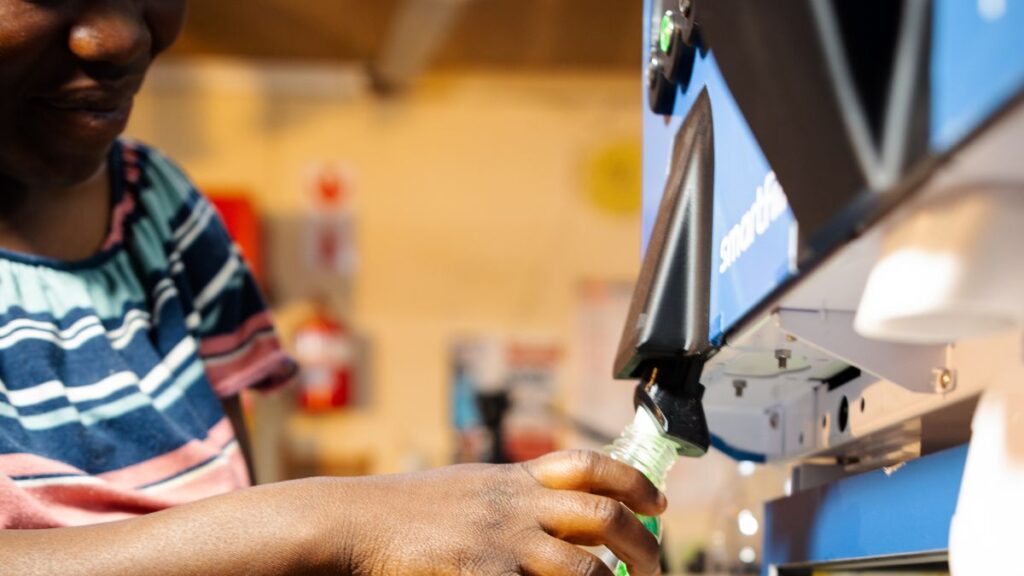
Smart grocery refill dispensers are slowly taking over South Africa’s formal independent retail, which allows consumers to buy what they can afford, at a cost of up to 50% cheaper than traditional retailers.
The new company Smartfill announced the rollout of its dispensers across several spaza shops in areas such as Tembisa in Johannesburg.
Developed in South Africa by DY|DX and the Smollan Group, Smartfill dispensers allow customers to buy trusted brands in the exact quantities they can afford, without the extra cost of packaging.
By cutting out single-use plastic and offering small refills, everyday items can cost significantly less than in supermarkets.
“Designed for the informal trade market, Smartfill eliminates single-use plastic and makes everyday essentials significantly more affordable by allowing shoppers to buy what they need, when they need it; no unnecessary packaging, just value,” the company explained.
The system is targeted at the informal sector, where a significant share of the country’s fast-moving consumer goods (FMCG) are sold.
“The general trade is where 40% of South Africa’s FMCG goods are purchased,” said Michael Smollan, Chief Growth Officer of the Smollan Group.
“We started Smartfill five years ago as an R&D project to meet the demand from FMCG manufacturers to innovate in this market. Consumers are actively engaging in this space, and we’ve seen an accelerating increase in sales volume for small-sized refills.”
Instead of competing with township spazas, Smartfill aims to strengthen them. “Unlike large retail outlets that divert footfall away from spazas, Smartfill’s model drives more customers into their shops,” Smollan said.
Smartfill’s CEO, Nevo Hadas, described the concept as one that blends sustainability with social impact.
“Smartfill is about more than sustainability; it’s about affordability, dignity, convenience, and community,” he said.
“These dispensers are making trusted brands accessible in the exact quantities families need, at the price they can afford. At the same time, we’re helping spaza owners increase their footfall and revenues and reducing single-use plastic packaging.”
Plans to expand across the boarder
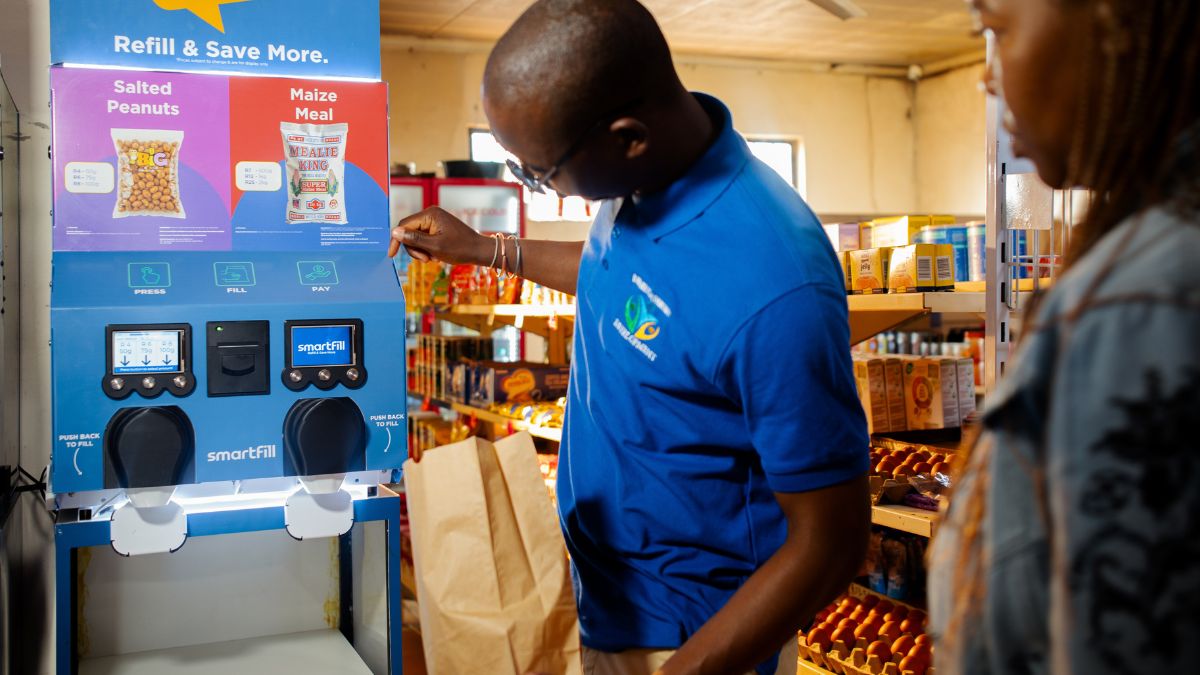
In township economies, where many households shop multiple times a month—sometimes with only R20 or R50 to spend mid-month—Smartfill’s flexibility offers real relief.
Consumers can buy small quantities of essentials such as maize meal, rice, peanuts, cooking oil, washing powder, and dishwashing liquid from brands like Unilever’s Sunlight, B-Well, Golden Key, and Mielie King, without the price penalties usually associated with small packaging.
The model is already proving successful. With more than 30,000 transactions recorded so far, Smartfill reports that nearly 30% of its customers return daily to refill their containers.
“Refill is not only viable but scalable. The success has attracted attention from international partners, leading to pilots in Bangladesh and Kenya, and plans for expansion into Zambia,” the company said.
Smartfill’s launch comes after other refill-based retail experiment. In Diepsloot, Johannesburg, a new concept store called Skubu recently opened using the same idea.
The store was developed in partnership with the Department of Science, Technology and Innovation, the CSIR, and local tech company Sonke.
Skubu’s automated refill stations let shoppers purchase staples like maize meal, sugar, rice, and detergent by the kilogram or litre.
Eben de Jongh, founder of Sonke, said Skubu was designed to offer products at prices up to 50% lower than traditional stores.
“It is a fully automated refill store where people can buy the quantity of goods that they need at a price that they can afford,” said Sonke founder Eben de Jongh.
Dr Mmboneni Muofhe from the Department of Science, Technology and Innovation said the initiative reflects a broader national effort to use technology to support local enterprise and protect the environment.
By promoting refill models, the government, in partnership with businesses, hope to encourage sustainable consumption while easing the pressure on struggling households.
Skubu
















 Loading ...