

Small town in America picks a fight with one of South Africa’s biggest companies


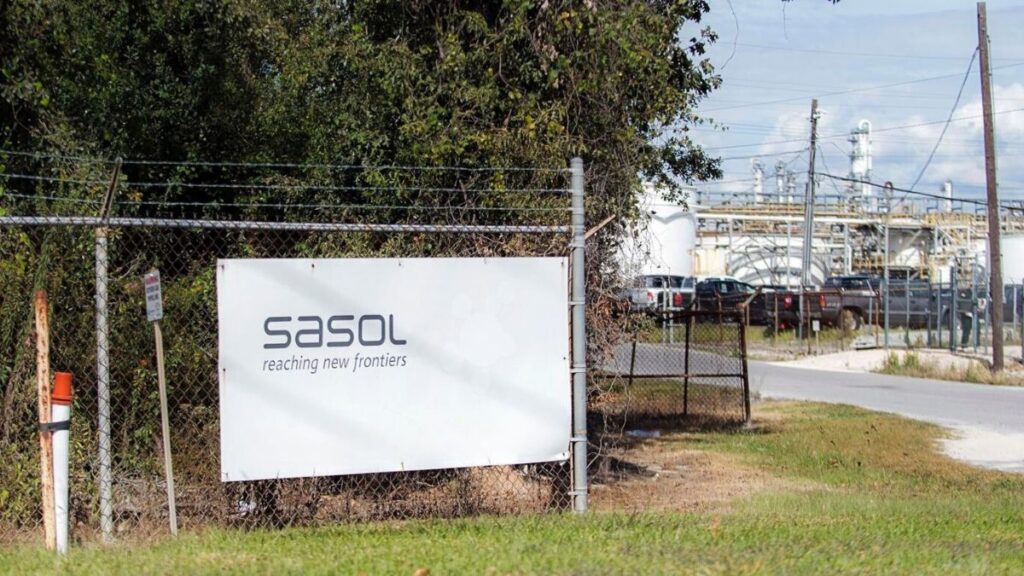
Residents of a small town in Louisiana have accused South African petrochemicals company Sasol of failing to fairly compensate and relocate those who want to leave the area surrounding its major US manufacturing facility.
However, Sasol has denied this, saying that it has been more than fair and has followed all the necessary steps to accommodate the residents.
Mossville is an unincorporated community on the outskirts of Lake Charles in Calcasieu Parish, Louisiana.
It lies between the towns of Sulphur and Westlake and has historically been home to African American families.
Because it is not an incorporated town or a census-designated place, Mossville’s exact population is unclear. However, the latest US Census puts its population at around 3,420 people.
Sasol owns a large petrochemical complex in Westlake, directly east of Mossville. Over the past decade, the company has expanded its operations through the Lake Charles Chemical Projects, a development valued at about $8.1 billion (R130 billion).
The project includes an ethane cracker and related chemical facilities used to produce inputs for consumer products such as soaps and detergents.
As part of this expansion, Sasol bought out and relocated most residents living north of Old Spanish Trail in Mossville.
In 2013, the company launched a Voluntary Property Purchase Program after requests from the community. The programme covered 883 properties in Mossville and the nearby Brentwood subdivision.
Under the programme, homeowners were offered the appraised value of their property plus an additional 40% to 60%, with a minimum appraised value of $100,000 (R1.6 million) for owner-occupied homes.
Additional relocation allowances and bonuses were also included. Many residents accepted the offers and moved.
However, some property owners declined the initial offers and now say they cannot sell their homes and are unable to relocate.
They argue that Sasol should renegotiate compensation, saying the original offers no longer reflect the impact of the development or current economic conditions. These residents are represented by EarthRights International.
Sasol’s response to the allegations

Senior managing attorney Maryum Jordan told Business Times that the buyout did not account for the loss of a long-established community or the difficulty of selling property in an area that has largely been demolished and is adjacent to heavy industry.
She added that the remaining residents are effectively stuck and want Sasol to negotiate new and fairer terms so they can move.
Residents have also raised concerns about environmental impacts. They argued pollution from the plant has affected air, water and soil quality in the area, which has made it difficult to grow crops or raise livestock.
Despite the concern, Sasol has rejected claims that it acted unfairly.
The company said it consulted extensively with the community from the beginning of the project and that the Voluntary Property Purchase Program was launched at the community’s request.
Sasol said a small group of property owners has misrepresented the situation and is seeking compensation beyond what the programme was designed to provide.
The company said it made clear from the start that the buyout programme would not be reopened and that homeowners who declined the original offers did so with that understanding.
However, Jordan argued that Sasol should negotiate individually with property owners rather than relying on a formula devised years ago, particularly given the company’s expected profit growth.
Despite this, Sasol added that it is not currently pursuing further property acquisitions near the Lake Charles facility due to market conditions and lower demand for its products.
On environmental issues, Sasol said it complied with all state and federal regulations and, in many cases, operated below permitted emission limits.
It said it has invested in emissions-control technology and ongoing research to reduce its environmental impact.
















 Loading ...