

The man from Potch who once owned Checkers, lost almost everything, and is now richer than Johann Rupert


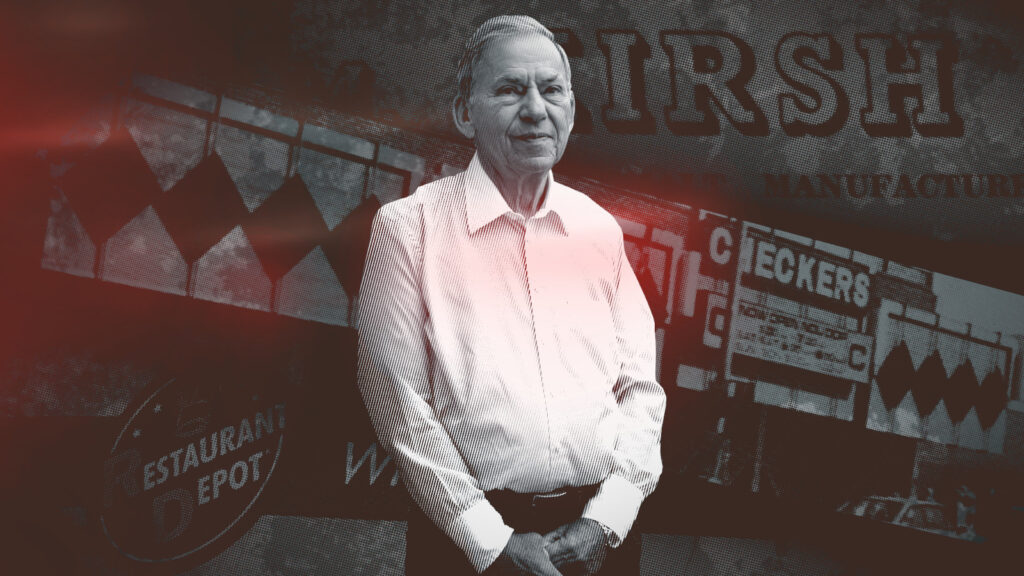
South African-born billionaire Nathan “Natie” Kirsh is now wealthier than Johann Rupert following the sale of his Jetro Restaurant Depot business in the United States for $29.1 billion (about R484 billion).
Kirsh was born on 6 January 1932 in Potchefstroom in the North West province to Jewish parents who had immigrated to South Africa from Lithuania.
After graduating from the University of the Witwatersrand, he joined the family business and helped his mother run their malt factory.
Following his father’s death, Kirsh used the insurance payout to expand into Eswatini (Swaziland), where he replicated the family’s malt business.
The venture proved successful and gave him enough capital to buy back his father’s original malt business in Potchefstroom.
In 1959, he consolidated these operations under Kirsh Industries. He later sold the malt business to Tiger Brands, providing him with significant capital to pursue other ambitions.
Kirsh made his next major move in 1970 when he acquired South African food distributor Moshal Gevisser. Through the business, he identified an opportunity in the cash-and-carry retail model.
At the time, apartheid laws prevented white-owned businesses from operating directly in black townships.
Kirsh instead supplied independent black shopkeepers, who were benefiting from the growth of the informal economy.
Moshal Gevisser later merged with Metro Cash & Carry, which expanded rapidly into one of South Africa’s largest food retail groups.
Kirsh also developed a reputation as an aggressive dealmaker.
He outmanoeuvred influential shareholder Rudi Frankel to secure full control of Metro and listed his holding structure, Kimet, on the Johannesburg Stock Exchange in 1978.
Through Kimet, Kirsh built a growing retail empire, acquiring businesses including Checkers, Dion, Union Wine and Russell’s. At one point, he controlled more than 12% of South Africa’s consumer goods market.
This was years before Checkers was sold to Shoprite in 1991 under the leadership of major shareholder Christo Wiese and CEO Whitey Basson.
Kirsh’s move to the United States
However, Kirsh’s dominance in South Africa did not last. Political instability, economic pressure and township unrest increasingly affected his businesses in the 1980s.
To fund further growth, he partnered with insurer Sanlam and its executive, Fred du Plessis, to form the holding company Sanki in 1984, with Kirsh owning 51% and Sanlam 49%.
The deal later proved costly. A clause relating to capital increases ultimately allowed Sanlam to gain control, costing Kirsh the empire he had built.
“I lost my fortune and the stature that came with controlling the country’s largest trading operation, employing more than 40,000 people,” Kirsh said in an interview with Leader.
After losing control of his South African business interests, Kirsh relocated to New York, where he focused on expanding his American operations.
He had already launched Jetro Cash & Carry in 1976, targeting small independent retailers such as bodegas.
The model replicated what he did in South Africa, where customers visited warehouses, selected stock themselves, paid upfront, and transported the goods back to their stores.
This was a different approach from full-service distributors such as Sysco, which relied on sales representatives, delivery networks and credit.
By cutting out delivery costs and credit risk, Jetro was able to sell products at prices reportedly around 20% lower than competitors.
The model gained traction. By the early 1990s, Jetro had expanded to 10 outlets across the United States and was generating over $400 million in annual revenue.
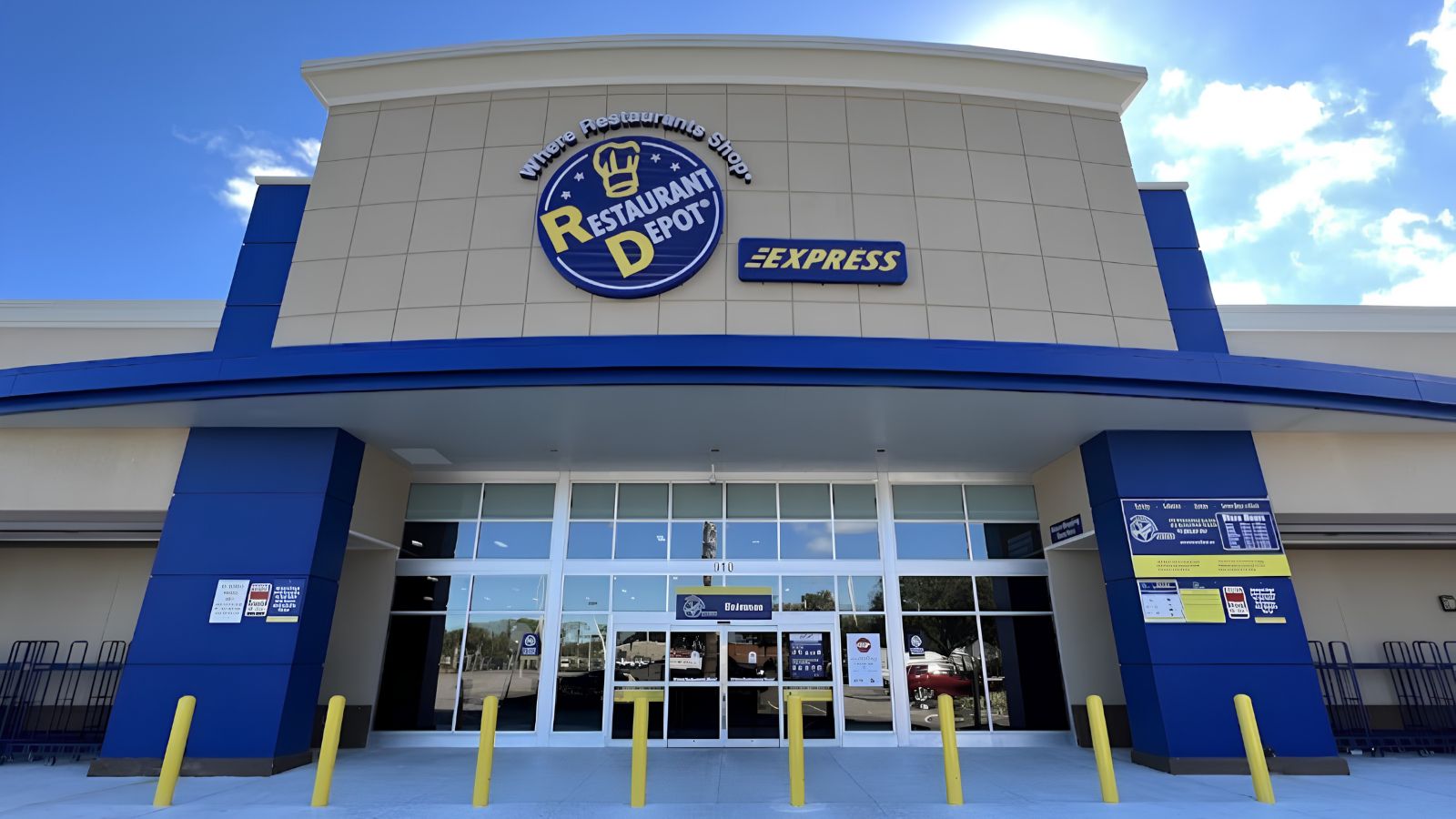
Kirsh later acquired Restaurant Depot, broadening the business beyond convenience stores to restaurants, caterers, pizzerias and delis.
Wealthiest South African-born businessman

Today, Jetro and Restaurant Depot operate 166 warehouse stores across 35 US states, serving roughly 725,000 smaller food-service operators. The business generated around $16 billion in revenue and $2.1 billion in EBITDA last year.
Having lost control of his South African empire decades earlier, Kirsh structured his later businesses differently. He kept Jetro private and retained tight control through family ownership and private partnerships.
He reportedly even declined an investment proposal from Warren Buffett, who had been interested in taking a 27% stake.
In March 2026, Sysco announced that it was acquiring Jetro Restaurant Depot for $29.1 billion (R484 billion), creating one of the largest food-service groups in the US.
The sale of Jetro Restaurant Depot to Sysco for $29.1 billion (R500 billion) includes debt, and shareholders are set to receive $21.6 billion in cash and 91.5 million Sysco shares.
As Jetro is a private business, it is difficult to accurately determine how much debt the company has.
However, most analysts and S&P Global have said the company’s debt burden is relatively small, as the combined cash and equity (share) payments are equal to Jetro’s stated enterprise value.
Before the transaction, Forbes estimated Kirsh’s wealth at $7.3 billion. Based on his roughly 70% stake in Jetro, analysts estimate the sale could leave him with about $20.3 billion in cash and shares.
This makes him wealthier than Johann Rupert, whose net worth, according to Forbes, is estimated at $15 billion (R249.6 billion).
Rupert is followed by Nicky Oppenheimer, whose net worth didn’t grow as significantly over the past year, adding $200 million to a net worth of $10.6 billion (R176.40 billion).
The rest of South Africa’s billionaires include Mining and minerals magnate Patrice Motsepe, moving ahead of media tycoon Koos Bekker, and Capitec founder Michiel le Roux.
This is followed by financial giant Jannie Mouton and retail businessman Christo Wiese, with Le Creuset’s Paul van Zuydam the poorest of the lot, with a net worth of $1.7 billion (R28.30 billion).
















 Loading ...