

Prominent South African grocery retailer loses R1.6 billion in a single day


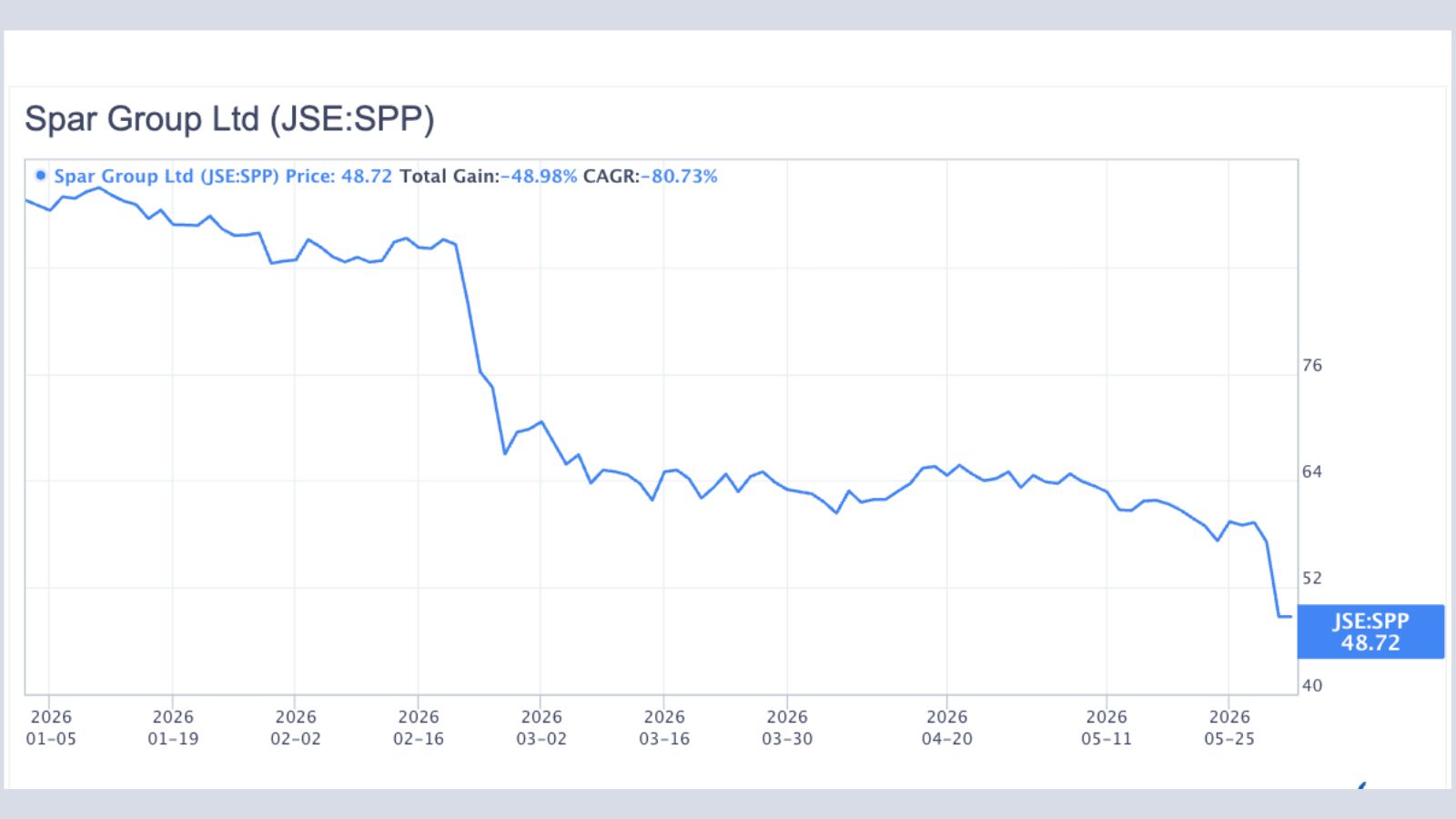
SPAR Group lost over R1.6 billion in market value in a single day after issuing a trading statement warning of a sharp decline in earnings.
The company revealed that headline earnings per share (HEPS) for the six months ended 27 March 2026 are expected to be between 50% and 60% lower than the same period a year earlier.
The market reacted harshly to the update, with SPAR’s share price plunging nearly 15% before the market closed.
The sell-off reduced the group’s market capitalisation from roughly R11.0 billion on 28 May to about R9.38 billion by the close of trading on 29 May. This represents a loss of approximately R1.62 billion in shareholder value.
SPAR’s share price has fallen by almost 50% since the start of 2026 as investors remain sceptical about the company’s recovery efforts.
This follows the troubled implementation of SAP enterprise software at its KwaZulu-Natal distribution centre, which severely disrupted operations and retailer relationships.
In its trading statement, SPAR said shareholders should expect a significant decline in earnings despite modest revenue growth across most of its operations.
“The following trading update is provided to give SPAR shareholders context in respect of top-line performance for the 26 weeks ended 27 March 2026,” the group said.
Group wholesale turnover from continuing operations increased by just 2.1% during the period. Southern African revenue grew 1.7%, while Ireland delivered 3.4% growth in local currency.
SPAR Health was the standout performer, with revenue increasing by more than 26%, while Build it returned to positive growth.
However, the company said revenue growth in its core South African grocery and liquor business remained below inflation levels, reflecting weak volumes and intense competition.
SPAR expects HEPS from continuing operations to come in at between 174 and 217 cents per share, compared with 434 cents in the prior period. Earnings per share (EPS) are expected to decline by between 55% and 65%.
KwaZulu-Natal distribution centre headache
According to the retailer, several factors contributed to the earnings deterioration. “Total continuing Group margins reflected margin compression in Southern Africa, partially offset by a positive contribution from Ireland,” it said.
The company highlighted elevated Black Friday promotional spending, underperformance at the KwaZulu-Natal distribution centre, above-inflation cost increases and higher debtor impairments as key pressures on profitability.
SPAR said a root-cause analysis found that insufficient logistics capacity planning in KwaZulu-Natal disrupted service levels and increased costs, resulting in a sharp decline in performance during the first quarter of the financial year.
“KZN performance remains a key ongoing risk for the Group and continues to be closely monitored at executive and Board level,” the retailer said.
Management noted that corrective measures have already been implemented, including leadership changes.
The distribution centre delivered three consecutive profitable months in February, March and April 2026, although management acknowledged that further work is required before operations are fully stabilised.
The group also reported approximately R128 million in impairments during the period, up from R71 million a year earlier, while debtor provisions increased as SPAR adopted a more conservative approach to assessing credit risk.
Despite the disappointing earnings outlook, SPAR said its balance sheet has stabilised and that it is pursuing several initiatives aimed at restoring profitability.
These include recovering margins in KwaZulu-Natal, strengthening relationships with independent retailers, reducing costs and improving operational efficiency.
“The executive team has been refreshed with new appointments having been made, but recovery will take time, and the macroeconomic backdrop remains demanding,” SPAR said.
The retailer is scheduled to publish its interim results on 10 June 2026, when investors will receive a more detailed breakdown of the factors behind the earnings collapse and management’s plans to drive a sustained recovery.















 Loading ...